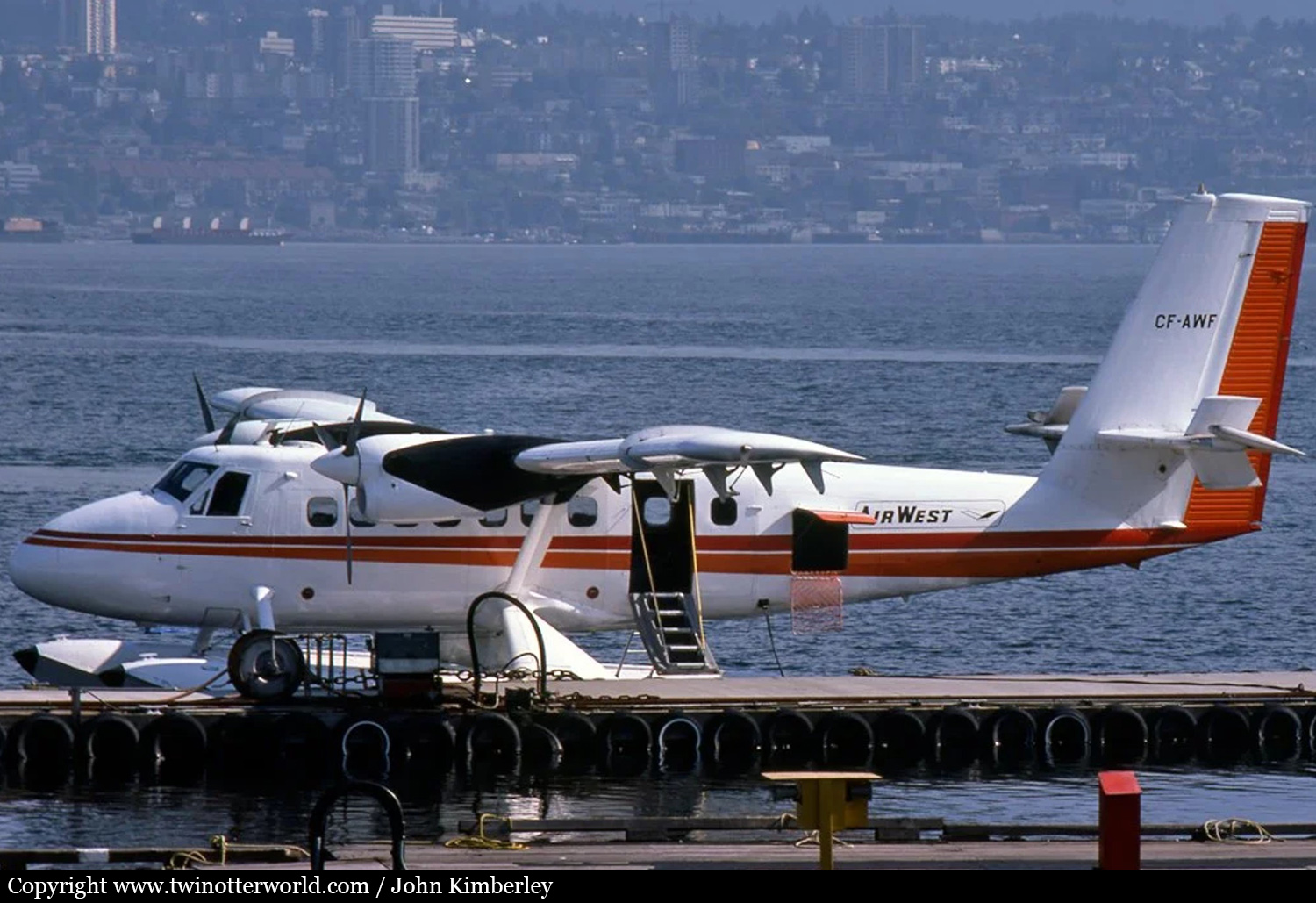
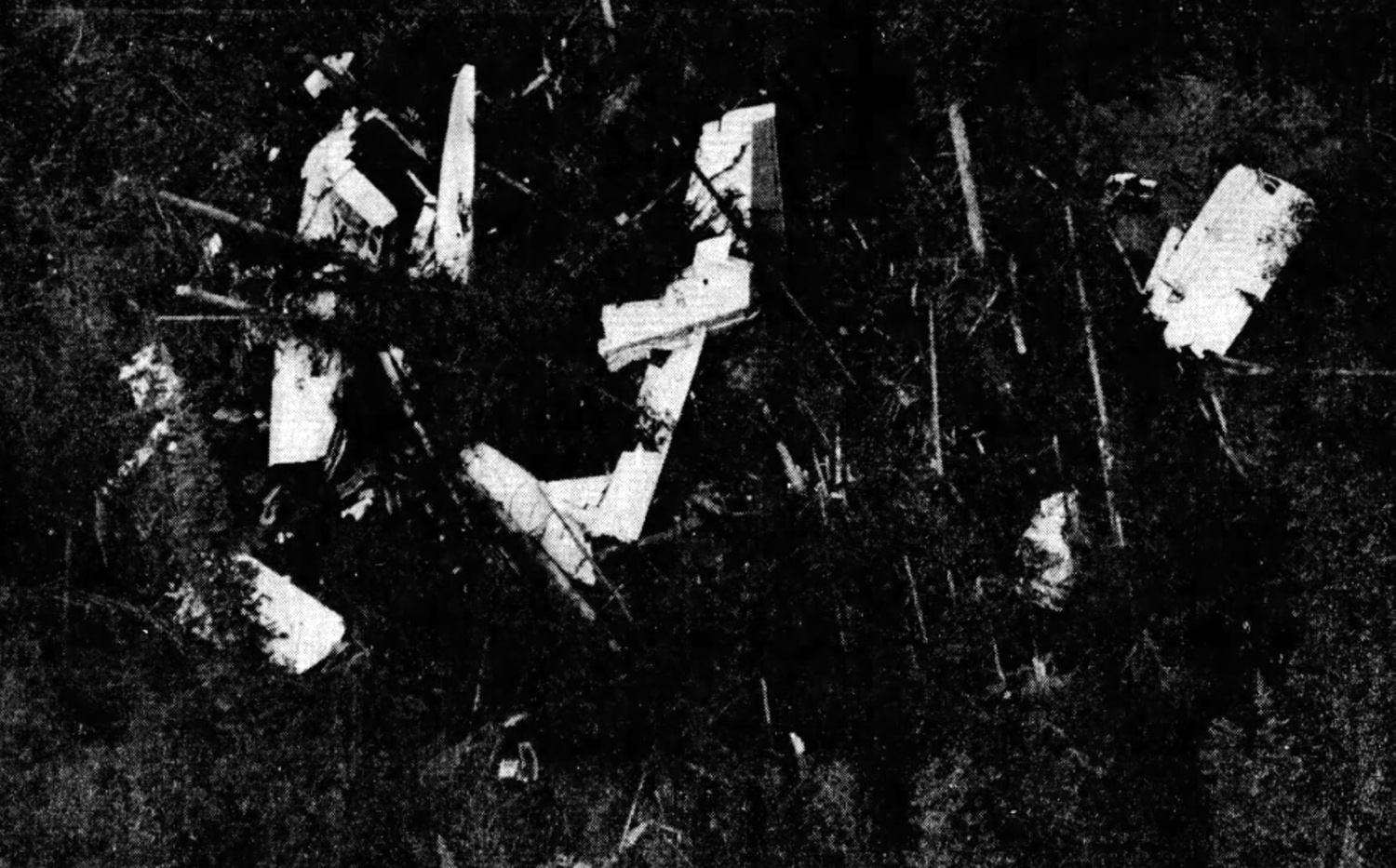
Crash of a De Havilland DHC-6 Twin Otter 100 near Mosher Creek: 1 killed
Date & Time:
Sep 22, 1976 at 1110 LT
Operator:

Registration:
CF-AWF
Survivors:
Yes
Schedule:
Campbell River – Shearwater – Bella Coola – Vancouver
MSN:
67
YOM:
1967
Crew on board:
2
Crew fatalities:
Pax on board:
16
Pax fatalities:
Other fatalities:
Total fatalities:
1
Captain / Total hours on type:
2500.00
Circumstances:
The aircraft had been chartered to carry a group of Canadian and American fishery engineers on a tour of fishery installations and projects in British Colombia. Two similar aircraft were used, each carrying 16 passengers. The proposed flight was to go from Campbell River to various points and then back to Vancouver the same day. After refueling at Shearwater, the aircraft was flown at a low altitude and through marginal weather conditions to the Atnarko River counting station. There the pilot, on request of the tour director, circled the aircraft within the confines of a narrow valley at an altitude of approximately 500 feet above the terrain. After the third orbit of the area, he initiated a climb in a northeasterly direction along the northern slope, paralleling the contours of the valley. On reaching an altitude of approximately 3,000 feet, he turned further to the left to follow a creek while continuing his climb directly toward a ridge located at the 6,000 feet elevation. At approximately 4,300 feet, the pilot realized the aircraft could not outclimb the gradient of the terrain. He attempted to turn to the left to reverse his course. As he banked the aircraft, it began to shudder as though it was entering a stall. He leveled the wings and at almost the same instant the undercarriage began striking trees. The aircraft struck the tree-covered slope with the undercarriage absorbing the majority of the impact forces. During the impact, the tail section aft of the cabin area and the right wing separated from the fuselage. The remainder of the fuselage came to rest in a comparatively level attitude allowing the crew and passengers to evacuate the wreckage. One passenger succumbed to his injuries approximately four hours after the impact, the others survived. There was no survival gear and no emergency signalling equipment on the aircraft. The copilot placed the ELT (Emergency Locator Transmitter) on the top of the wreckage and activated it manually; it failed to operate due to impact damage.
Probable cause:
It is concluded that the pilot, while climbing along the contours of a steep side hill to clear a high ridge, misjudged the height and the gradient of the terrain. He also did not cater for the reduced climb performance of the aircraft resulting from the overweight condition. On realizing his predicament, he attempted to turn away from his intended flight path. His airspeed had decreased to a point where, as he attempted the bank to the left, the aircraft entered a stall.
The following findings were identified:
- The aircraft was overloaded. Evidence indicates that the aircraft was between 1'000 and 1'600 pounds overloaded on departure from Shearwater. Allowing one hour fuel burn-off from Shearwater to the accident site, the aircraft would have exceeded the maximum authorized gross weight by between 400 - 1'000 pounds at the time of impact.
- The pilot misjudged the climb capability of the overloaded aircraft relative to the climb gradient required for terrain clearance.
- The Company did not provide adequate emergency survival equipment on the aircraft.
The following findings were identified:
- The aircraft was overloaded. Evidence indicates that the aircraft was between 1'000 and 1'600 pounds overloaded on departure from Shearwater. Allowing one hour fuel burn-off from Shearwater to the accident site, the aircraft would have exceeded the maximum authorized gross weight by between 400 - 1'000 pounds at the time of impact.
- The pilot misjudged the climb capability of the overloaded aircraft relative to the climb gradient required for terrain clearance.
- The Company did not provide adequate emergency survival equipment on the aircraft.
Final Report: