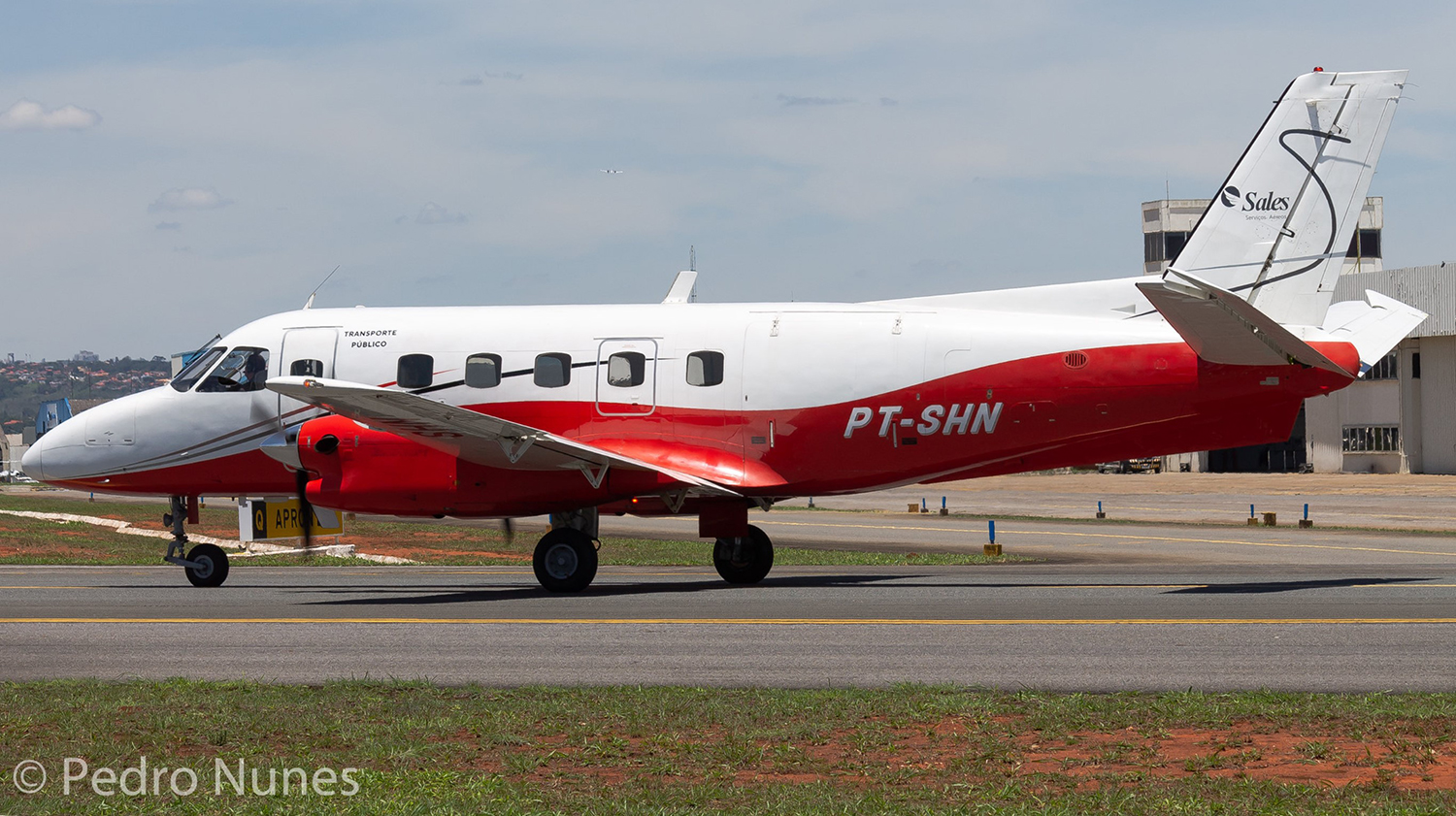
Crash of an Embraer EMB-110P1 Bandeirante in Eldorado do Sul
Date & Time:
May 20, 2022 at 1052 LT
Operator:

Registration:
PT-SHN
Survivors:
Yes
Schedule:
Jundiaí – Eldorado do Sul
MSN:
110-460
YOM:
1985
Crew on board:
2
Crew fatalities:
Pax on board:
0
Pax fatalities:
Other fatalities:
Total fatalities:
0
Captain / Total hours on type:
1890.00
Copilot / Total hours on type:
779
Circumstances:
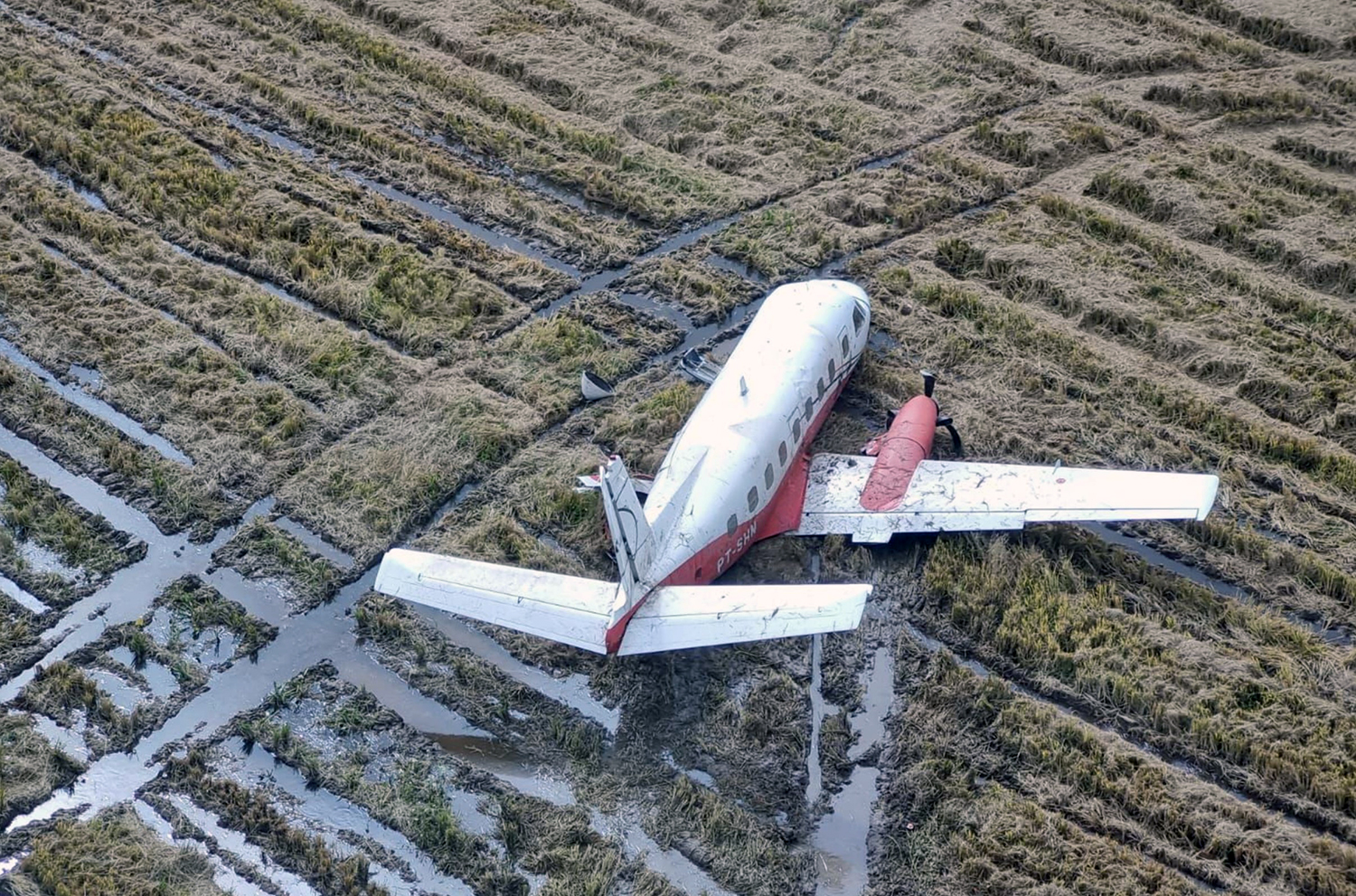
The airplane departed Jundiaí at 0800LT on a cargo flight to Eldorado do Sul, carrying two pilots and a load of automotive parts. About thirty minutes prior to reaching the destination, the descent procedure was initiated. During the descent, the crew observed that the left engine torque indicator would not reduce to values below 1,300 lb. ft. The crew continued toward the destination. On the final approach for landing, the left engine was shut down. Subsequently, the aircraft lost control and crash landed in a rice paddy field located short of runway. While contacting ground, the undercarriage and the left wing were torn off. Both pilots were injured, one seriously.
Probable cause:
Contributing factors:
- Attitude – a contributor.
Familiarity with the destination aerodrome, developed through recent experience, along with experience in this type of operation, generated a complacent attitude toward safety procedures and excessive confidence in the pilots’ ability to handle the situation.
These attitudes led to inadequate adherence to the procedures required in the presence of an engine malfunction. Additionally, the decision to continue the flight and landing under VFR, despite adverse meteorological conditions, reflected difficulty in reacting appropriately to external stimuli affecting the operation, resulting in inadequate behaviors and compromising flight safety.
- Training and Qualification – undetermined.
There were no records indicating that the pilots had completed CRM training, as required by Section 135.330 of RBAC 135. Furthermore, it is possible that the lack of completion of periodic flight training before the accident contributed to inadequate
performance and insufficient proficiency in the context of the emergency operation and management.
- Communication – a contributor.
During the management of the emergency, the crew demonstrated difficulty organizing and expressing information rationally and coherently. The PIC’s unclear and low assertiveness verbalizations hindered the SIC’s ability to properly interpret and act upon the
instructions. This situation worsened during the go-around after the first landing attempt, when the PIC repeatedly issued commands using non-standard phraseology, delaying actions on the part of the SIC. Throughout the second traffic circuit, information exchange between the pilots was insufficient to establish an orderly definition of the commands and actions to be executed before shutting down the left engine on final approach.
- Adverse meteorological conditions – undetermined.
Meteorological conditions below the minima for VFR and for landing at SIXE may have affected aircraft performance and induced the pilots to conduct engine-malfunction procedures at low altitude to maintain ground reference, reducing the safety margin during the ensuing loss of control.
- Crew Resource Management – a contributor.
Human resources available for the operation were inefficiently employed, with inadequate management of each crew member’s actions and a failure to consult emergency checklists.The confusion observed on the CVR indicated that, once assuming control of the
aircraft, the PIC struggled to provide clear direction to the SIC during critical flight phases, particularly during the landing attempt and the subsequent left-engine shutdown on final. At no point did the crew engage in dialogue aimed at analyzing the situation,
interpreting available information, or consulting checklists to support decision-making.
- Handling of aircraft flight controls – undetermined.
CVR transcripts showed that, when control was lost, the PIC applied maximum power on the right engine. Under those circumstances, the action performed by the crew may have aggravated the aircraft’s loss-of-control condition, which resulted in a left descending turn that continued until ground impact.
- Piloting judgment – a contributor.
There was inadequate assessment of aircraft operational parameters prior to shutting down the left engine. This misjudgment led the crew to perform the shutdown on final approach, at low altitude and with the aircraft fully configured for landing – conditions under which sustained flight was no longer possible. Additionally, shutting down the engine during final approach prevented recovery of control in the new single-engine flight condition due to insufficient altitude.
- Aircraft maintenance – undetermined.
The possibility of maintenance personnel involvement could not be ruled out, due to inadequacies in the corrective or preventive actions taken regarding discrepancies recorded in the Aircraft Logbook by the same crew days prior to the accident. At that time, a mismatch between the power-lever positions had been noted. It was considered that this condition may have been associated with the onset of FCU malfunction, through an incipient fracture in the bellows.
- Decision-making process – a contributor.
Evidence collected during the investigation suggests difficulty in perceiving, analyzing, and appropriately responding to the situation, resulting in hasty decision-making and inadequate use of available time to implement a safe course of action. During arrival at SIXE, inadequate evaluations and/or indecision were identified regarding measures to mitigate the emergency in question. By choosing to land at SIXE, the pilots did not comply with the meteorological minima prescribed for that operation, reducing the safety margin when shutting down the malfunctioning engine – an action that led to loss of control. Misinterpretation and insufficient analysis led to an underestimation of the seriousness of the situation, resulting in the decision to shut down the engine during final approach at an aerodrome lacking emergency response capability, without notifying air traffic services of the aircraft’s emergency condition.
- Managerial oversight – undetermined.
One deemed plausible that there was inadequate oversight by the organization’s management regarding pilot training activities and monitoring of qualifications. Additionally, in response to reports of discrepancies, the aircraft maintenance manager may not have adequately addressed abnormal behaviors exhibited by the aircraft – such as the power-lever mismatch – prior to the accident.
- Attitude – a contributor.
Familiarity with the destination aerodrome, developed through recent experience, along with experience in this type of operation, generated a complacent attitude toward safety procedures and excessive confidence in the pilots’ ability to handle the situation.
These attitudes led to inadequate adherence to the procedures required in the presence of an engine malfunction. Additionally, the decision to continue the flight and landing under VFR, despite adverse meteorological conditions, reflected difficulty in reacting appropriately to external stimuli affecting the operation, resulting in inadequate behaviors and compromising flight safety.
- Training and Qualification – undetermined.
There were no records indicating that the pilots had completed CRM training, as required by Section 135.330 of RBAC 135. Furthermore, it is possible that the lack of completion of periodic flight training before the accident contributed to inadequate
performance and insufficient proficiency in the context of the emergency operation and management.
- Communication – a contributor.
During the management of the emergency, the crew demonstrated difficulty organizing and expressing information rationally and coherently. The PIC’s unclear and low assertiveness verbalizations hindered the SIC’s ability to properly interpret and act upon the
instructions. This situation worsened during the go-around after the first landing attempt, when the PIC repeatedly issued commands using non-standard phraseology, delaying actions on the part of the SIC. Throughout the second traffic circuit, information exchange between the pilots was insufficient to establish an orderly definition of the commands and actions to be executed before shutting down the left engine on final approach.
- Adverse meteorological conditions – undetermined.
Meteorological conditions below the minima for VFR and for landing at SIXE may have affected aircraft performance and induced the pilots to conduct engine-malfunction procedures at low altitude to maintain ground reference, reducing the safety margin during the ensuing loss of control.
- Crew Resource Management – a contributor.
Human resources available for the operation were inefficiently employed, with inadequate management of each crew member’s actions and a failure to consult emergency checklists.The confusion observed on the CVR indicated that, once assuming control of the
aircraft, the PIC struggled to provide clear direction to the SIC during critical flight phases, particularly during the landing attempt and the subsequent left-engine shutdown on final. At no point did the crew engage in dialogue aimed at analyzing the situation,
interpreting available information, or consulting checklists to support decision-making.
- Handling of aircraft flight controls – undetermined.
CVR transcripts showed that, when control was lost, the PIC applied maximum power on the right engine. Under those circumstances, the action performed by the crew may have aggravated the aircraft’s loss-of-control condition, which resulted in a left descending turn that continued until ground impact.
- Piloting judgment – a contributor.
There was inadequate assessment of aircraft operational parameters prior to shutting down the left engine. This misjudgment led the crew to perform the shutdown on final approach, at low altitude and with the aircraft fully configured for landing – conditions under which sustained flight was no longer possible. Additionally, shutting down the engine during final approach prevented recovery of control in the new single-engine flight condition due to insufficient altitude.
- Aircraft maintenance – undetermined.
The possibility of maintenance personnel involvement could not be ruled out, due to inadequacies in the corrective or preventive actions taken regarding discrepancies recorded in the Aircraft Logbook by the same crew days prior to the accident. At that time, a mismatch between the power-lever positions had been noted. It was considered that this condition may have been associated with the onset of FCU malfunction, through an incipient fracture in the bellows.
- Decision-making process – a contributor.
Evidence collected during the investigation suggests difficulty in perceiving, analyzing, and appropriately responding to the situation, resulting in hasty decision-making and inadequate use of available time to implement a safe course of action. During arrival at SIXE, inadequate evaluations and/or indecision were identified regarding measures to mitigate the emergency in question. By choosing to land at SIXE, the pilots did not comply with the meteorological minima prescribed for that operation, reducing the safety margin when shutting down the malfunctioning engine – an action that led to loss of control. Misinterpretation and insufficient analysis led to an underestimation of the seriousness of the situation, resulting in the decision to shut down the engine during final approach at an aerodrome lacking emergency response capability, without notifying air traffic services of the aircraft’s emergency condition.
- Managerial oversight – undetermined.
One deemed plausible that there was inadequate oversight by the organization’s management regarding pilot training activities and monitoring of qualifications. Additionally, in response to reports of discrepancies, the aircraft maintenance manager may not have adequately addressed abnormal behaviors exhibited by the aircraft – such as the power-lever mismatch – prior to the accident.
Final Report: