Country
Operator Image

Crash of a Boeing 737-524 in Guadalajara
Date & Time:
Sep 16, 1998 at 2253 LT
Operator:
Registration:
N20643
Survivors:
Yes
Schedule:
Houston - Guadalajara
MSN:
28904
YOM:
1997
Flight number:
CO475
Crew on board:
6
Crew fatalities:
Pax on board:
102
Pax fatalities:
Other fatalities:
Total fatalities:
0
Circumstances:
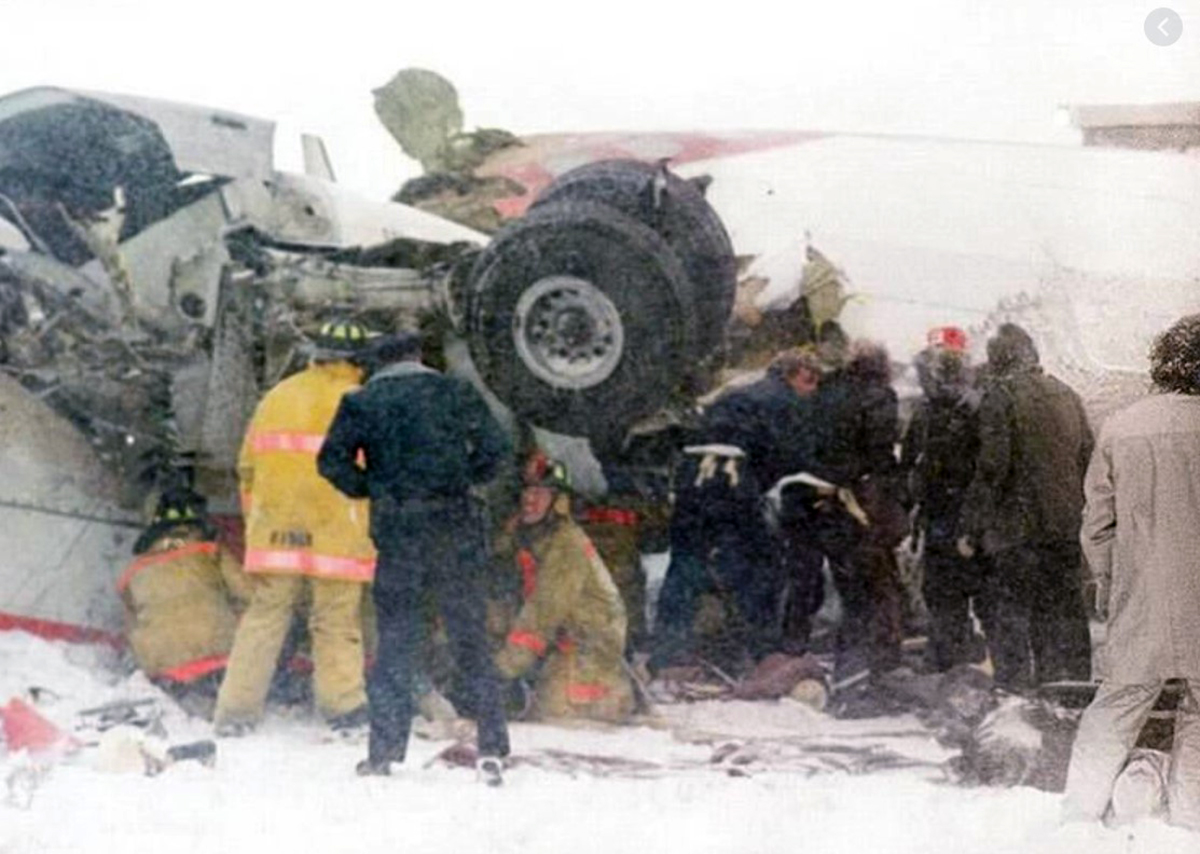
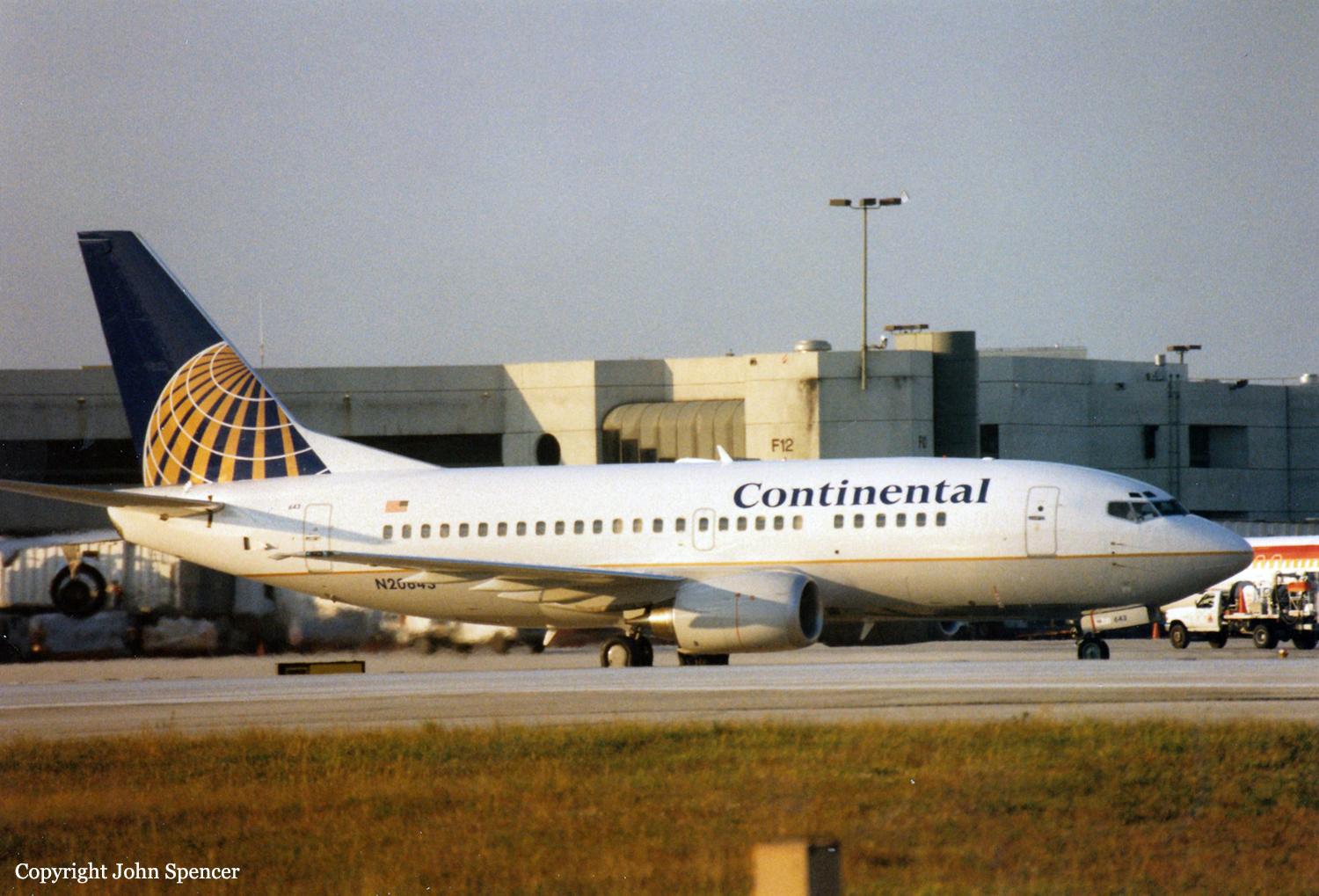
On September 16, 1998, at 2253 central daylight time, a Boeing 737-524 transport airplane, N20643, operating as Continental Airlines flight 475, was substantially damaged following a loss of control during the landing roll at the Don Miguel Hidalgo International Airport near Guadalajara, Mexico. The 2 airline transport rated pilots, the 4 flight attendants, and the 102 passengers were not injured. The airplane was owned and operated by Continental Airlines of Houston, Texas, under Title 14 CFR Part 121. Night visual meteorological conditions prevailed for the scheduled international passenger-cargo flight for which an IFR flight plan was filed. The flight was dispatched from the George Bush International Airport near Houston, Texas, at 2056, for the two hour flight to Guadalajara, State of Jalisco, Mexico. The flight's scheduled arrival time was 2254. After executing a missed approach on their first ILS approach to runway 28, the flight was vectored for a second approach to runway 28. The second approach was reported by both pilots to be uneventful; however, after touchdown, the aircraft drifted to the left side of the runway. The left main landing gear exited the hard surface of the runway approximately 2,700 feet from the landing threshold and eventually all 3 landing gears exited the 197 foot wide asphalt runway. The first officer, who was flying the airplane, stated that he never felt any anti-skid cycling during the landing roll and did not feel any "radical braking" which was expected with the auto-brake in the number 3 setting. The airplane's nose landing gear collapsed resulting in structural damage to the avionics bay, the forward baggage compartment, the engine cowlings and pylons. Both engines incurred FOD. A total of 15 runway lights on the southern edge of runway 28 were found either sheared or knocked down. The tower operator reported that intermittent heavy rain showers accompanied with downdrafts and strong winds associated with a thunderstorm northeast of the airport prevailed throughout the area at the time of the accident. The two transport category airplanes that landed prior to Continental flight 475 reported windshear on final approach. The winds issued to Continental 475 by the tower while on short final were from 360 degrees at 20 knots, gusting to 40 knots. Prior to the arrival of Continental flight 475, an Aeromexico MD-82, drifted to the left side of the runway to the point where the left main gear exited the hard surface of the runway. The pilot of that flight stated that he used differential power to regain control and bring the aircraft back on the runway. The flight taxied to the gate without further incident.
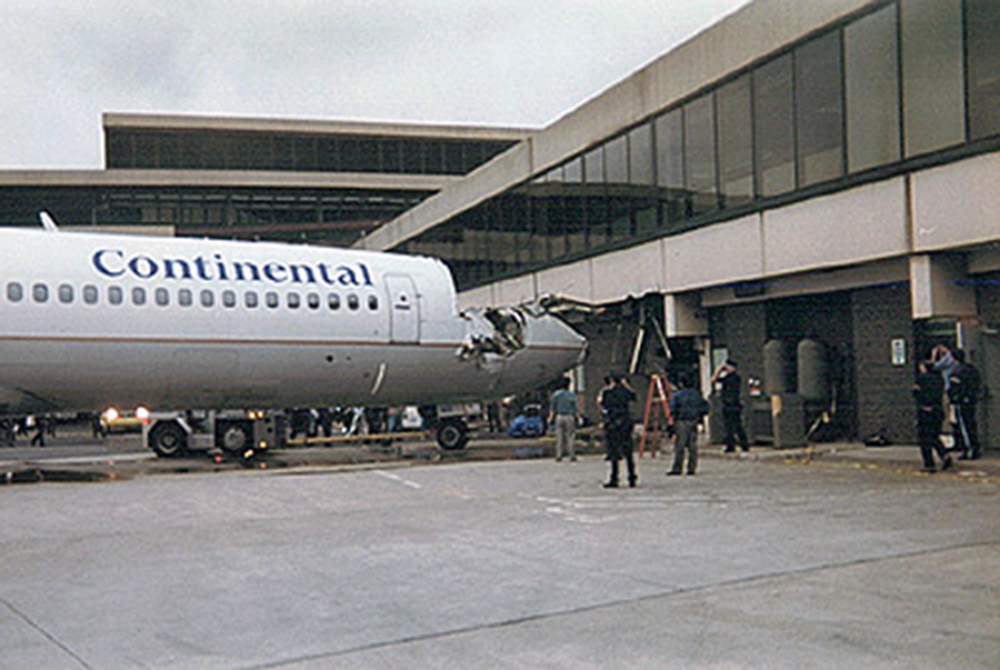
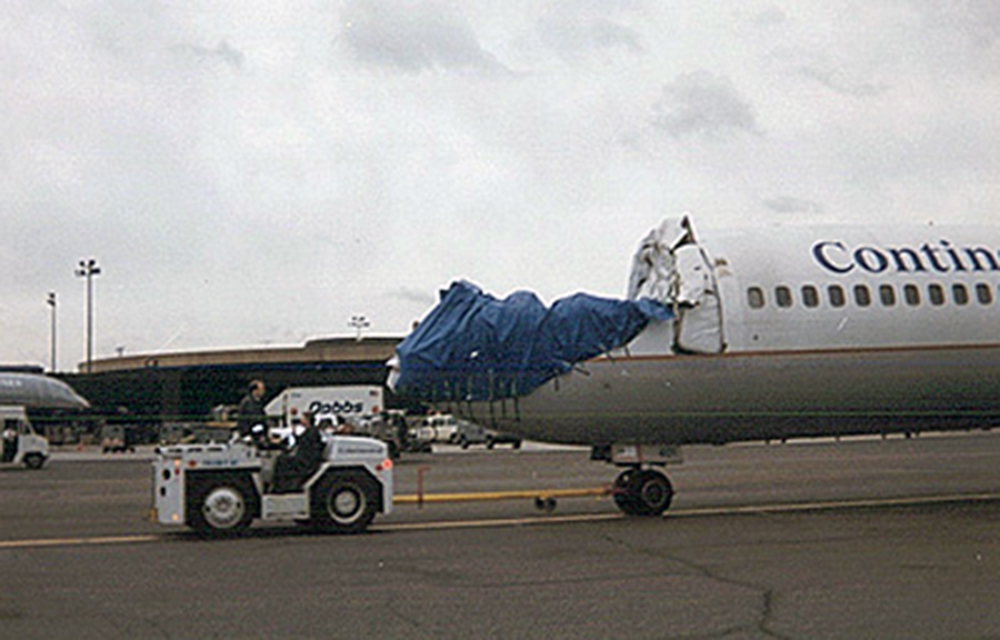
Crash of a Boeing 727-227 in Newark
Date & Time:
Jun 7, 1997
Operator:
Registration:
N571PE
Survivors:
Yes
MSN:
21264
YOM:
1976
Crew on board:
2
Crew fatalities:
Pax on board:
0
Pax fatalities:
Other fatalities:
Total fatalities:
0
Circumstances:
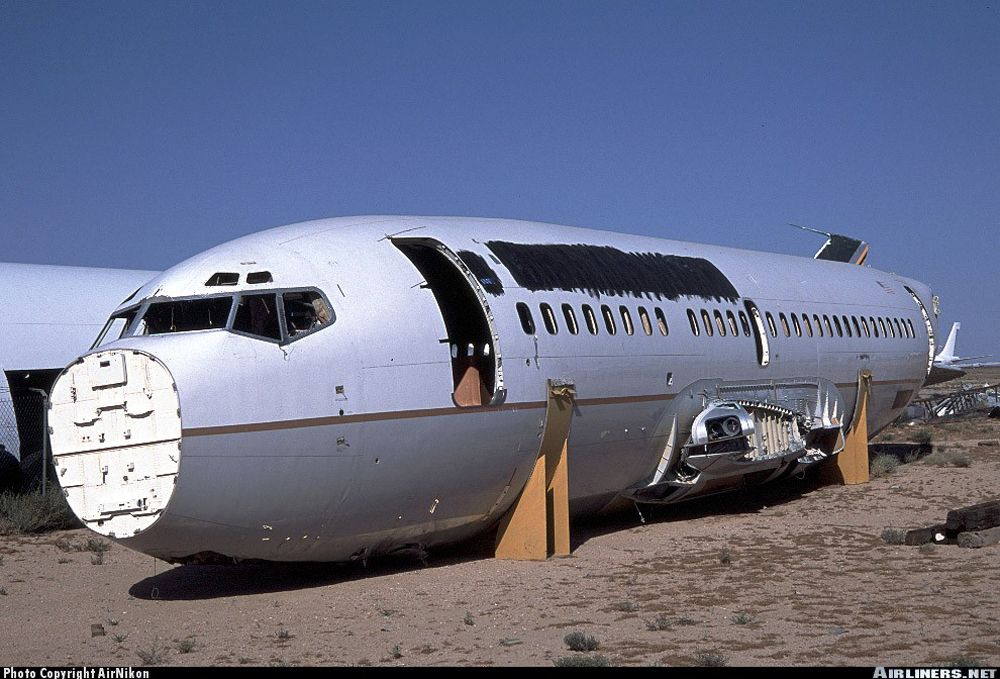
The aircraft was transferred from the maintenance facilities to the main terminal by a technical crew when control was lost. The airplane collided with the USAir Terminal and the cockpit was destroyed.

Crash of a Douglas DC-9-32 in Houston
Date & Time:
Feb 19, 1996 at 0904 LT
Operator:
Registration:
N10556
Survivors:
Yes
Schedule:
Washington DC - Houston
MSN:
47423
YOM:
1970
Flight number:
CO1943
Crew on board:
5
Crew fatalities:
Pax on board:
82
Pax fatalities:
Other fatalities:
Total fatalities:
0
Captain / Total hours on type:
5000.00
Copilot / Total hours on type:
575
Aircraft flight hours:
63132
Aircraft flight cycles:
58913
Circumstances:
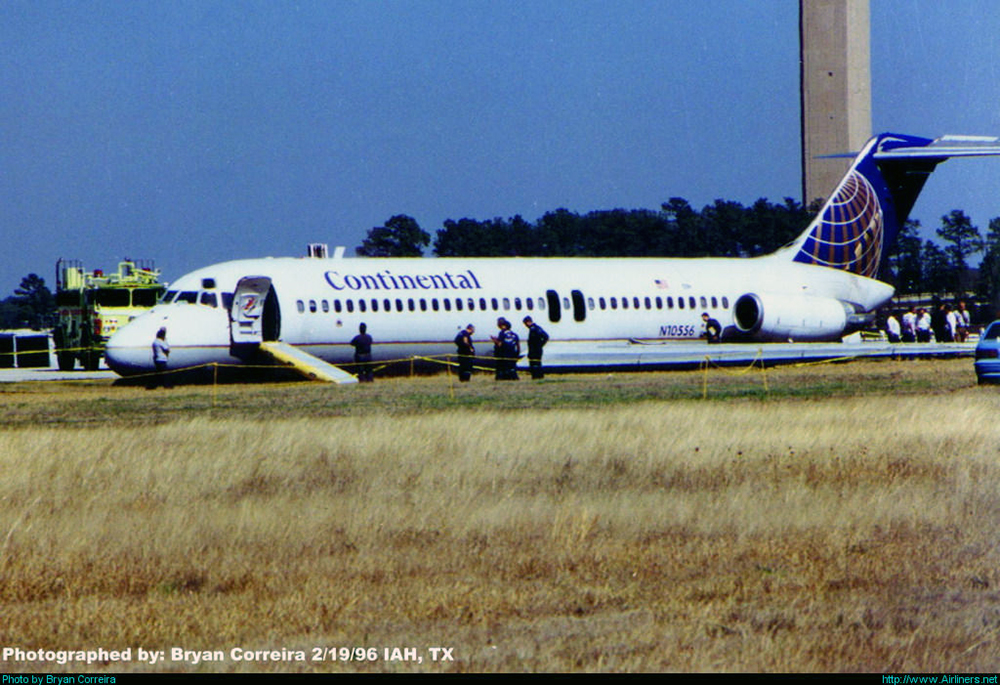
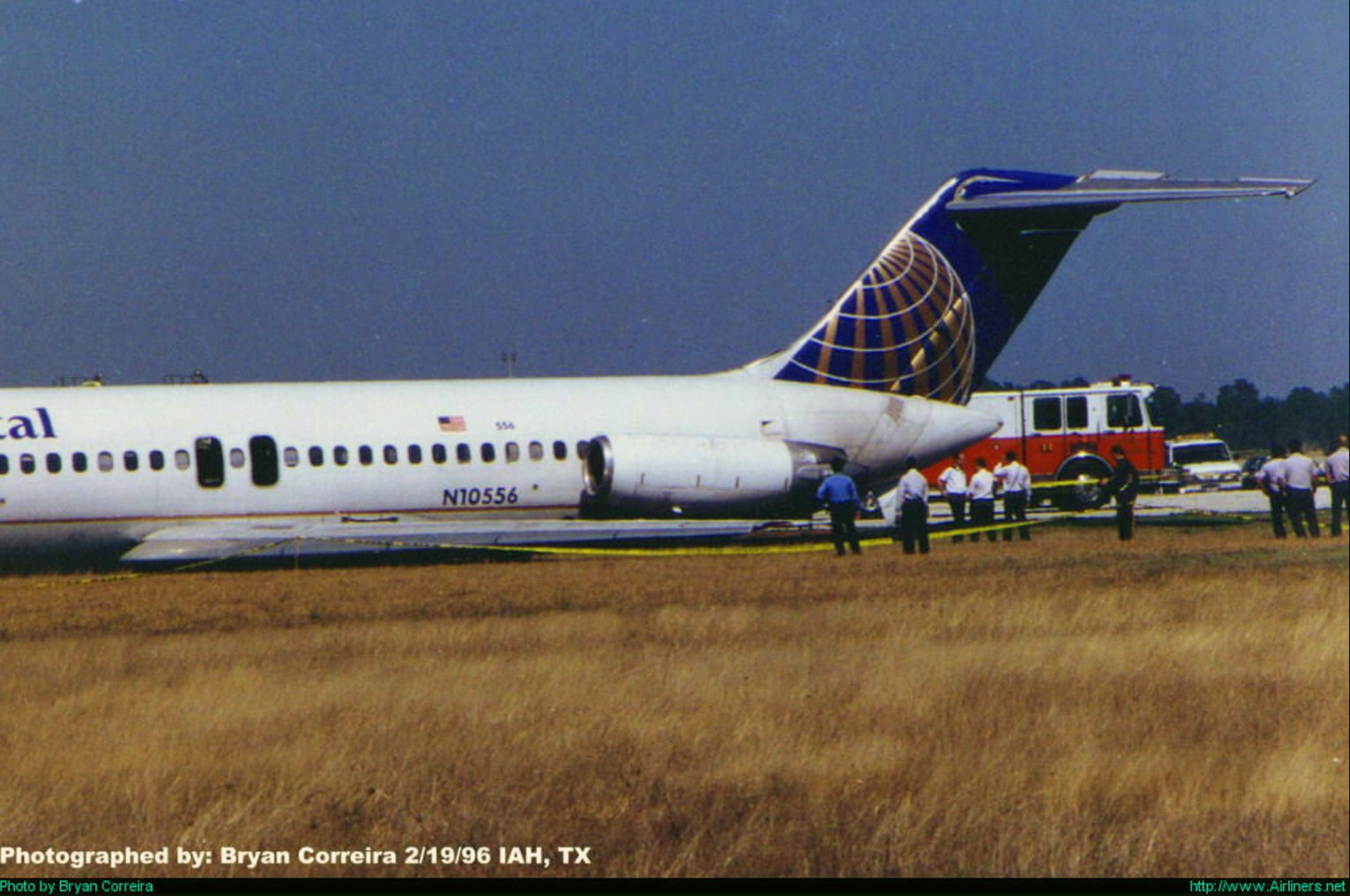
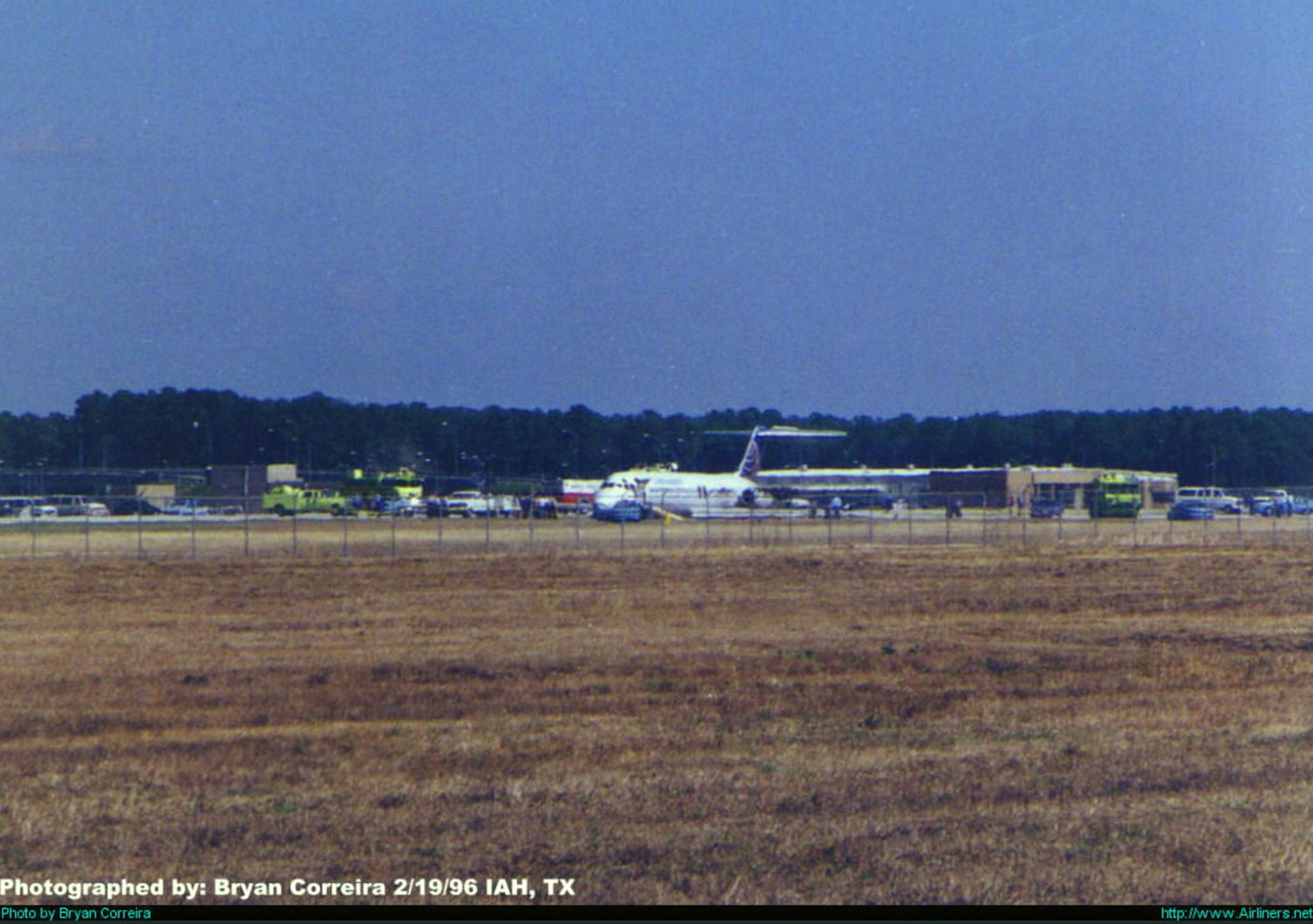
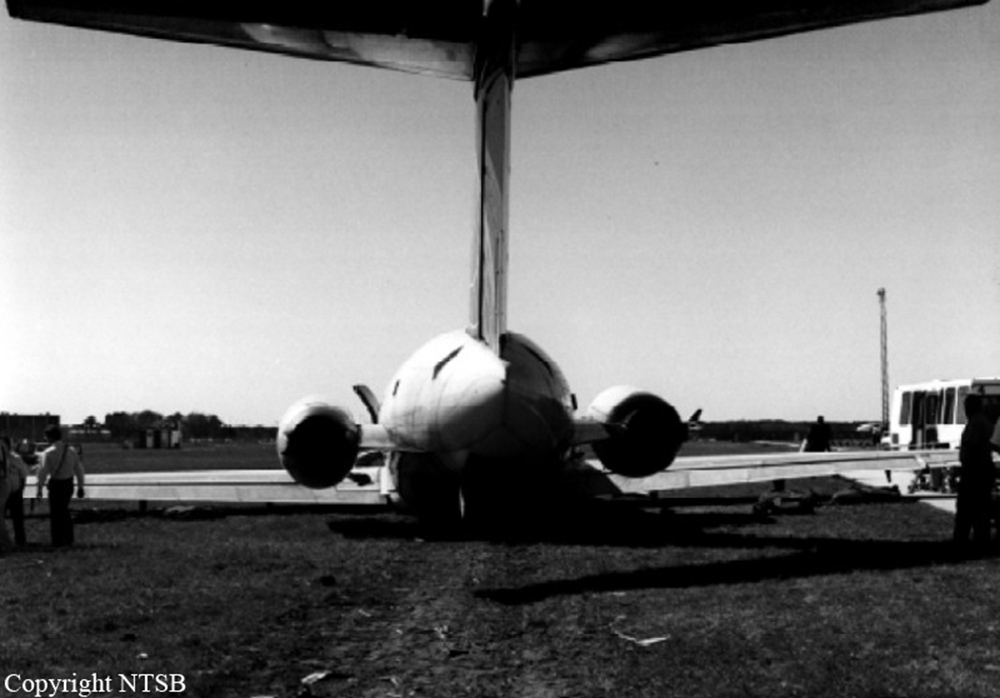
The airplane landed wheels up and slid 6,850 feet before coming to rest in grass about 140 feet left of the runway centerline. The cabin began to fill with smoke, and the airplane was evacuated. Investigation showed that because the captain had omitted the 'Hydraulics' item on the in-range checklist and the first officer failed to detect the the error, hydraulic pressure was not available to lower the landing gear and deploy the flaps. Both the captain and the first officer recognized that the flaps had not extended after the flaps were selected to 15°. The pilots then failed to perform the landing checklist and to detect the numerous cues alerting them to the status of the landing gear because of their focus on coping with the flap extension problem and the high level of workload as a result of the rapid sequence of events in the final minute of flight. The first officer attempted to communicate his concern about the excessive speed of the approach to the captain. There were deficiencies in Continental Airlines' (COA) oversight of its pilots and the principal operations inspector's oversight of COA. COA was aware of inconsistencies in flightcrew adherence to standard operating procedures within the airline; however, corrective actions taken before the accident had not resolved this problem.
Probable cause:
The captain's decision to continue the approach contrary to Continental Airlines (COA) standard operating procedures that mandate a go-around when an approach is unstabilized below 500 feet or a ground proximity warning system alert continues below 200 feet above field elevation. The following factors contributed to the accident:
(1) the flightcrew's failure to properly complete the in-range checklist, which resulted in a lack of hydraulic pressure to lower the landing gear and deploy the flaps;
(2) the flightcrew's failure to perform the landing checklist and confirm that the landing gear was extended;
(3) the inadequate remedial actions by COA to ensure adherence to standard operating procedures; and
(4) the Federal Aviation Administration's inadequate oversight of COA to ensure adherence to standard operating procedures.
(1) the flightcrew's failure to properly complete the in-range checklist, which resulted in a lack of hydraulic pressure to lower the landing gear and deploy the flaps;
(2) the flightcrew's failure to perform the landing checklist and confirm that the landing gear was extended;
(3) the inadequate remedial actions by COA to ensure adherence to standard operating procedures; and
(4) the Federal Aviation Administration's inadequate oversight of COA to ensure adherence to standard operating procedures.
Final Report:
Ground accident of a Boeing 737-2C0 in Houston
Date & Time:
Nov 26, 1994 at 1102 LT
Operator:
Registration:
N11244
Survivors:
Yes
MSN:
20073
YOM:
1969
Crew on board:
2
Crew fatalities:
Pax on board:
0
Pax fatalities:
Other fatalities:
Total fatalities:
0
Circumstances:
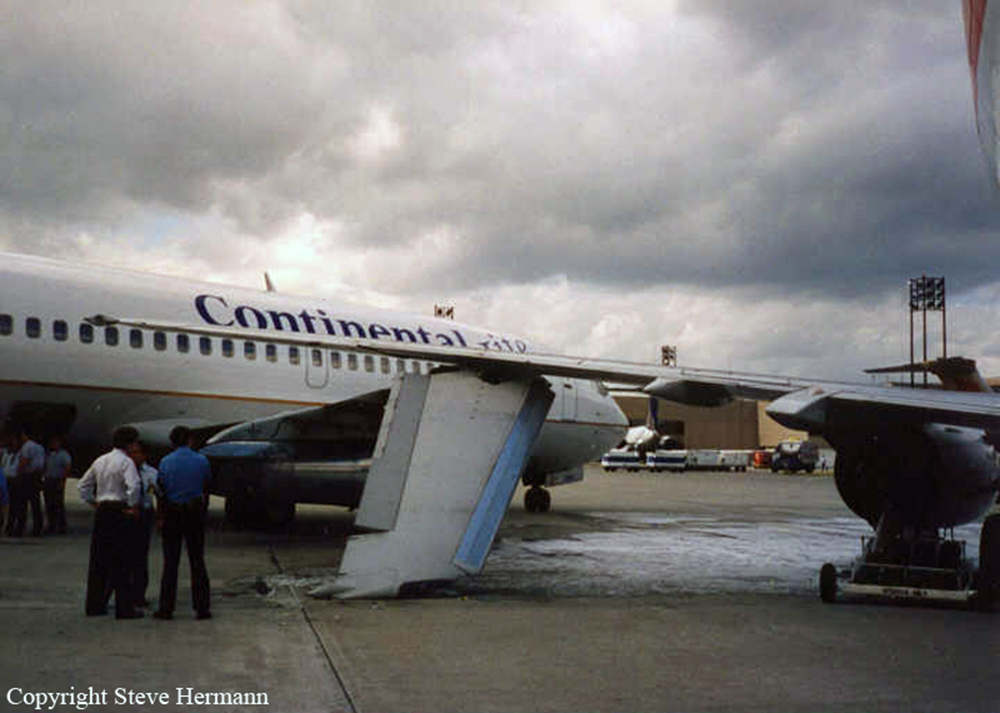
Two technicians took over the airplane from the main Continental maintenance hangar to the gate 41. While approaching the gate, the right wing of the B737 collided with the left wing of a Continental Airlines Boeing 737-300 that was towed from the next gate. While the second B737 was slightly damaged, the right wing of the B737 registered was partially sheared off. There were no casualties but the aircraft was damaged beyond repair.
Probable cause:
Failure of maintenance personnel to follow the taxi checklist resulting in the hydraulic pumps not being turned on.
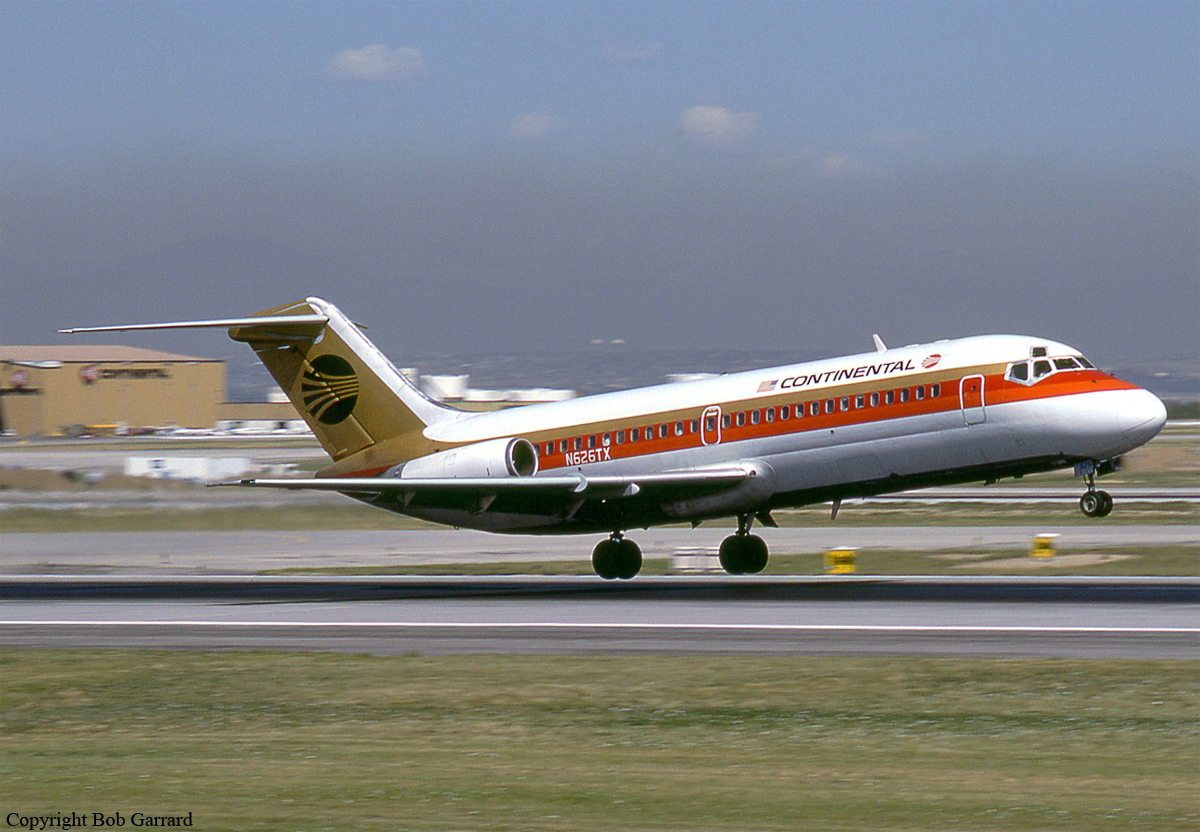
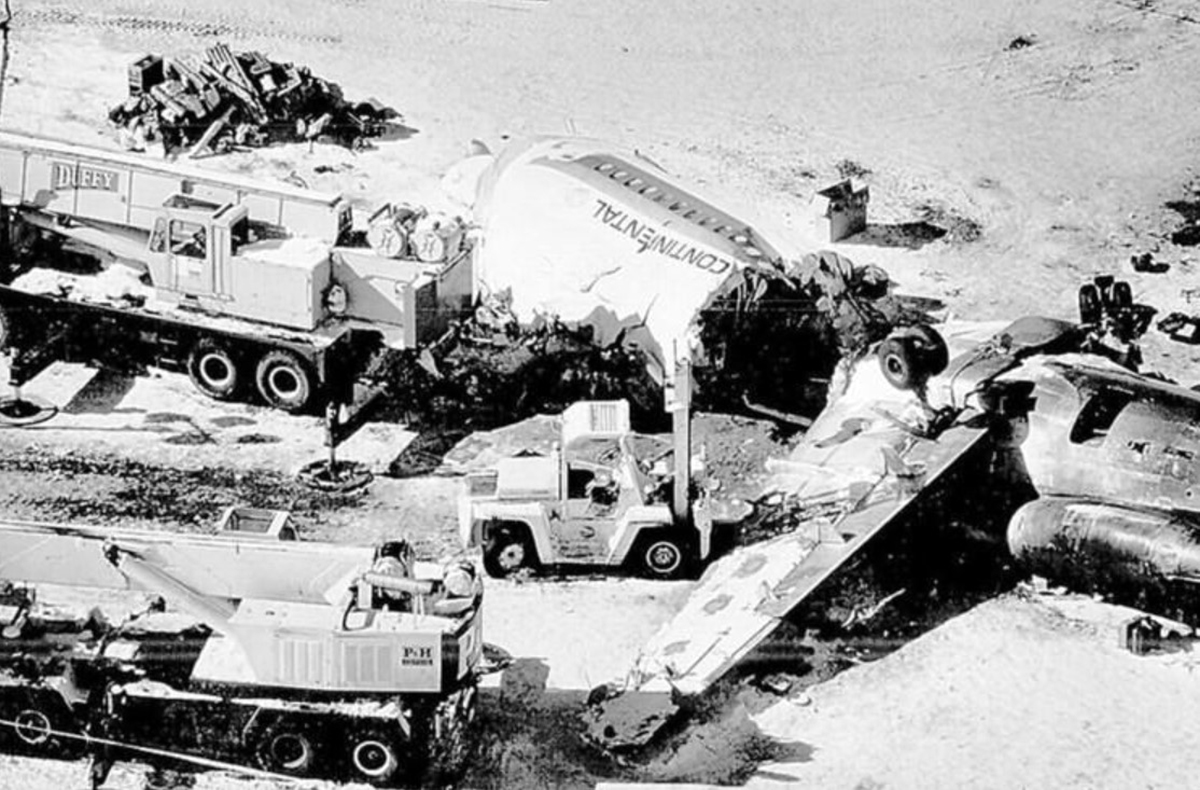
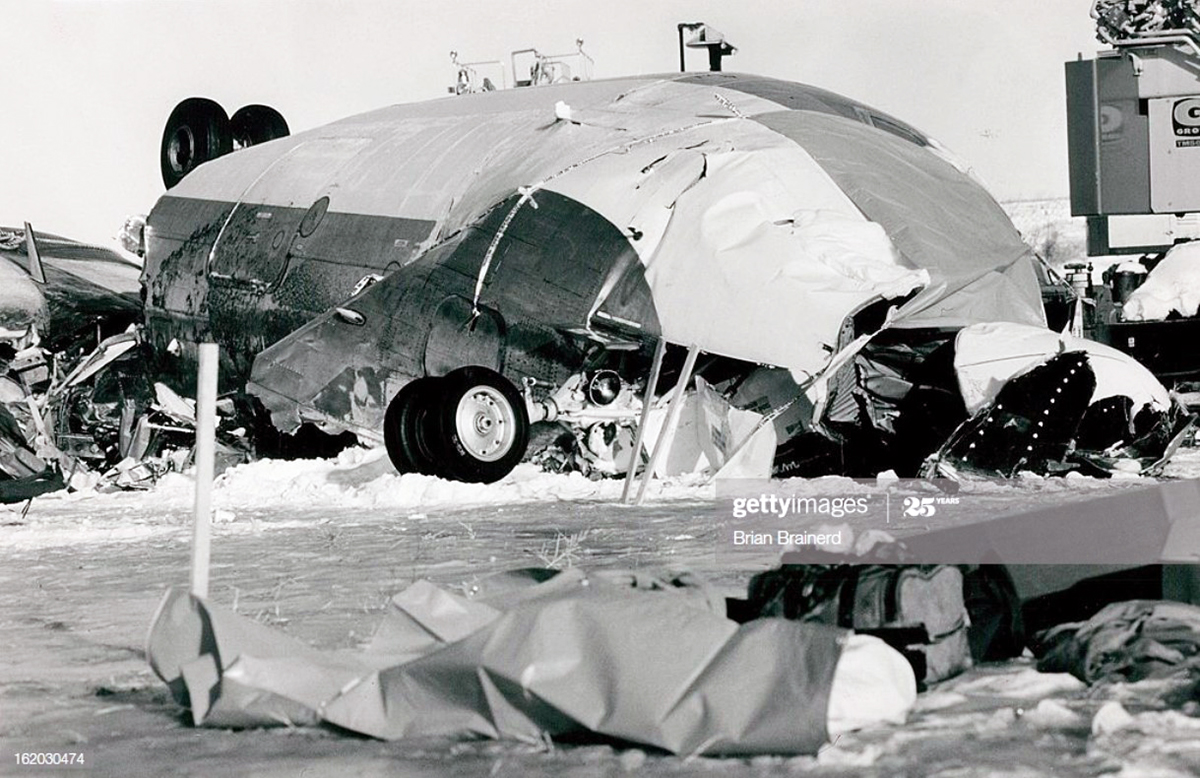
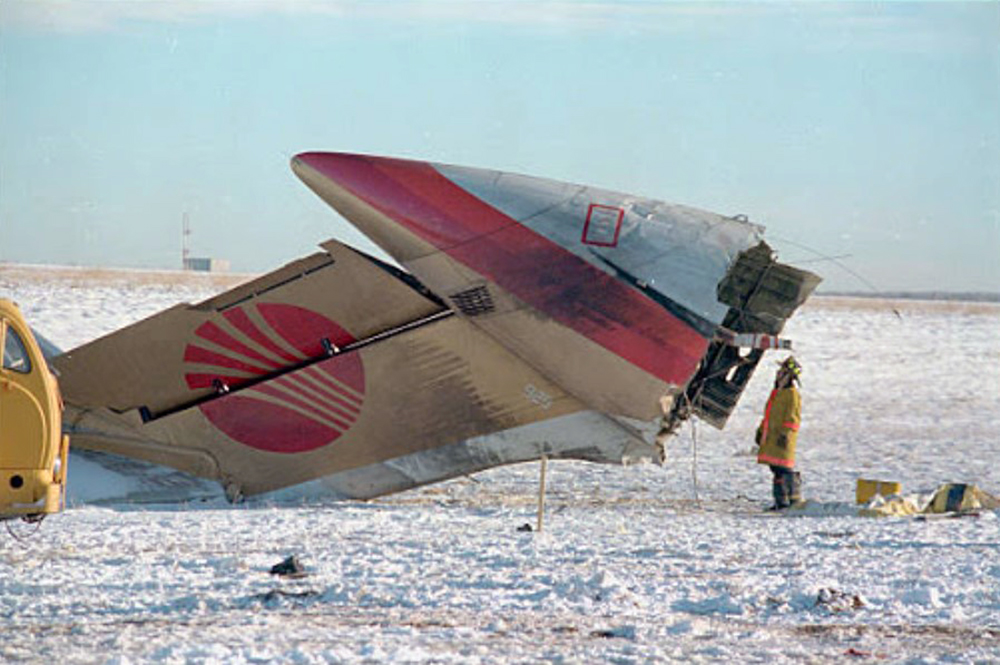
Crash of a Douglas DC-9-14 in Denver: 28 killed
Date & Time:
Nov 15, 1987 at 1415 LT
Operator:
Registration:
N626TX
Survivors:
No
Schedule:
Denver - Boisé
MSN:
45726
YOM:
1966
Flight number:
CO1713
Crew on board:
5
Crew fatalities:
Pax on board:
77
Pax fatalities:
Other fatalities:
Total fatalities:
28
Captain / Total hours on type:
133.00
Copilot / Total hours on type:
36
Aircraft flight hours:
42184
Aircraft flight cycles:
54759
Circumstances:
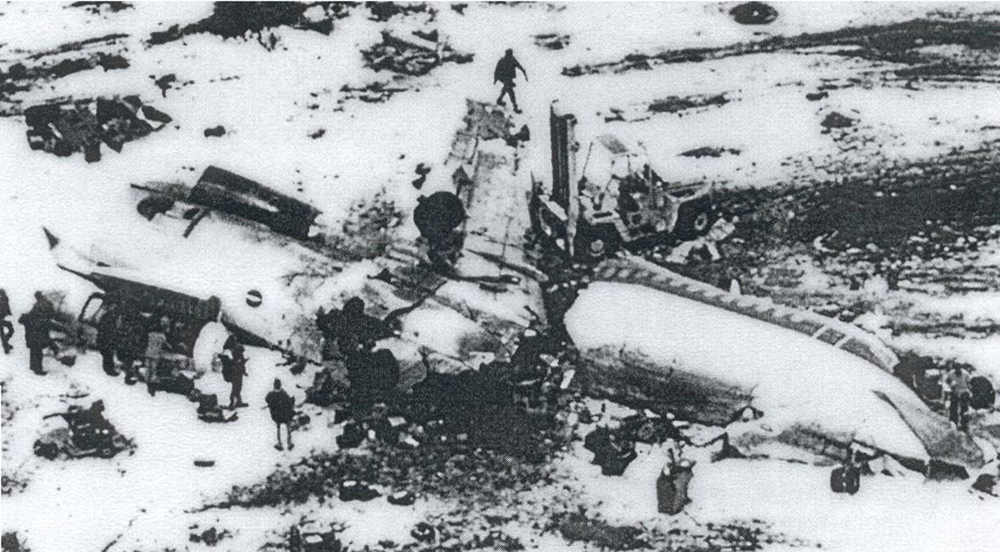
Weather conditions were moderate snow and freezing temperatures. Following a 27 minute delay between deicing and departure, on takeoff the aircraft was over-rotated by the first officer. Aircraft control was lost, the aircraft stalled and impacted off the right side of the runway. Company procedures called for repeat deicing when in icing conditions if a delay exceeds 20 minutes. Confusion between the tower and the flight crew due to procedural errors resulted in the delayed takeoff clearance. Both pilots were inexperienced in their respective crew positions. The captain had 33 hours experience as a DC-9 captain. The first officer had 36 hours jet experience, all in the DC-9. First officer demonstrated weak scan in training and had pilot performance problems with previous employers. First officer was on reserve, and had not flown for 24 days. The trip was assigned to the first officer for proficiency. Flight was first officer's 2nd trip as DC-9 first officer. Wing vortices from a landing aircraft on a parallel runway were not a factor in the accident.
Probable cause:
The captain's failure to have the airplane de-iced a second time after delay before take-off that led to upper wing surface contamination and a loss of control during rapid take-off rotation by the first officer.
Contributing was the absence of regulatory or management controls governing operations by newly qualified flight crew members and the confusion that existed between the flight crew and air traffic controllers that led to the delay in departure.
Contributing was the absence of regulatory or management controls governing operations by newly qualified flight crew members and the confusion that existed between the flight crew and air traffic controllers that led to the delay in departure.
Final Report: