Zone
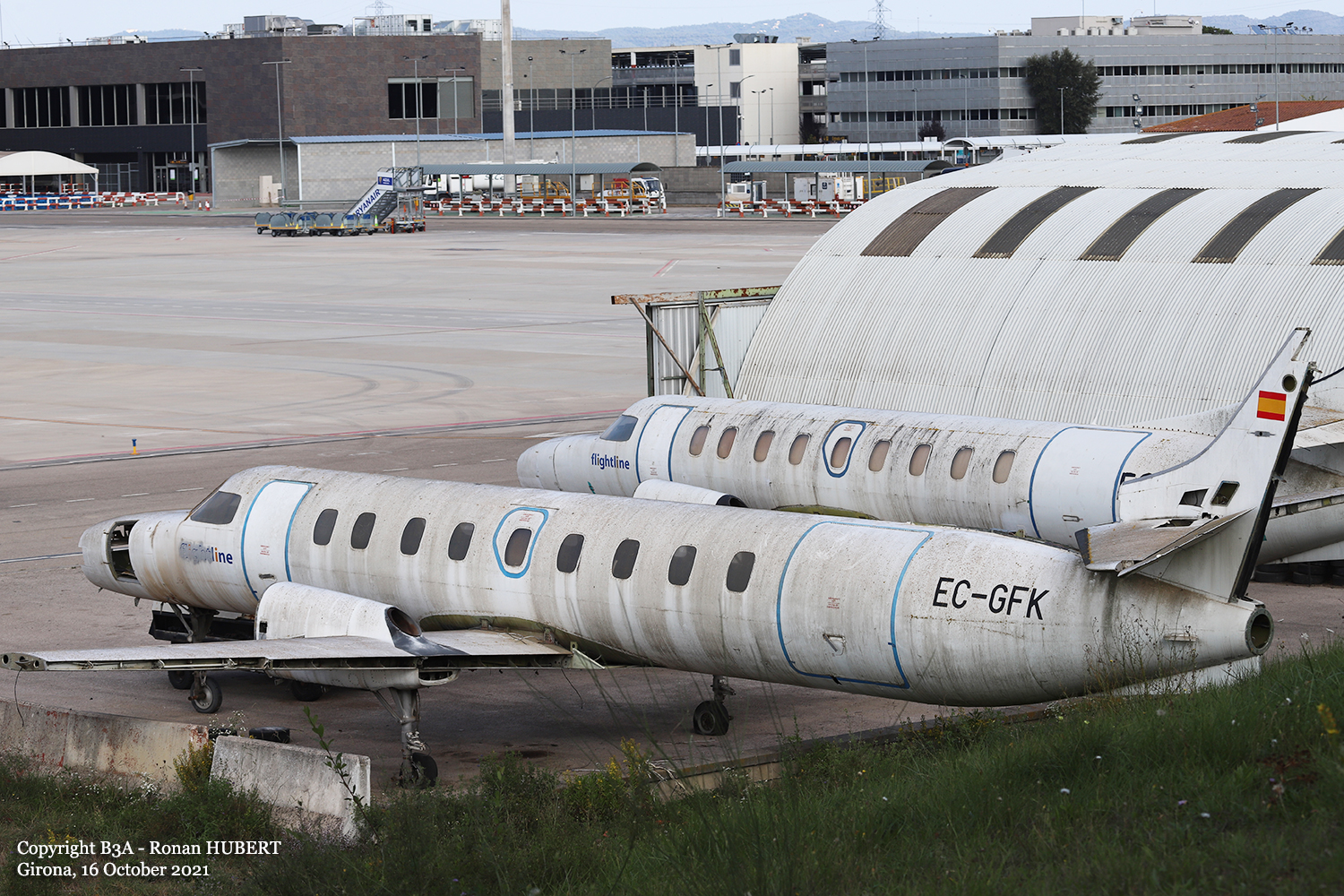
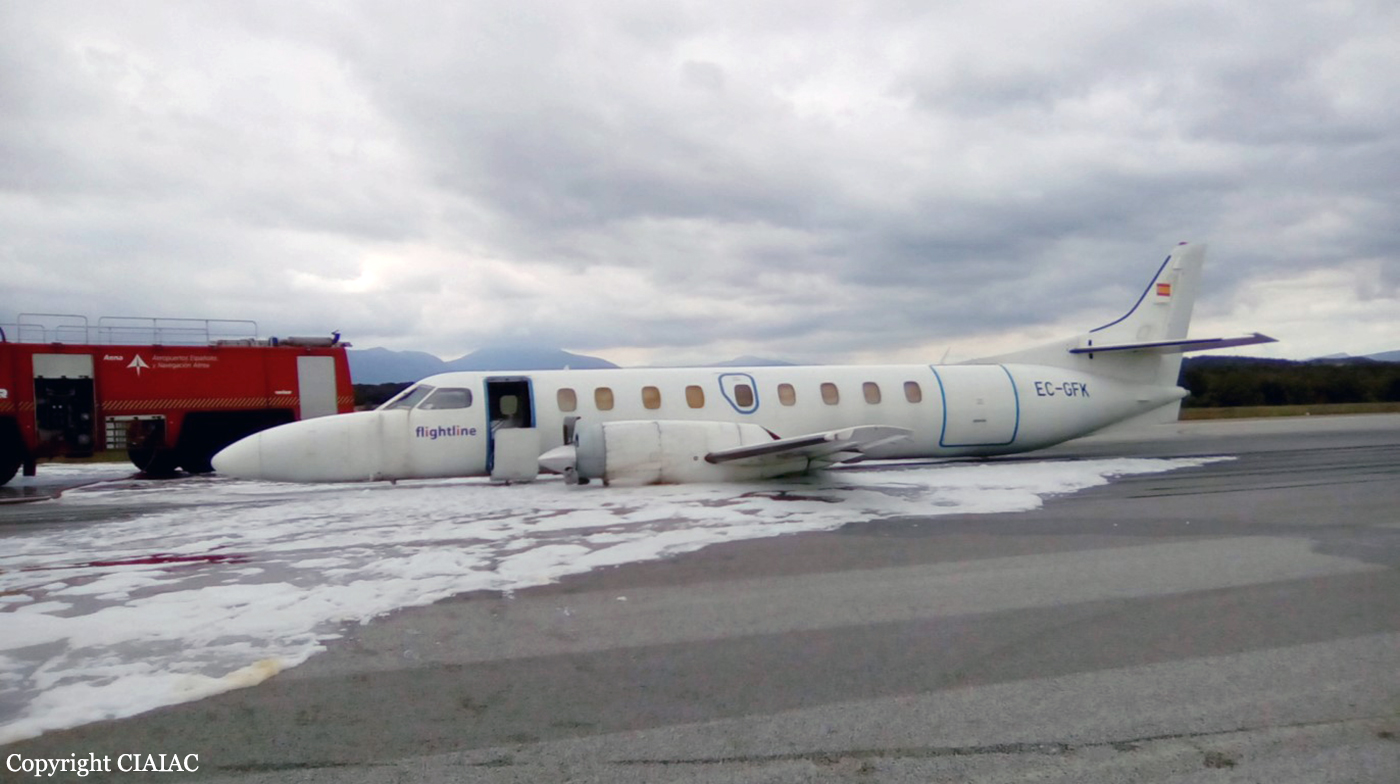
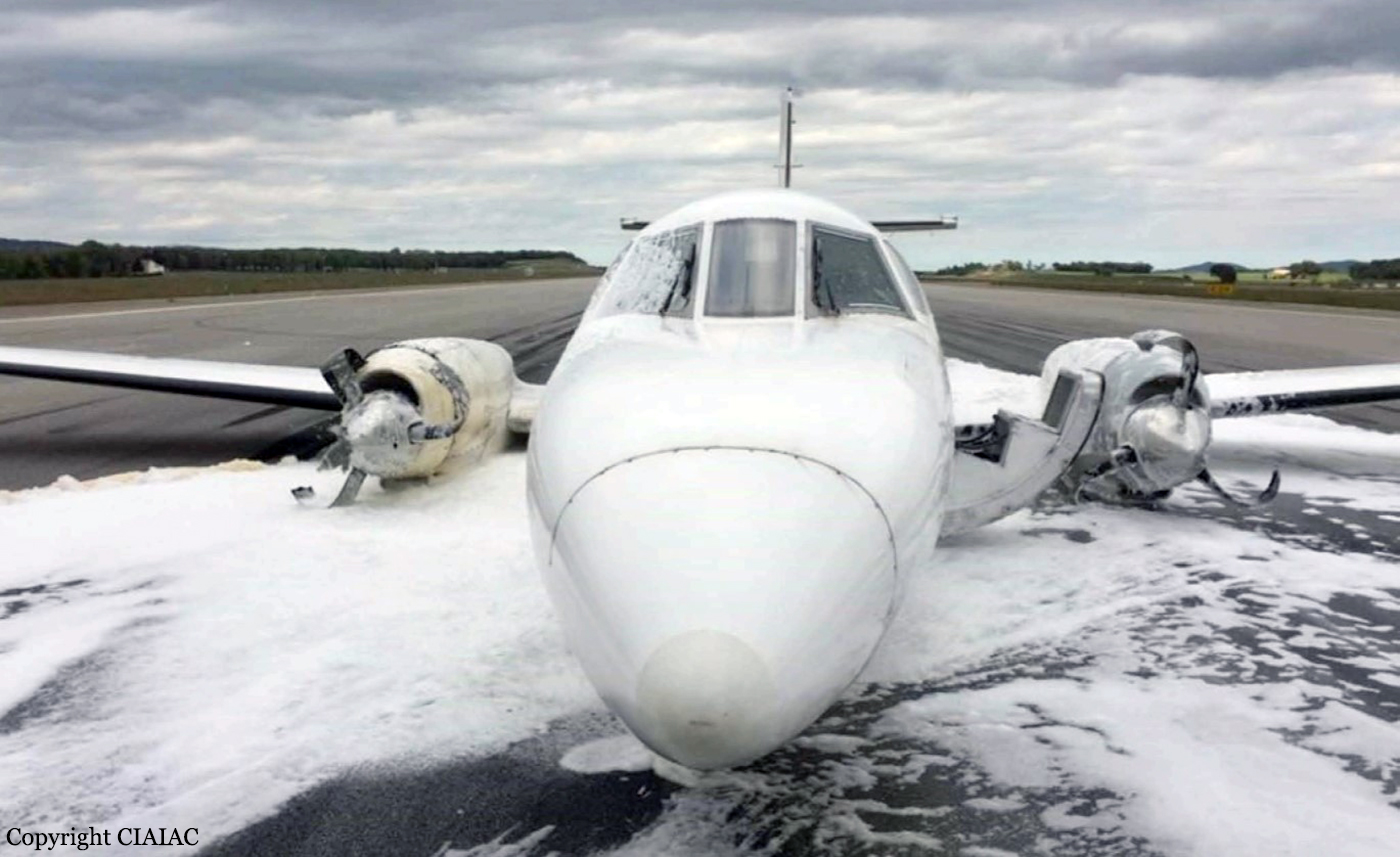
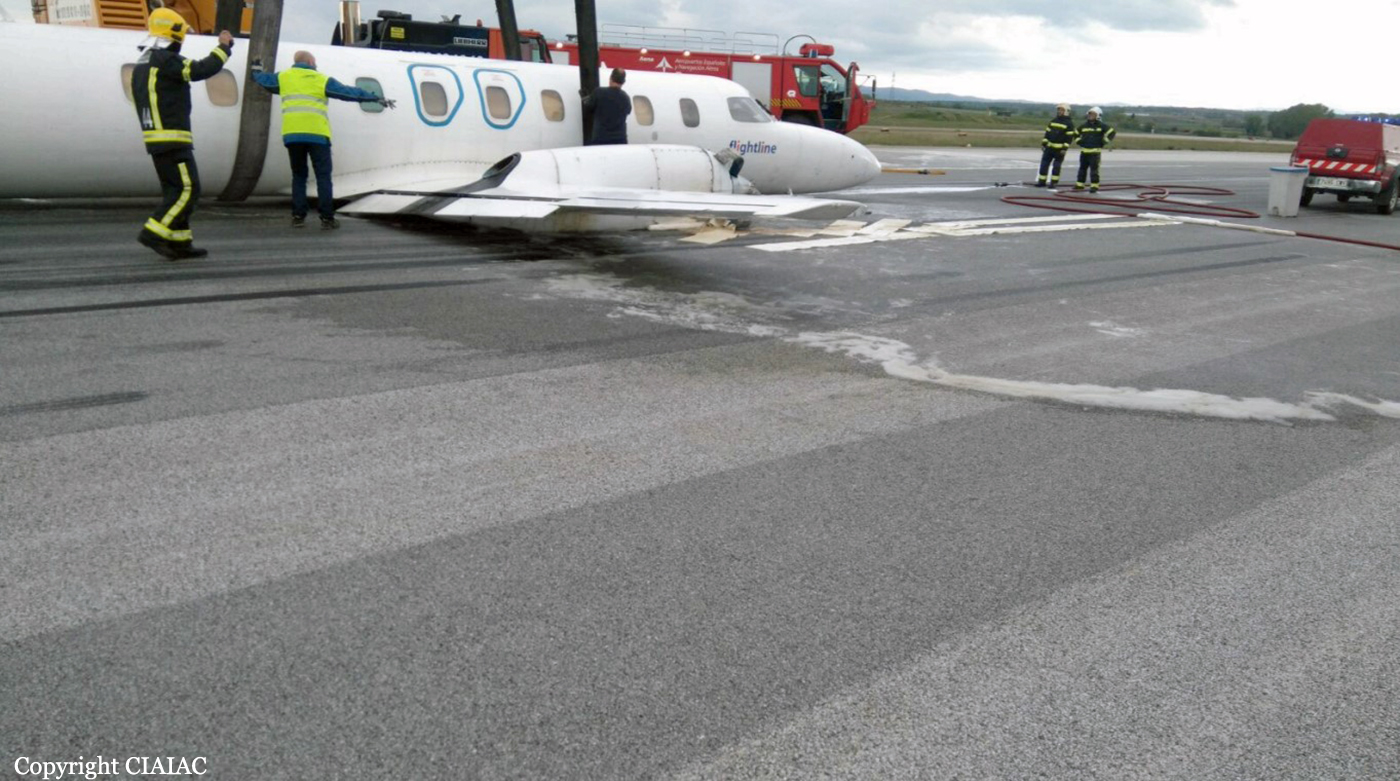
Crash of a Swearingen SA226AT Merlin IVA in Girona
Date & Time:
Apr 24, 2016 at 1520 LT
Operator:

Registration:
EC-GFK
Survivors:
Yes
Schedule:
Girona - Girona
MSN:
AT-062
YOM:
1977
Crew on board:
2
Crew fatalities:
Pax on board:
0
Pax fatalities:
Other fatalities:
Total fatalities:
0
Captain / Total hours on type:
27.00
Copilot / Total hours on type:
6868
Aircraft flight hours:
16128
Circumstances:
The crew (one pilot under supervision and one instructor) departed Girona-Costa Brava on a local training flight. Following two successful landings and touch-and-go manoeuvres, the crew initiated a new approach to complete a full stop landing. The aircraft belly landed and slid for few dozen metres before coming to rest on the runway. Both pilots evacuated safely and the aircraft was damaged beyond repair.
Probable cause:
The cause of the accident was that the crew failed to actuate the lever used to deploy the landing gear. Inadequate presentation, in the operator's operating manuals, of the flight tasks to be performed by each crew member and the timing of these tasks is identified as a contributing factor.
Final Report:
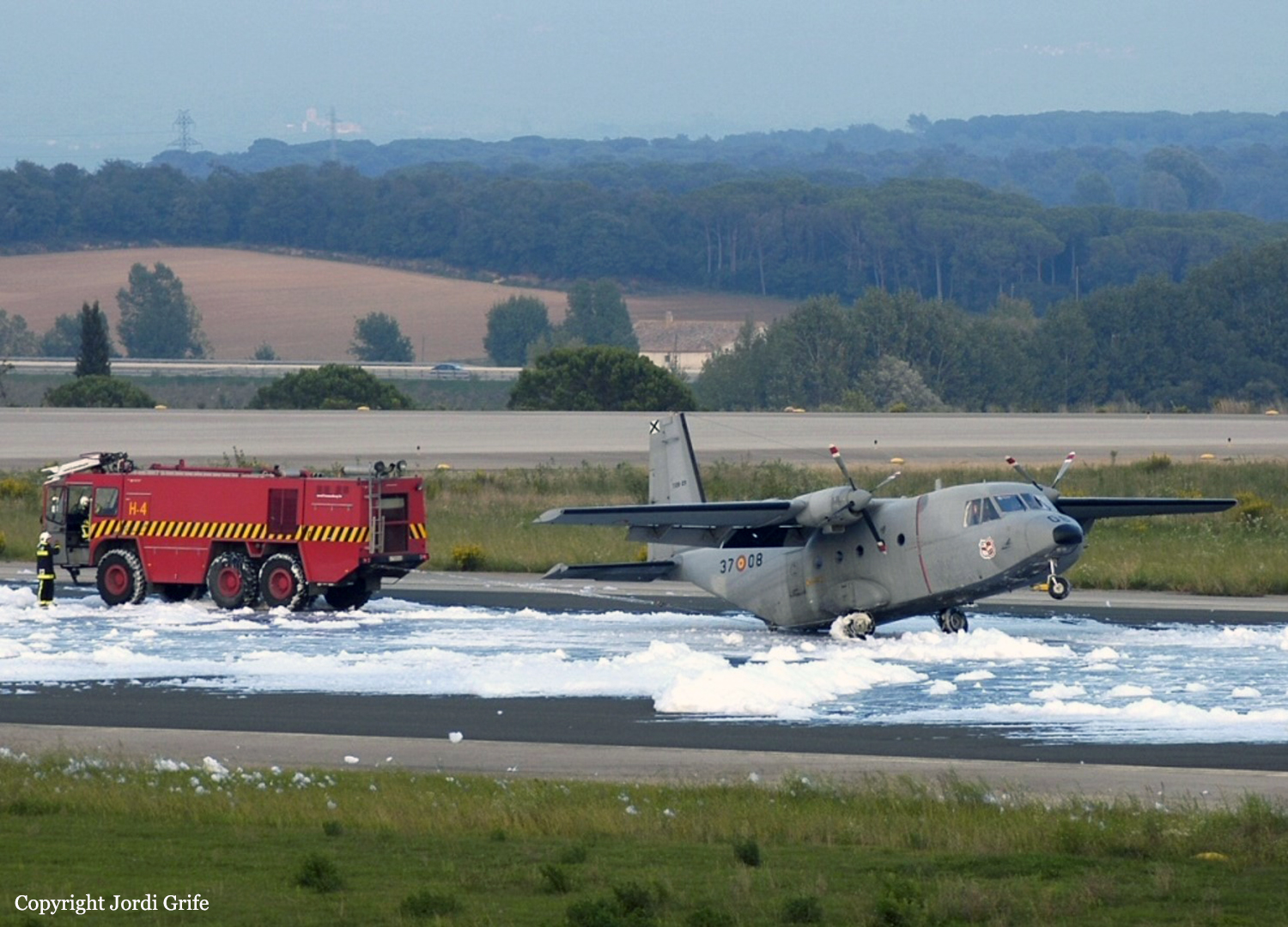
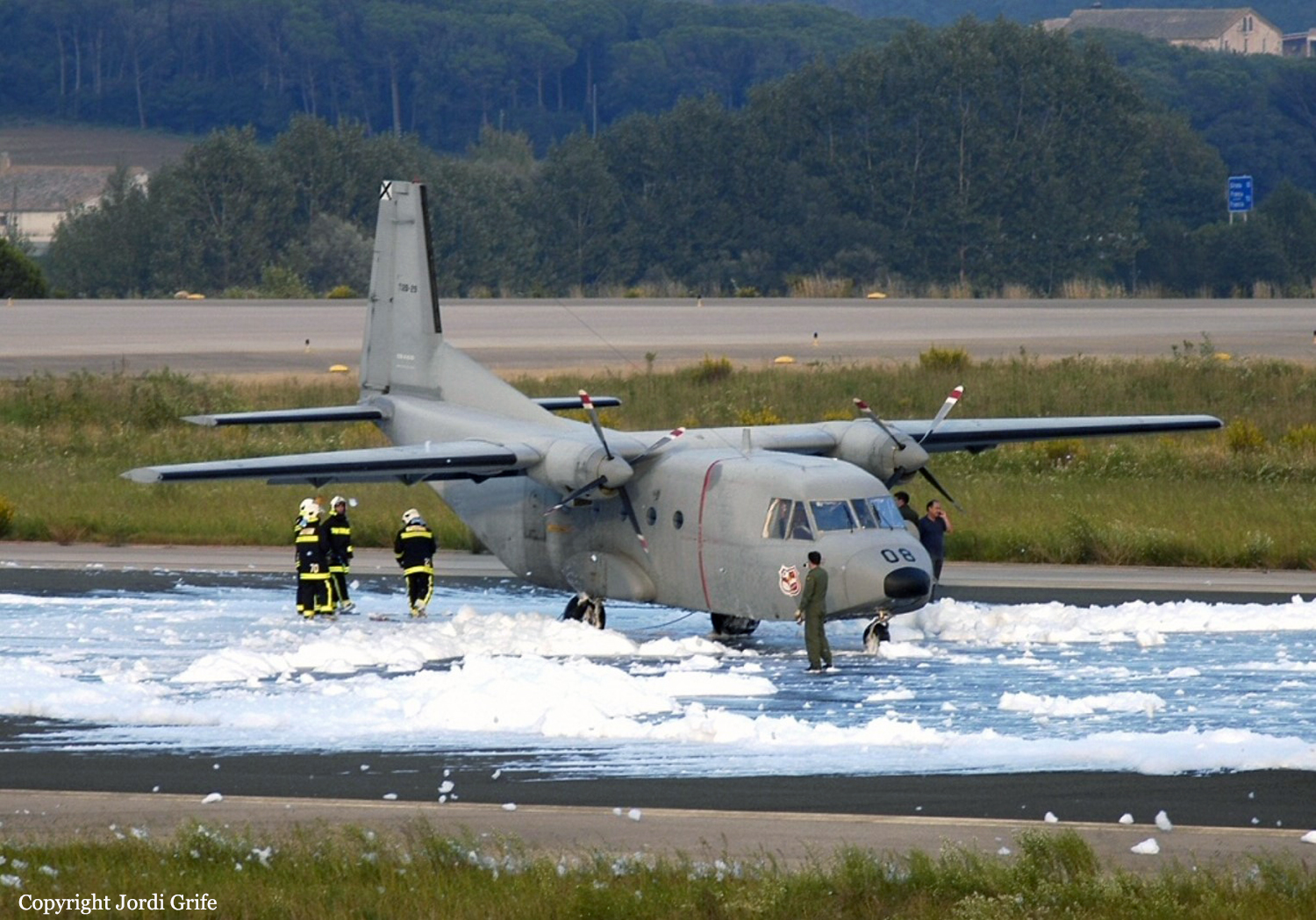
Crash of a Casa 212 Aviocar 100 in Gerona
Date & Time:
Oct 9, 2005
Operator:

Registration:
T.12B-29
Survivors:
Yes
MSN:
51
YOM:
1976
Crew on board:
0
Crew fatalities:
Pax on board:
0
Pax fatalities:
Other fatalities:
Total fatalities:
0
Circumstances:
On final approach to Empuriabrava Airfield, the aircraft was too low, causing the undercarriage to collide with the perimeter fence. Decision was taken to divert to Gerona-Costa Brava Airport. The aircraft landed on a foamed runway and came to rest. There were no casualties but the aircraft was damaged beyond repair.
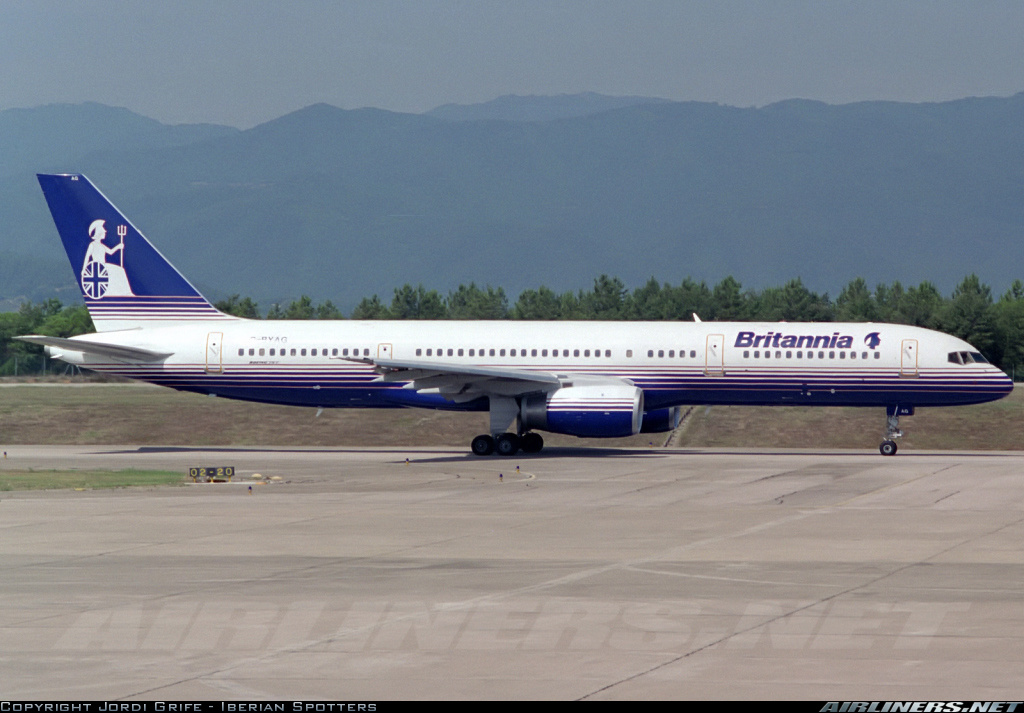
Crash of a Boeing 757-204 in Gerona: 1 killed
Date & Time:
Sep 14, 1999 at 2347 LT
Operator:

Registration:
G-BYAG
Survivors:
Yes
Schedule:
Cardiff - Gerona
MSN:
26965
YOM:
1993
Flight number:
BAL226A
Crew on board:
9
Crew fatalities:
Pax on board:
236
Pax fatalities:
Other fatalities:
Total fatalities:
1
Captain / Total hours on type:
3562.00
Copilot / Total hours on type:
1145
Aircraft flight hours:
26429
Aircraft flight cycles:
9816
Circumstances:
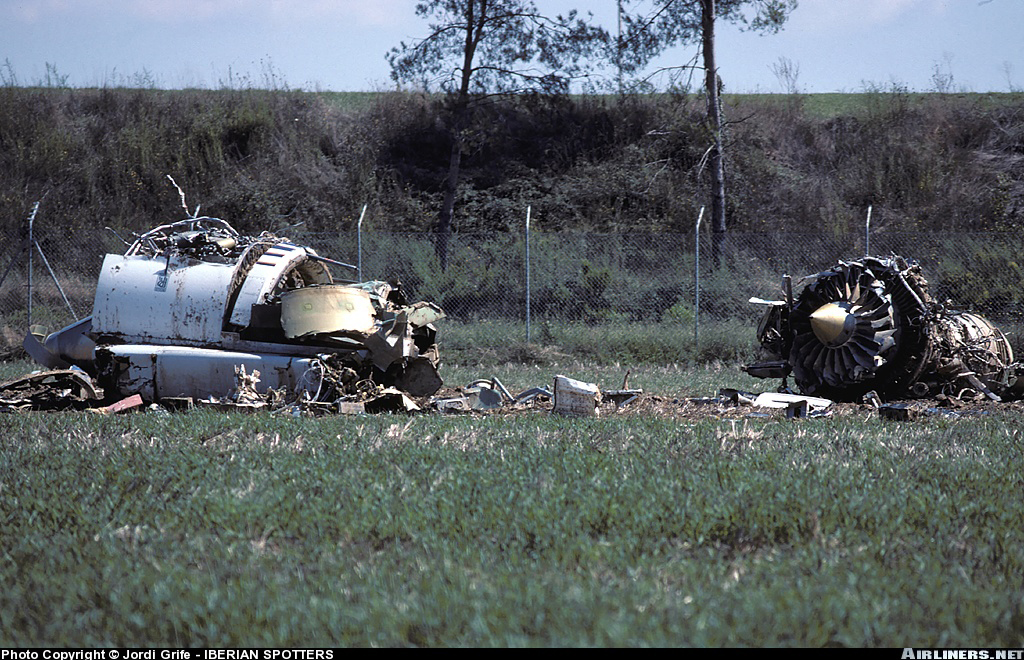
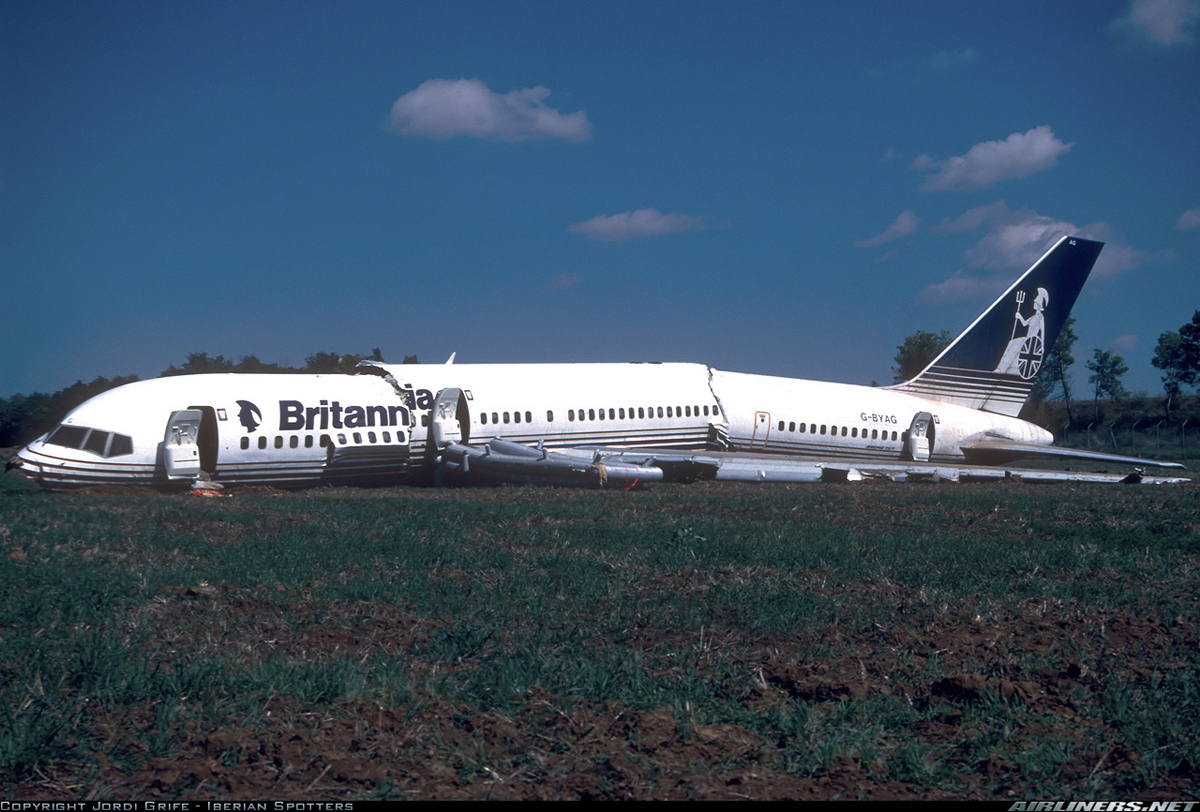
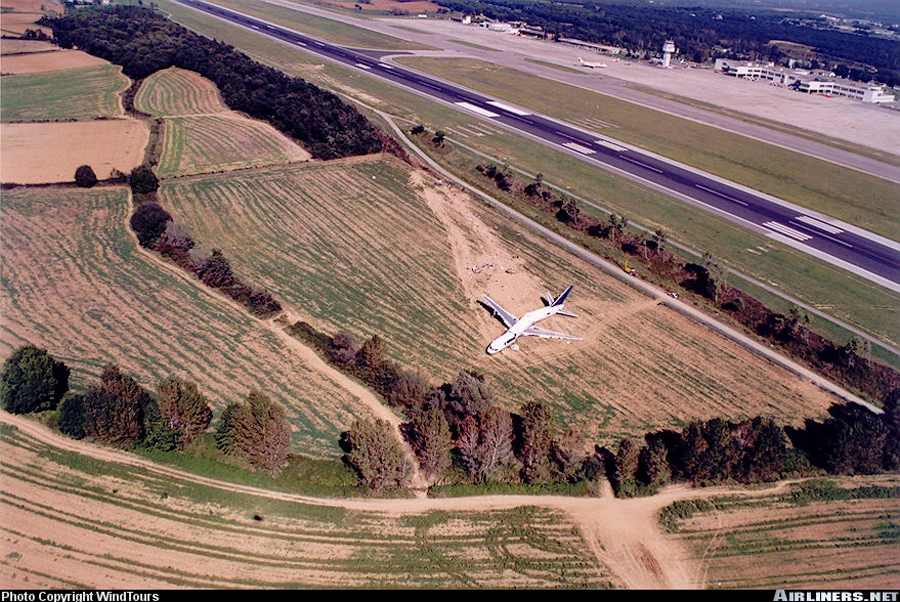
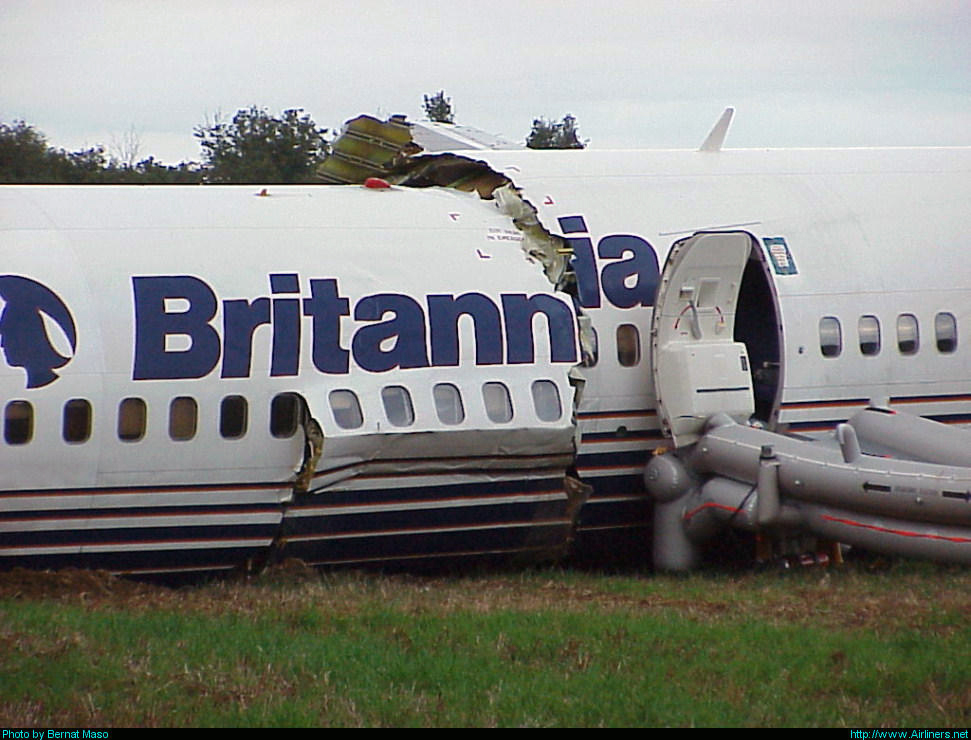
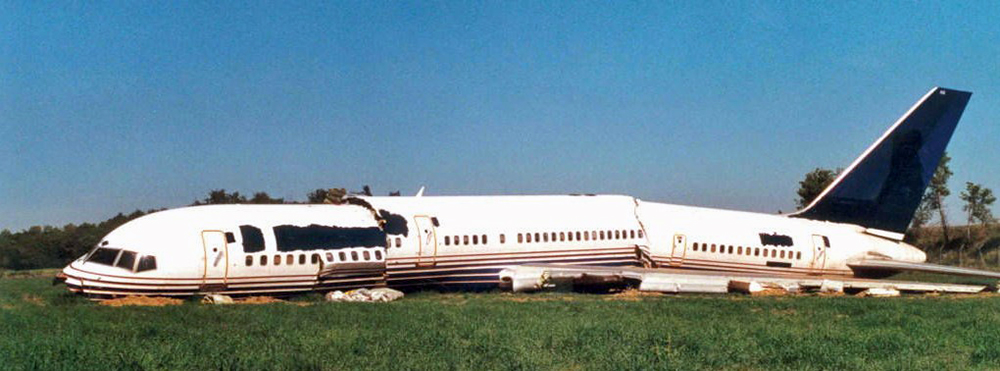
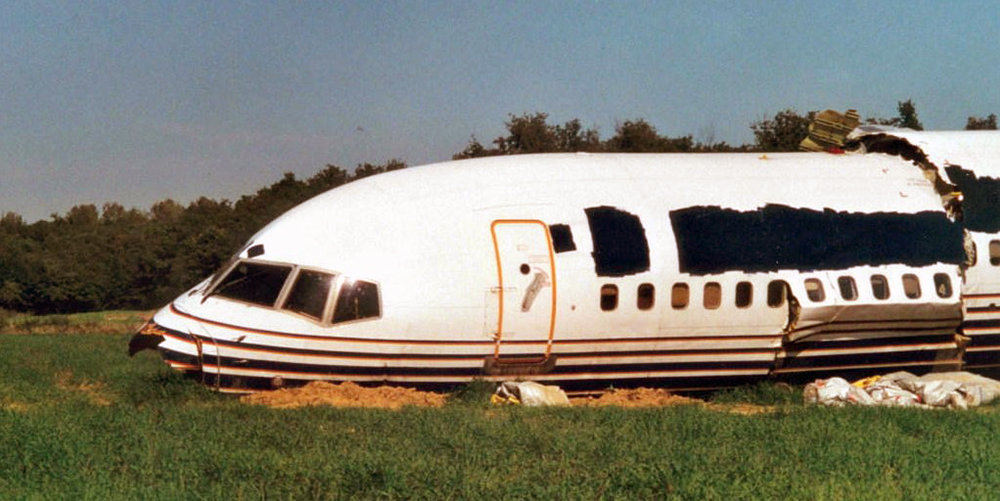
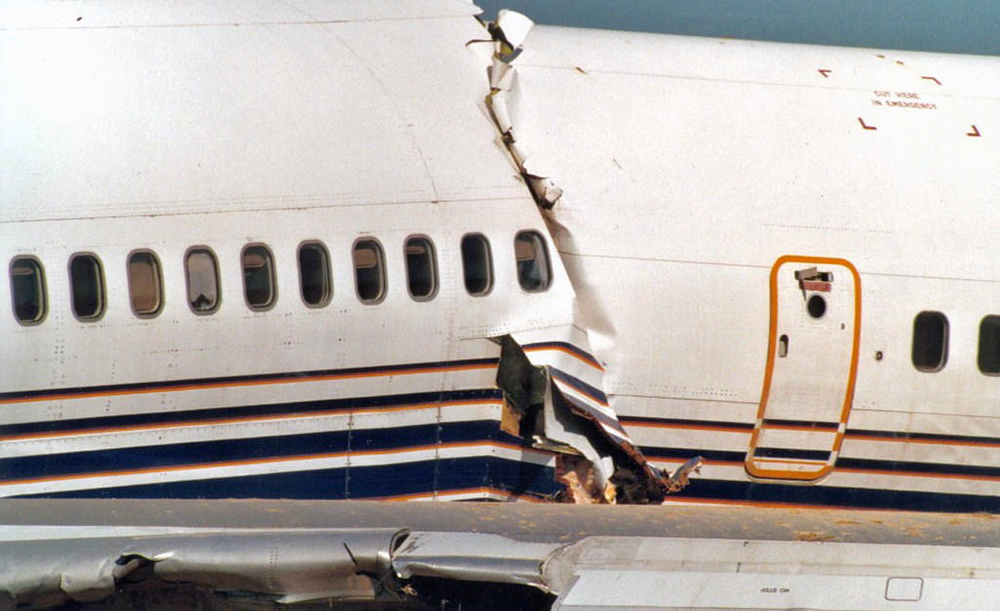
Flight BY226A took off from Cardiff at 20:40 local time for a charter flight to Gerona. The crew contacted Gerona ATC at 23:14 hours. With a thunderstorm in the area, flight conditions were turbulent. ATC offered the option of a runway 20 ILS approach, but the crew decided to fly a VOR/DME procedure to runway 02 considering the prevailing conditions of wet runway, downslope and tailwind. At 23:33, in full landing configuration and just after passing 10 DME, the crew were advised of a change of wind to 200 degrees at 12 knots. Upon becoming visual the aircraft was not adequately aligned with the runway and the change in wind direction now favored the reciprocal runway so a missed approach was carried out. The aircraft was now positioned for an ILS approach to runway 20. During the approach the crew noted that the company minimum amount of fuel for a diversion to Barcelona (2,800 kg) had been reached. At 23:46:58 hrs, at 250 feet above ground level (agl) and on the correct glidepath, the captain disconnected the autopilot and autothrottle. The aircraft began to deviate above the glidepath. Twelve seconds later, at 110 feet agl, the captain briefly pushed the control column almost fully forward before returning it to an approximately neutral position. The aircraft pitched down to -4.5° nose down attitude and then back up to -2.5° nose down attitude. During this period the captain lost his visual reference with the runway because all runway lights had suddenly failed. The GPWS then warned of the excessive sink rate and the thrust levers being retarded to idle. At 21:47:17 the aircraft touched down in a 2° nose down attitude and a recorded peak normal (vertical) acceleration of 3.11 g. The aircraft bounced, the nose pitched up to +3.3°, a roll to the right commenced, both the thrust levers advanced and the power on both engines increased to 1.18 EPR. Full nose down elevator was applied and held until a second touchdown, resulting in a rapid pitch down. The aircraft made the second touchdown 1.9 seconds after the first at -0.5° pitch attitude (nose down), with a pitch rate of 7°/sec nose down and 4.2° of right roll. After a run of approximately 343 meters across flat grassland beside the runway, the aircraft ran diagonally over a substantial earth mound adjacent to the airport boundary, becoming semi-airborne as a result. At the far side of the mound a number of medium sized trees were struck and severed, predominantly by the right wing, and the right engine nacelle struck the boundary fence. The aircraft, yawed considerably to the right of its direction of travel, then passed through the fence, re-landed in a field and both main landing gears collapsed. It came to rest after a 244 meter slide across the field, with the fuselage almost structurally severed at two points.
Probable cause:
It is considered that the most probable cause of the accident was the destabilization of the approach below decision height with loss of external visual references and automatic height callouts immediately before landing, resulting in touchdown with excessive descent rate in a nose down attitude. The resulting displacement of the nose landing gear support structure caused disruption to aircraft systems that led to uncommanded forward thrust increase and other effects that severely aggravated the consequences of the initial event.
Contributory factors were:
- Impairment of the runway visual environment as a result of darkness and torrential rain and the extinguishing of runway lights immediately before landing;
- Suppression of some automatic height callouts by the GPWS 'SINK RATE' audio caution;
- The effect of shock or mental incapacitation on the PF at the failure of the runway lights which may have inhibited him from making a decision to go-around;
- The absence of specific flight crew training in flight simulators to initiate a go-around when below landing decision height;
- Insufficient evaluation of the weather conditions, particularly the movement and severity of the storm affecting the destination airport.
Contributory factors were:
- Impairment of the runway visual environment as a result of darkness and torrential rain and the extinguishing of runway lights immediately before landing;
- Suppression of some automatic height callouts by the GPWS 'SINK RATE' audio caution;
- The effect of shock or mental incapacitation on the PF at the failure of the runway lights which may have inhibited him from making a decision to go-around;
- The absence of specific flight crew training in flight simulators to initiate a go-around when below landing decision height;
- Insufficient evaluation of the weather conditions, particularly the movement and severity of the storm affecting the destination airport.
Final Report:
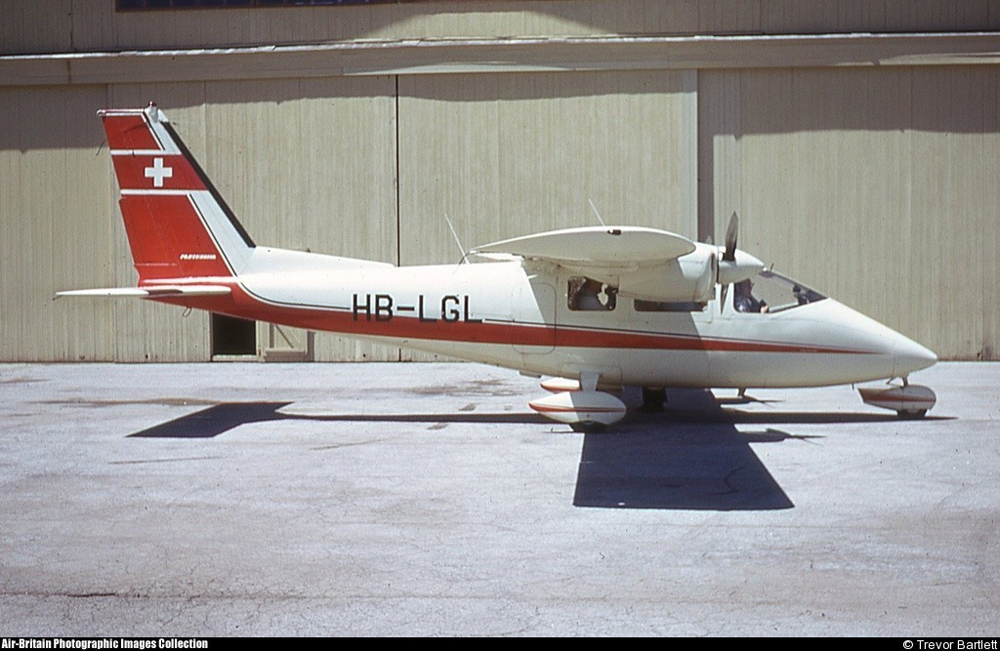
Crash of a Partenavia P.68N near Cuneo: 6 killed
Date & Time:
Oct 17, 1986
Operator:

Registration:
HB-LGL
Survivors:
No
Schedule:
Ascona - Gerona
MSN:
05
YOM:
1975
Crew on board:
1
Crew fatalities:
Pax on board:
5
Pax fatalities:
Other fatalities:
Total fatalities:
6
Circumstances:
En route from Ascona, Ticino, to Gerona, weather conditions deteriorated. In limited visibility, the pilot failed to realize his altitude was insufficient when the aircraft struck the slope of Mt Bindino located near Cuneo. All six occupants were killed.
Probable cause:
Controlled flight into terrain.