Crash of a Cessna 208B Grand Caravan in Vacamonte
Date & Time:
Aug 16, 2004 at 0835 LT
Operator:

Registration:
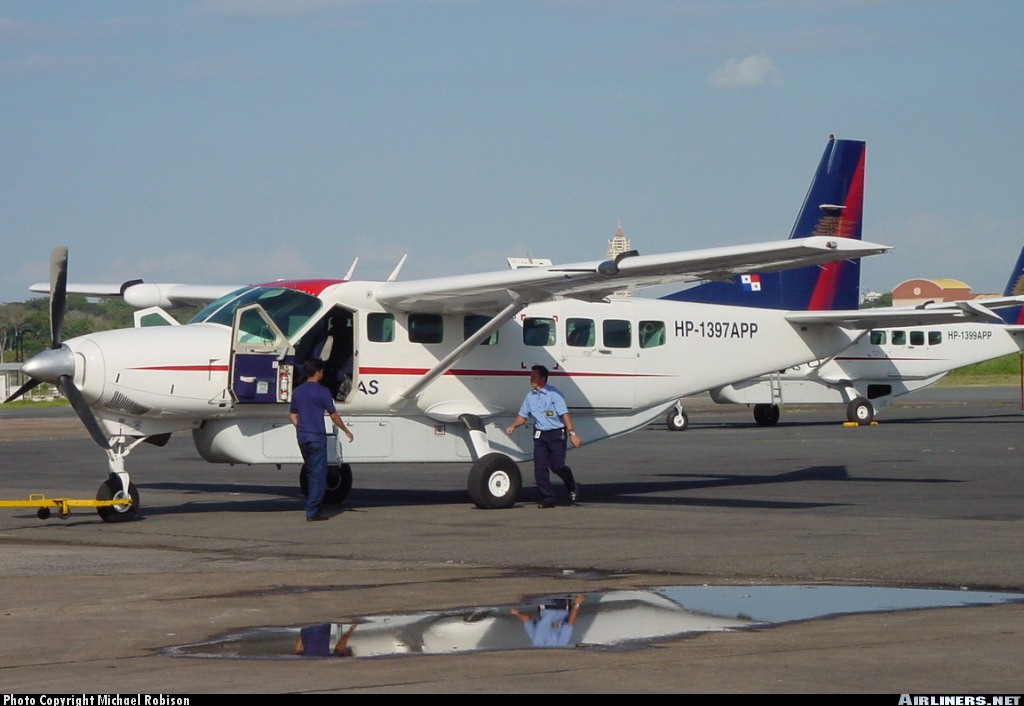
HP-1397APP
Survivors:
Yes
Schedule:
Panama City – Chitré
MSN:
208B-0613
YOM:
1997
Flight number:
WL460
Crew on board:
2
Crew fatalities:
Pax on board:
5
Pax fatalities:
Other fatalities:
Total fatalities:
0
Captain / Total hours on type:
736.00
Copilot / Total hours on type:
722
Aircraft flight hours:
9112
Aircraft flight cycles:
17518
Circumstances:
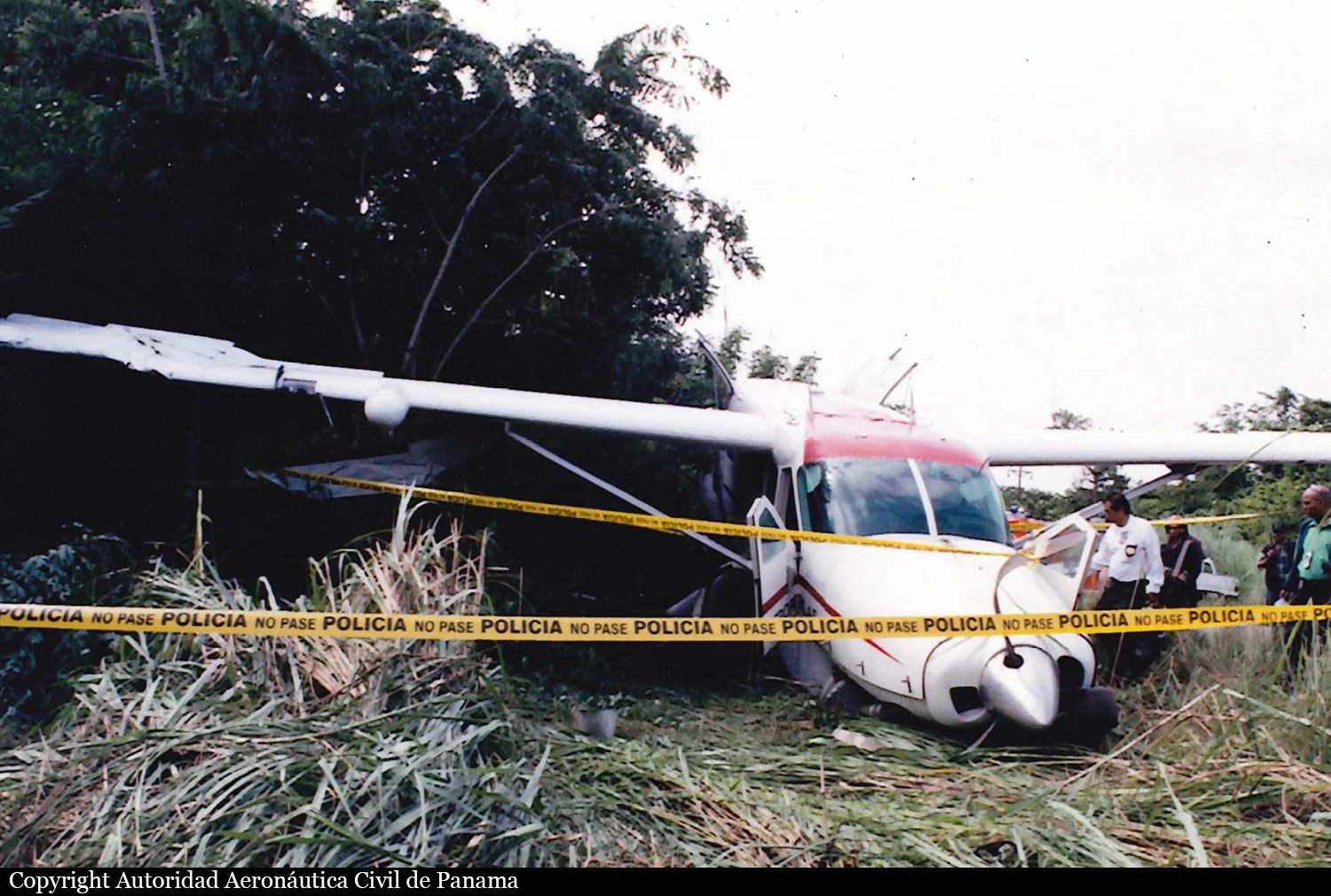
After takeoff from Panama City-Marcos A. Gelabert Airport Runway 36, the crew was cleared to climb to 6,000 feet. Once this altitude was reached, the crew heard a loud noise come from the engine that stopped. The propeller was feathered and the crew declared an emergency. The pilot reduced his altitude and attempted an emergency landing on a road located in Vacamonte when the airplane struck trees and crashed on the shoulder of the road. All seven occupants escaped uninjured while the airplane was damaged beyond repair.
Crew:
Luis Alberto Chavez Ortega, pilot,
Luis Suira Vega, copilot.
Crew:
Luis Alberto Chavez Ortega, pilot,
Luis Suira Vega, copilot.
Probable cause:
The cause of the accident was the sudden stoppage of the engine due to the detachment of a blade from the compressor turbine disc which broke several blades and internal parts of the engine.
The following factors were considered as contributing:
- The sudden stoppage of the engine.
- The lack of a nearby runway relative to the flight altitude.
- The time lost in making the decision to land the aircraft, due to the uncertainty at the moment regarding altitude loss and the aircraft's gliding.
- The area chosen for the forced landing due to the circumstances, as there were obstacles that were difficult to avoid in order to make contact with the pavement such as automobiles, a tractor, trees, and the narrowness of the pavement necessary to keep the airplane aligned on the landing path and manage to stop it on the two-lane road.
The following factors were considered as contributing:
- The sudden stoppage of the engine.
- The lack of a nearby runway relative to the flight altitude.
- The time lost in making the decision to land the aircraft, due to the uncertainty at the moment regarding altitude loss and the aircraft's gliding.
- The area chosen for the forced landing due to the circumstances, as there were obstacles that were difficult to avoid in order to make contact with the pavement such as automobiles, a tractor, trees, and the narrowness of the pavement necessary to keep the airplane aligned on the landing path and manage to stop it on the two-lane road.
Final Report: