Country
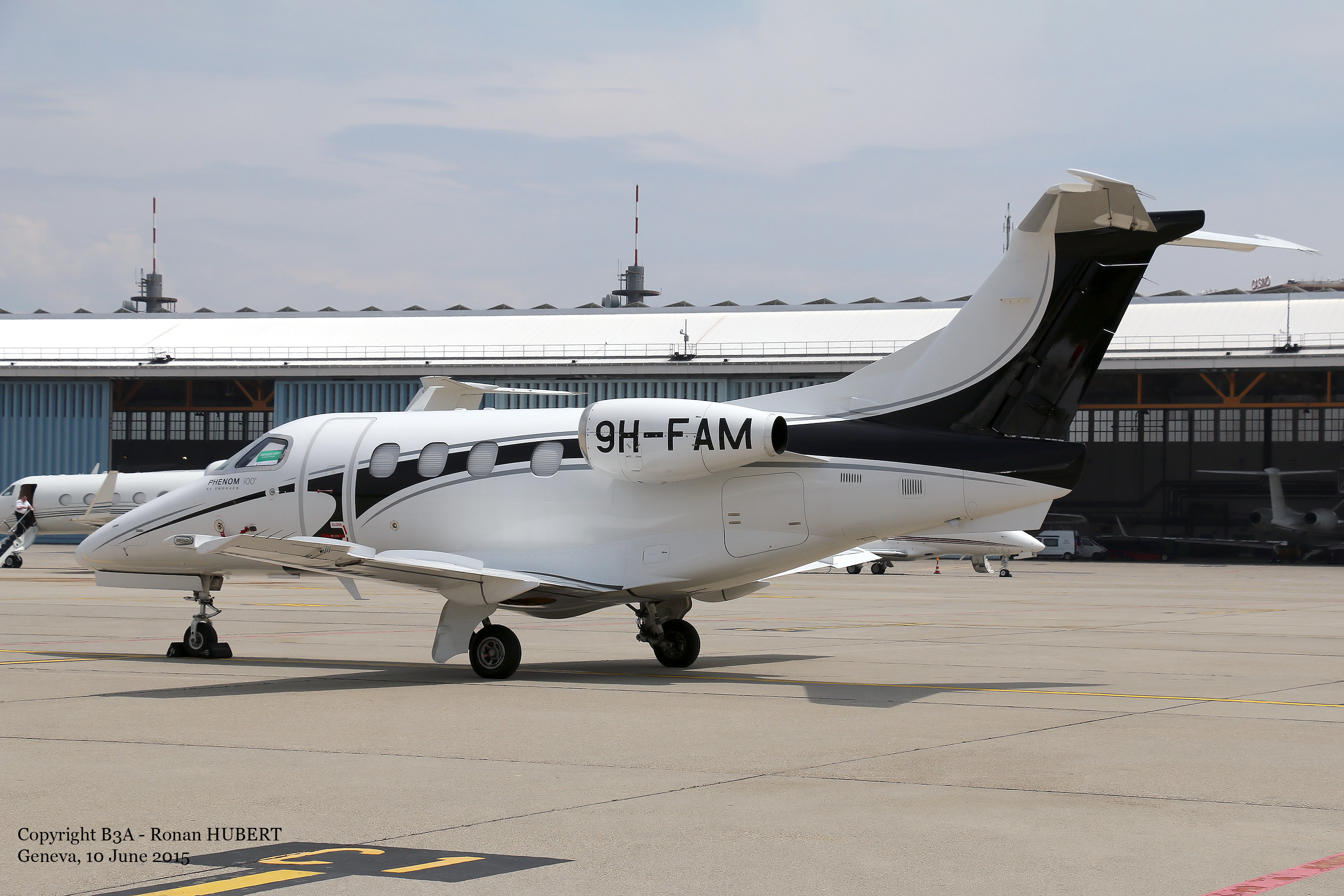
Crash of an Embraer EMB-500 Phenom 100 in Paris
Date & Time:
Feb 8, 2021 at 1100 LT
Operator:

Registration:
9H-FAM
Survivors:
Yes
Schedule:
Venice - Paris
MSN:
500-00100
YOM:
2009
Crew on board:
2
Crew fatalities:
Pax on board:
1
Pax fatalities:
Other fatalities:
Total fatalities:
0
Captain / Total hours on type:
2961.00
Copilot / Total hours on type:
425
Circumstances:
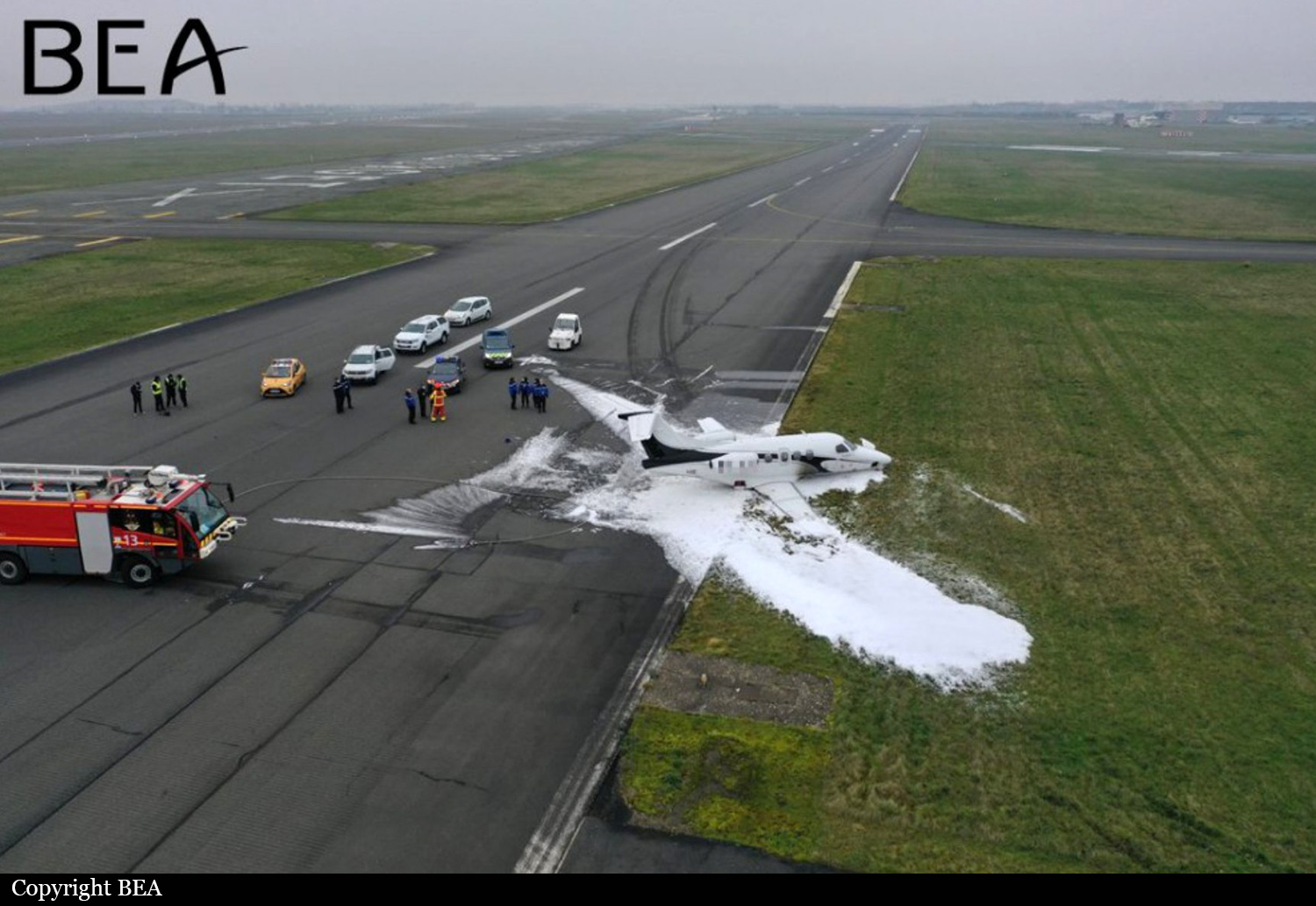
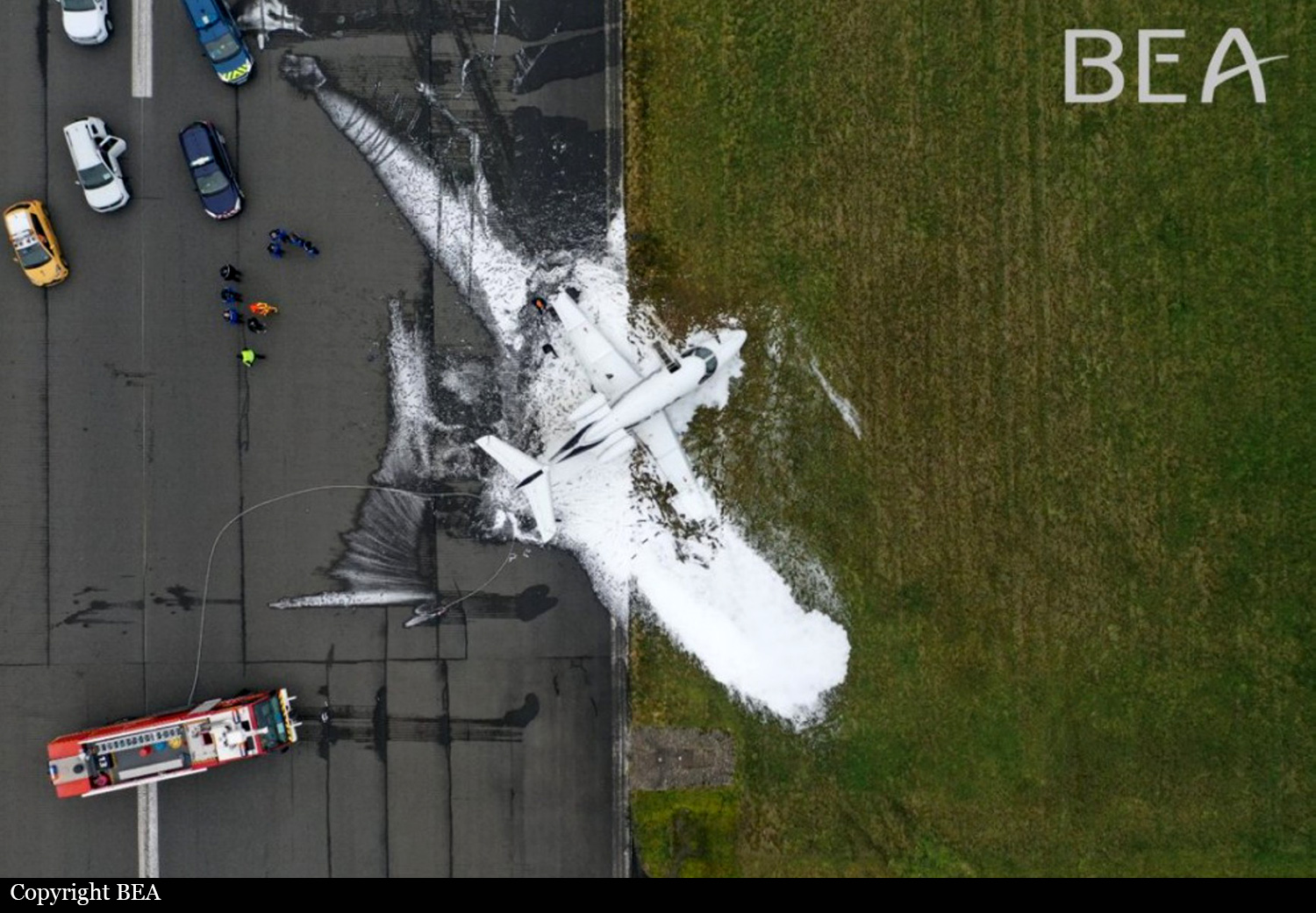
The crew, composed of a captain and a co-pilot, carried out a passenger commercial air transport flight from Venice (Italy) bound for Le Bourget (France). They took off from Venice at 08:17 with one passenger on board. The co-pilot was the PF for this leg. During the flight, the crew discussed the weather conditions forecast at their destination and mentioned the possibility of snow and the runway being contaminated. They tested the aeroplane’s anti-icing system and observed that it was operating. Between 09:16 and 09:20, the crew determined the speeds to be complied with for the approach and landing by consulting the Flight Manual charts. They selected the speeds of 97 kt for the VRef, 102 kt for the VAC and 121 kt for the VFS. These speed values correspond to those suitable for landing in non-icing conditions. At 09:20, the aeroplane was at FL 340, the crew listened to the Le Bourget ATIS which especially mentioned severe icing between 3,000 ft and 5,000 ft. The captain told the co-pilot that unlike what had been forecast, there was not going to be any snow. He mentioned the icing and explained that this was a common phenomenon at Le Bourget. The crew carried out the approach briefing and planned for an ILS approach to runway 27 with the flaps in the “FULL” configuration and the autopilot engaged. At 09:50, the crew contacted the Paris-Charles de Gaulle approach controller who cleared them to descend to 5,000 ft. The engine anti-icing and the windshield demisting/de-ice system were activated. The controller cleared the descent to 3,000 ft QNH and then the ILS 27 approach to Le Bourget. In level flight at 3,000 ft QNH, the aeroplane intercepted the Localizer signal at around 14 NM from Le Bourget. The captain announced the activation of the WINGSTAB (de-ice) system (see paragraph 3.3) and confirmed he could see built-up ice breaking up. The co-pilot added that he saw a small part coming away on his side. The de-ice system was deactivated 21 s later. At 09:58, the aeroplane intercepted the Glide signal at around 8.5 NM from Le Bourget airport. The crew were transferred to the Le Bourget tower controller who cleared them to land on runway 27 and indicated that the wind was coming from 350° at 4 kt. At 10:00, the aeroplane was at 3.8 NM from Le Bourget, it flew through 1,380 ft QNH in descent at -360 ft/min and an indicated airspeed of 135 kt. The flaps were in the FULL configuration and the landing gears were extended. The crew carried out the before landing check-list. The captain announced that the engine anti-icing system was deactivated and added that he could also leave it activated as the temperature was 0 °C. He announced that he had runway 27 in sight. At 468 ft QNH at an airspeed of 100 kt, the approach was stabilized and the autopilot disengaged. At 10:01, shortly before reaching the DH (200 ft), the captain announced that the aeroplane was high on the approach slope. Five seconds after flying through a radio-altimeter height of 50 ft, the aeroplane’s speed decreased from 94 to 90 kt and the angle of attack increased from 10 to 28°. The aeroplane abruptly sunk, the normal acceleration reached -0,4 G, the vertical speed increased from -700 to -960 ft/min and the roll angle alternated between 2° to the left and 10° to the right. The captain called out that he was taking the controls and started a go-around. The “STALL STALL” aural warning was activated. The aeroplane stalled in very short final with a right bank angle of around 10° and touched down hard on the runway. The FDR and CVR stopped at the time of the impact. A fire broke out under the fuselage near the wing roots, the aeroplane slid along the runway for 1,050 metres before coming to a stop on the left edge of runway 27. The airport Aircraft Rescue and Fire Fighting service (ARFF) put out the fire and the occupants evacuated the aeroplane unharmed.
Probable cause:
Before starting the descent to destination, the crew listened to the Le Bourget airport ATIS which indicated the presence of severe icing between 3,000 and 5,000 ft. They carried out the approach applying the manufacturer’s normal procedure for an approach in non-icing conditions, the approach speed selected by the crew (Vref 97 kt) was thus 22 kt below the approach speed in icing conditions and was, according to the manufacturer, close to the stall speed in the event of ice contamination. At 3,000 ft, the crew activated the wing and stabilizer de-ice system for a period of 21 s which corresponded to a complete de-ice cycle. The crew indicated that they observed through the cockpit window that the ice which had built up on wing leading edges had broken up. They then deactivated the de-ice system and did not active it again. This decision was solely based on the visual observation of the wing leading edges. The presence of ice on the wing and stabilizer leading edges observed after the accident shows that ice built up on the aeroplane on final. The following hypotheses can thus be made:
• Either the light and clouds did not allow the crew to determine the actual degree of contamination of the wings.
• Or the shapes and thickness of this built-up ice were visible from the cockpit and in this case:
o after deactivating the de-ice system, the crew no longer actively monitored the leading edges to ensure that there was no formation of ice or,
o the crew observed this build-up of ice but underestimated the consequences of this.
In the conditions of the day, the aeroplane’s weight and the configuration selected by the crew, compliance with the manufacturer’s procedure for an approach in icing conditions would have meant that the aeroplane would not be able to land at Le Bourget airport. This was because firstly, in the event of a go-around with one engine inoperative, the aeroplane’s climb rate was not sufficient to safely clear obstacles. Secondly, the landing distance available was less than the landing distance required by the aeroplane. The crew told the BEA that they were aware of these limitations even before taking off and that they knew that if they had to continuously activate the de-ice system until landing, they would have to divert. Given that it was impossible to meet the operational constraints by strictly complying with the procedure, the strategy chosen by the crew was to carry out the landing according to the manufacturer's procedures for an approach and landing in non-icing conditions while ensuring that ice had not built up on the aeroplane. The captain explained that this was a standard adaptation of the procedure.
The deactivation of the de-ice system had the following consequences:
• The ice that may have built up on the leading edge of the horizontal stabilizer may not have been completely broken up.
• Ice built up again on the aeroplane at the end of the approach.
• The Stall Warning Protection System (SWPS) was not configured to cut in effectively in the icing conditions of the accident: the speed tape displayed on the PFD was not configured to alert the crew that they were flying at a speed close to the stall speed and the aural stall warning and the Stick Pusher protection were not configured to activate at the appropriate angles of attack.
Just before the impact, the aeroplane was flying in low speed and high angle-of-attack envelopes where the aircraft was likely to stall in case of ice contamination of its structure. The recorded flight data did not enable the exact degree of contamination to be determined, but the presence of ice on the leading edges of the wings and horizontal stabilizer observed after the accident confirmed that ice had built up on the aeroplane.
• Either the light and clouds did not allow the crew to determine the actual degree of contamination of the wings.
• Or the shapes and thickness of this built-up ice were visible from the cockpit and in this case:
o after deactivating the de-ice system, the crew no longer actively monitored the leading edges to ensure that there was no formation of ice or,
o the crew observed this build-up of ice but underestimated the consequences of this.
In the conditions of the day, the aeroplane’s weight and the configuration selected by the crew, compliance with the manufacturer’s procedure for an approach in icing conditions would have meant that the aeroplane would not be able to land at Le Bourget airport. This was because firstly, in the event of a go-around with one engine inoperative, the aeroplane’s climb rate was not sufficient to safely clear obstacles. Secondly, the landing distance available was less than the landing distance required by the aeroplane. The crew told the BEA that they were aware of these limitations even before taking off and that they knew that if they had to continuously activate the de-ice system until landing, they would have to divert. Given that it was impossible to meet the operational constraints by strictly complying with the procedure, the strategy chosen by the crew was to carry out the landing according to the manufacturer's procedures for an approach and landing in non-icing conditions while ensuring that ice had not built up on the aeroplane. The captain explained that this was a standard adaptation of the procedure.
The deactivation of the de-ice system had the following consequences:
• The ice that may have built up on the leading edge of the horizontal stabilizer may not have been completely broken up.
• Ice built up again on the aeroplane at the end of the approach.
• The Stall Warning Protection System (SWPS) was not configured to cut in effectively in the icing conditions of the accident: the speed tape displayed on the PFD was not configured to alert the crew that they were flying at a speed close to the stall speed and the aural stall warning and the Stick Pusher protection were not configured to activate at the appropriate angles of attack.
Just before the impact, the aeroplane was flying in low speed and high angle-of-attack envelopes where the aircraft was likely to stall in case of ice contamination of its structure. The recorded flight data did not enable the exact degree of contamination to be determined, but the presence of ice on the leading edges of the wings and horizontal stabilizer observed after the accident confirmed that ice had built up on the aeroplane.
Final Report: