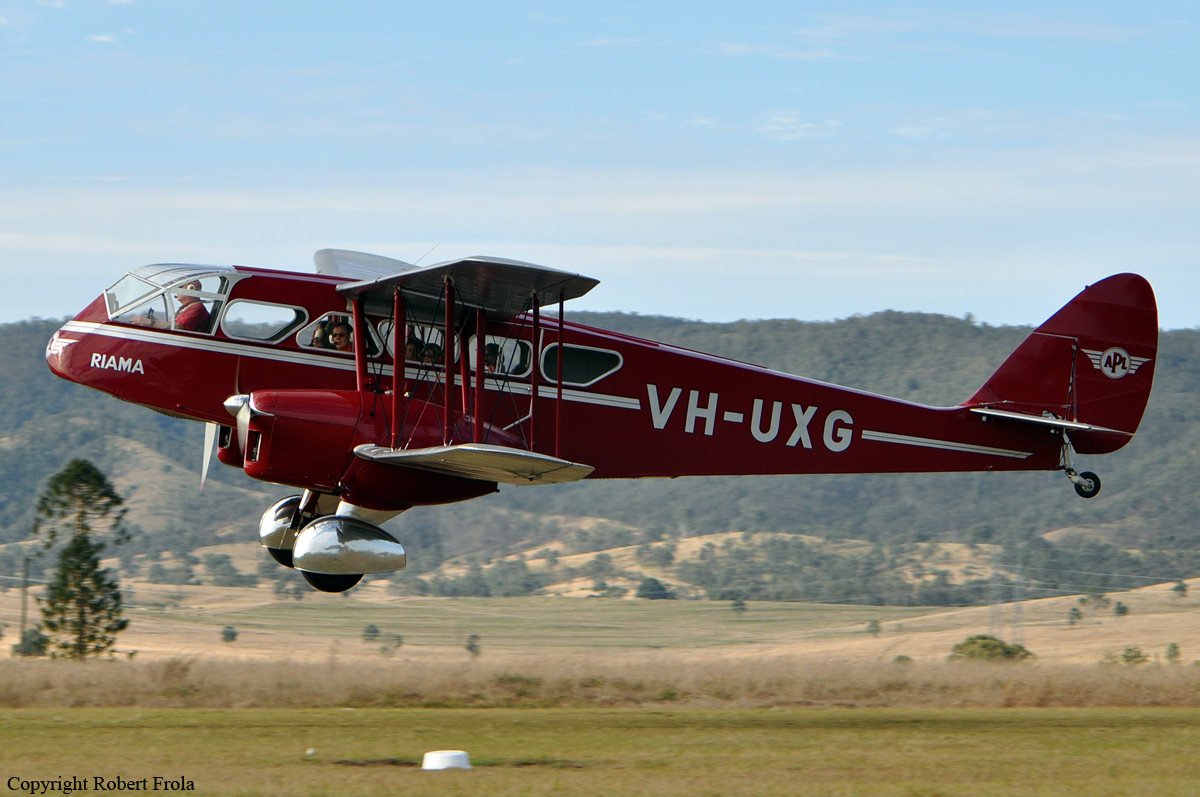
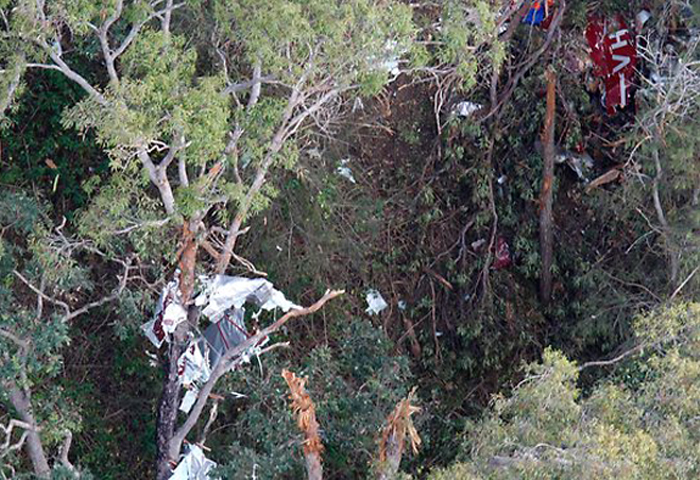
Crash of a De Havilland DH.84 Dragon near Borumba Dam: 6 killed

Date & Time: Oct 1, 2012 at 1413 LT
Type of aircraft:
Operator:
Registration:
VH-UXG
Flight Phase:
Flight Type:
Survivors:
No
Schedule:
Monto - Caboolture
MSN:
6077
YOM:
1934
Country:
Region:
Crew on board:
1
Crew fatalities:
Pax on board:
5
Pax fatalities:
Other fatalities:
Total fatalities:
6
Captain / Total flying hours:
1134
Captain / Total hours on type:
662.00
Circumstances:
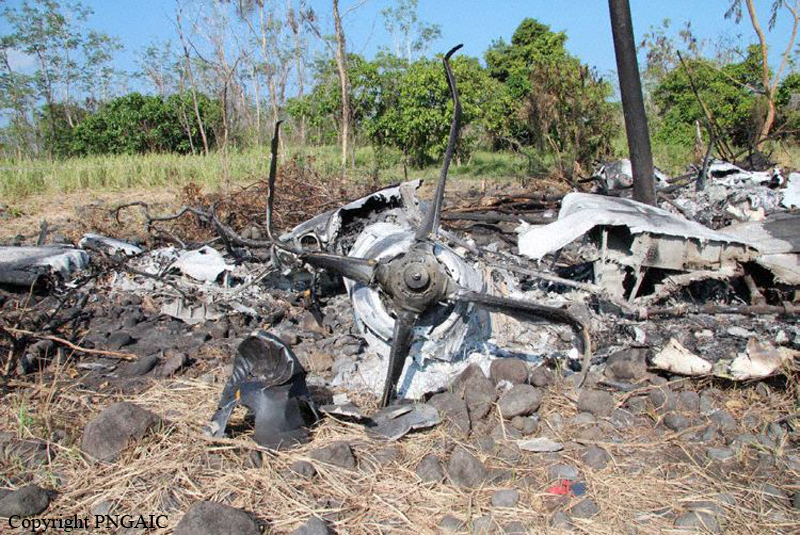
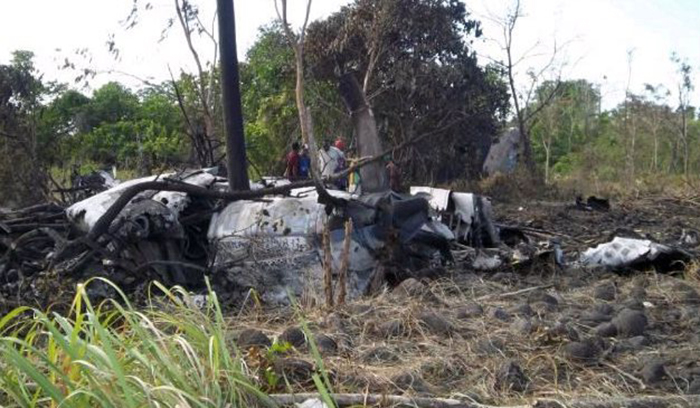
At about 1107 Eastern Standard Time on 01OCT2012, a de Havilland Aircraft Pty Ltd DH-84 Dragon, registered VH-UXG (UXG), took off from Monto on a private flight to Caboolture, Queensland under the visual flight rules (VFR). On board the aircraft were the pilot/owner and five passengers. The weather conditions on departure were reported to include a light south-easterly wind with a high overcast and good visibility. Sometime after about 1230, the aircraft was seen near Tansey, about 150 km north-west of Caboolture on the direct track from Monto to Caboolture. The aircraft was reported flying in a south-easterly direction at the time, at an estimated height of 3,000 ft and in fine but overcast conditions. At 1315, the pilot contacted Brisbane Radar air traffic control (ATC) and advised that the aircraft’s position was about 37 NM (69 km) north of Caboolture and requested navigation assistance. At 1318, the pilot advised ATC that the aircraft was in ‘full cloud’. For most of the remainder of the flight, the pilot and ATC exchanged communications, at times relayed through a commercial flight and a rescue flight in the area due to the limited ATC radio coverage in the area at low altitude. At about 1320, a friend of one of the aircraft’s passengers received a telephone call from the passenger to say that she was in an aircraft and that they were ‘lost in a cloud’ and kept losing altitude. Witnesses in the Borumba Dam, Imbil and Kandanga areas 70 to 80 km north-north-west of Caboolture later reported that they heard and briefly saw the aircraft flying in and out of low cloud between about 1315 and 1415. At 1348, the pilot advised ATC that the aircraft had about an hour’s endurance remaining. The pilot’s last recorded transmission was at 1404. A search for the aircraft was coordinated by Australian Search and Rescue (AusSAR). The aircraft wreckage was located on 3 October 2012, about 87 km north-west of Caboolture on the northern side of a steep, densely wooded ridge about 500 m above mean sea level. The Australian Transport Safety Bureau (ATSB) later determined that the aircraft probably impacted terrain at about 1421 on 01OCT2012. Preliminary analysis indicated that the aircraft collided with trees and terrain at a moderate to high speed, with a left angle of bank. The aircraft’s direction of travel at impact was toward the south-south-west.
Probable cause:
From the evidence available, the following findings are made with respect to the visual flight rules into instrument meteorological conditions accident involving de Havilland Aircraft Pty Ltd DH-84 Dragon, registered VH-UXG, that occurred 36 km south-west of Gympie, Queensland, on 1 October 2012. These findings should not be read as apportioning blame or liability to any particular organisation or individual. Safety issues, or system problems, are highlighted in bold to emphasize their importance. A safety issue is an event or condition that increases safety risk and (a) can reasonably be regarded as having the potential to adversely affect the safety of future operations, and (b) is a characteristic of an organisation or a system, rather than a characteristic of a specific individual, or characteristic of an operating environment at a specific point in time.
Contributing factors:
- The pilot unintentionally entered instrument meteorological conditions and was unable to reattain and maintain visual conditions.
- It is likely that the pilot became spatially disoriented and lost control due to a combination of factors such as the absence of a visible horizon, cumulative workload, stress and/or distraction.
Other factors that increased risk:
- Though it probably did not have a significant bearing on the event, the aircraft was almost certainly above its maximum take-off weight (MTOW) on take-off, and around the MTOW at the time of the accident.
- Though airborne search and rescue service providers were regularly tasked to provide assistance to pilots in distress, there was limited specific guidance on the conduct of such assistance. Other findings:
- The aircraft wreckage was not located for 2 days as the search was hindered by difficult local weather conditions and terrain, and the cessation of the aircraft’s emergency beacon due to impact damage.
Final Report:
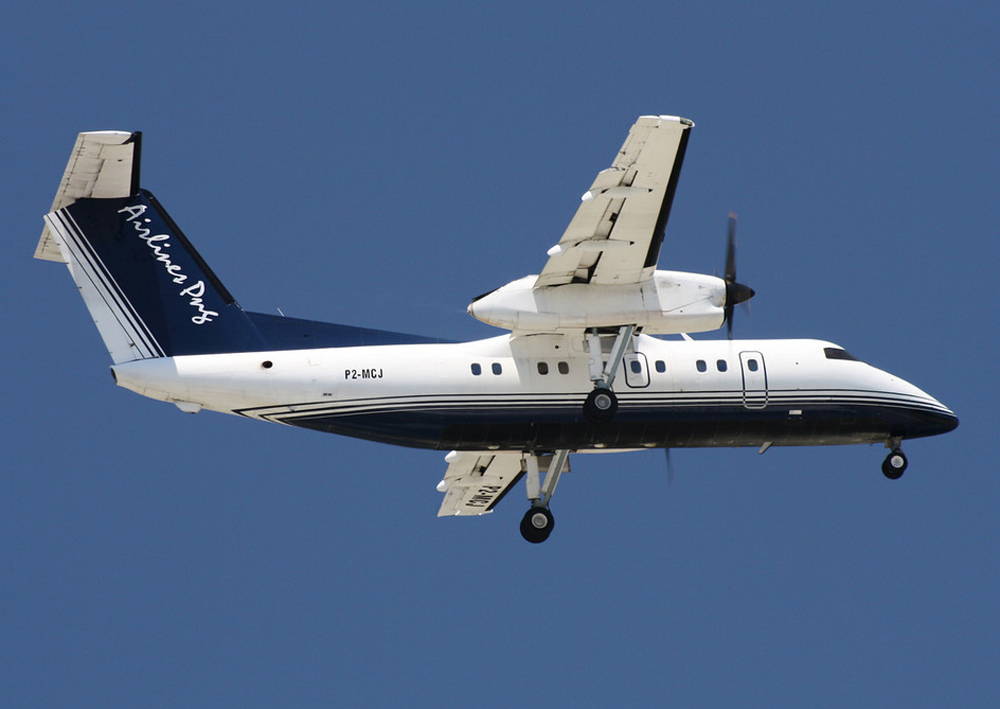
Crash of a De Havilland DHC-8-100 near Madang: 28 killed

Date & Time: Oct 13, 2011 at 1717 LT
Operator:
Registration:
P2-MCJ
Survivors:
Yes
Schedule:
Port Moresby - Lae - Madang
MSN:
125
YOM:
1988
Flight number:
CG1600
Location:
Region:
Crew on board:
4
Crew fatalities:
Pax on board:
28
Pax fatalities:
Other fatalities:
Total fatalities:
28
Captain / Total flying hours:
18200
Captain / Total hours on type:
500.00
Copilot / Total flying hours:
2725
Copilot / Total hours on type:
391
Aircraft flight hours:
38421
Aircraft flight cycles:
48093
Circumstances:
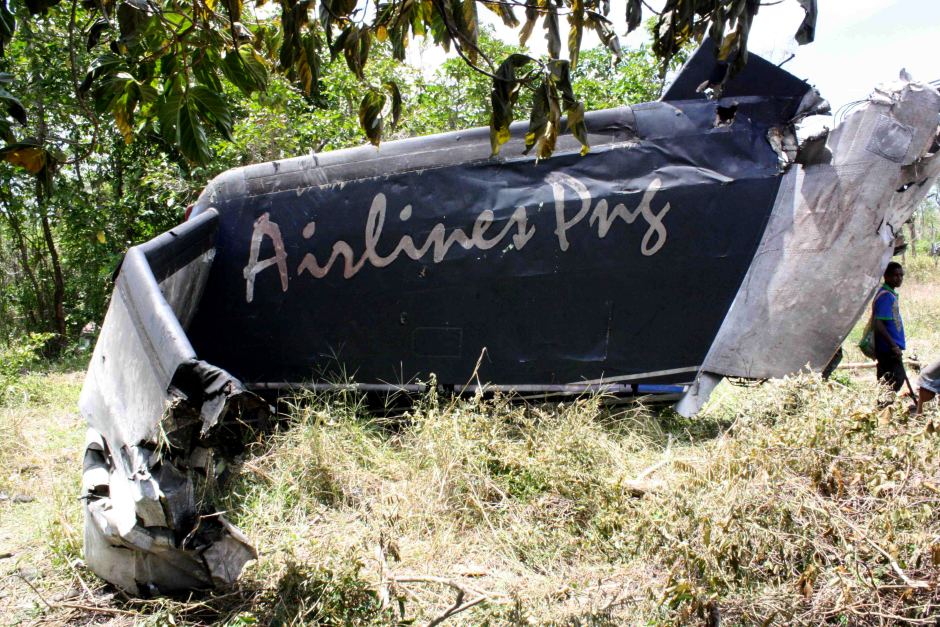
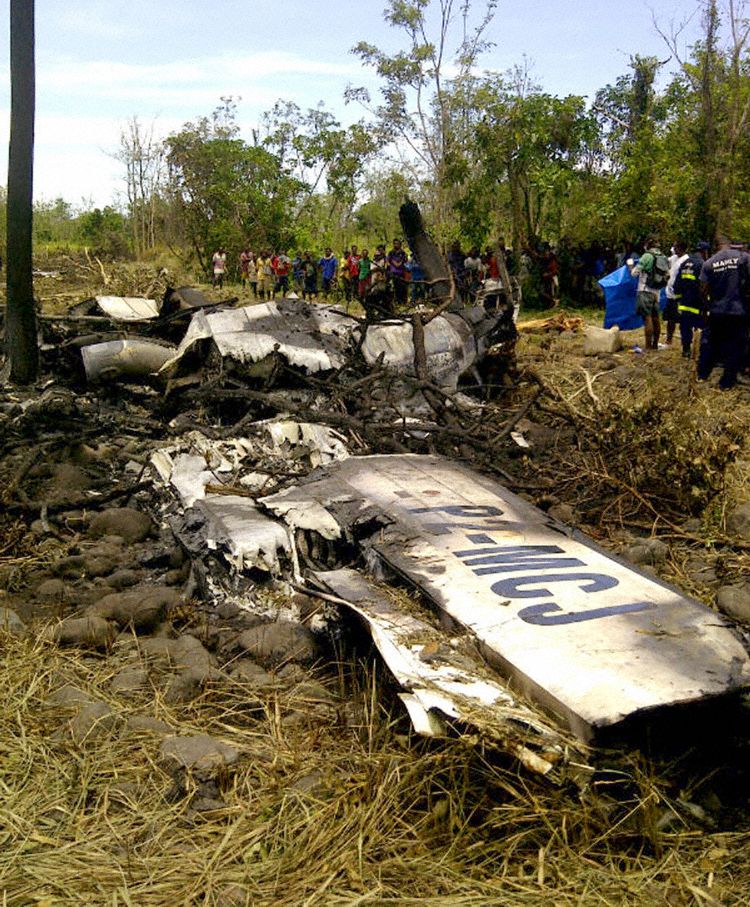
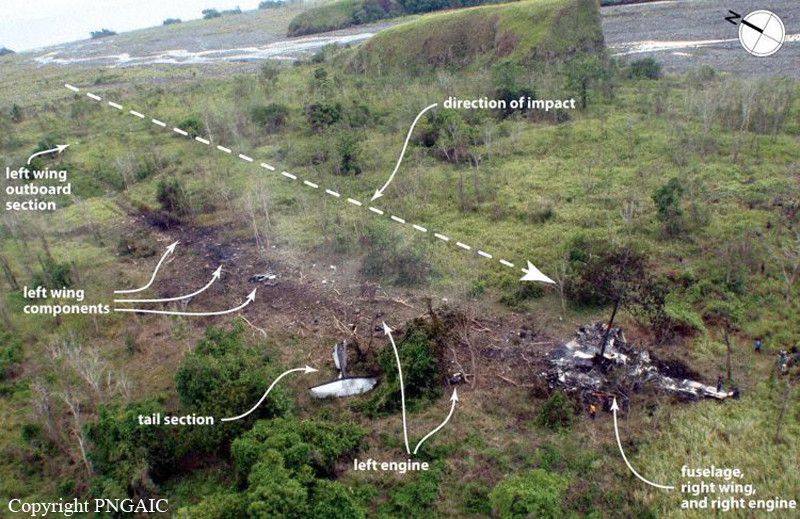
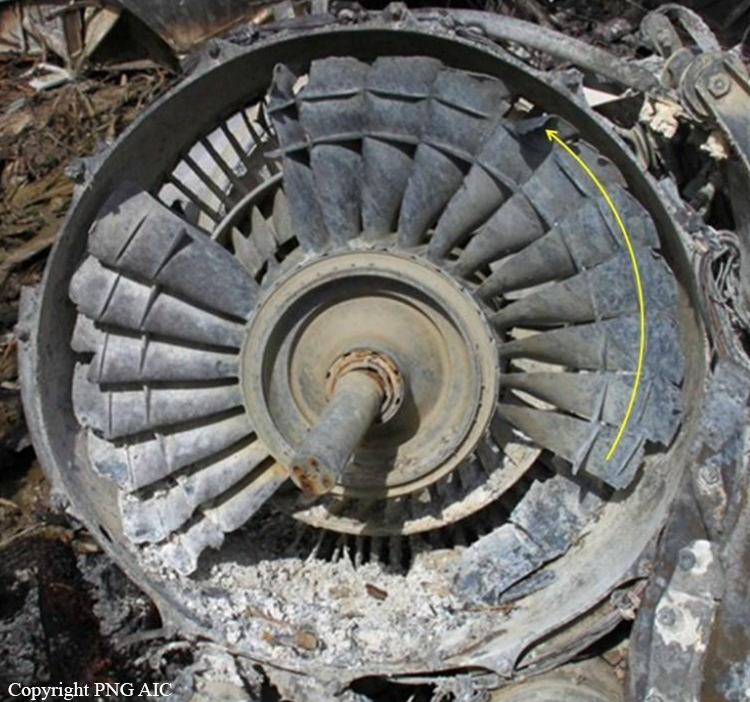
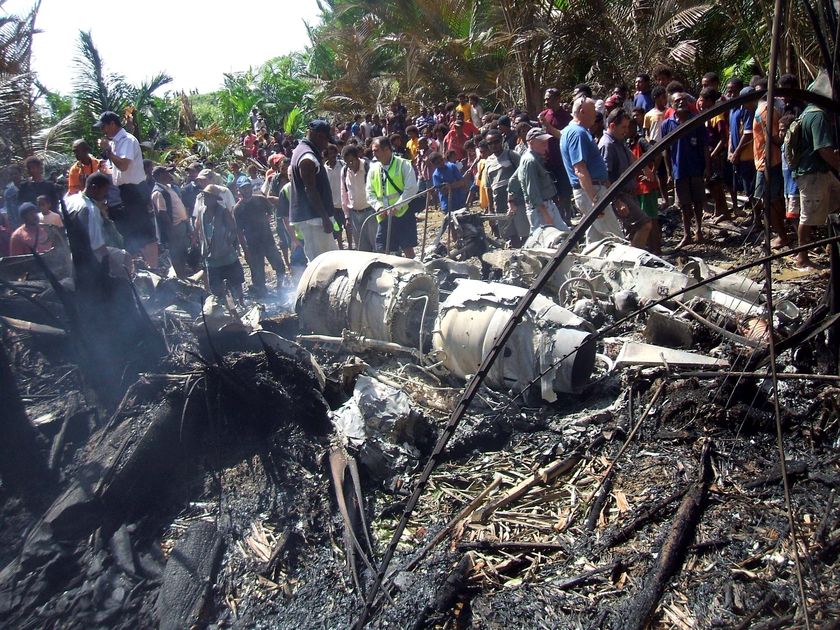
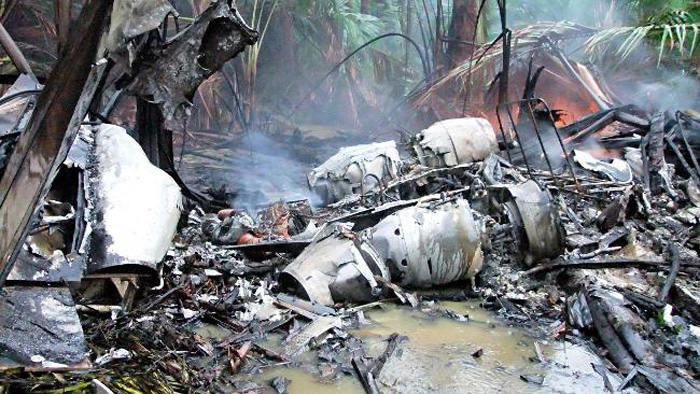
On the afternoon of 13 October 2011, an Airlines PNG Bombardier DHC-8-103, registered P2-MCJ (MCJ), was conducting a regular public transport flight from Nadzab, Morobe Province, to Madang, Madang Province under the Instrument Flight Rules (IFR). On board the aircraft were two flight crew, a flight attendant, and 29 passengers. Earlier in the afternoon, the same crew had flown MCJ from Port Moresby to Nadzab. The autopilot could not be used because the yaw damper was unserviceable so the aircraft had to be hand-flown by the pilots. At Nadzab, the aircraft was refuelled with sufficient fuel for the flight to Madang and a planned subsequent flight from Madang to Port Moresby. MCJ departed Nadzab at 1647 LMT with the Pilot-in-Command as the handling pilot. The aircraft climbed to 16,000 ft with an estimated arrival time at Madang of 1717. Once in the cruise, the flight crew diverted right of the flight planned track to avoid thunderstorms and cloud. The Pilot-in-Command reported that communications between Madang Tower and an aircraft in the vicinity of Madang indicated a storm was approaching the aerodrome. He recalled that he had intended to descend below the cloud in order to be able to see across the sea to Madang and had been concentrating on manoeuvring the aircraft to remain clear of thunderstorms and cloud, so he had been looking mainly outside the cockpit. Because of the storm in the vicinity of the airport, he said there had been „some urgency‟ to descend beneath the cloud base to position for a right base for runway 07 at Madang, the anticipated approach. On this route, the descent to Madang was steep (because of the need to remain above the Finisterre Ranges until close to Madang) and, although the aircraft was descending steeply, the propellers were at their cruise setting of 900 revolutions per minute (RPM). Neither pilot noticed the airspeed increasing towards the maximum operating speed (VMO); the Pilot-in-Command reported afterwards that he had been „distracted‟ by the weather. When the aircraft reached VMO as it passed through 10,500 ft, with a rate of descent between 3,500 and 4,200 ft per minute, and the propellers set at 900 RPM, the VMO overspeed warning sounded. The Pilot-in-command reported that he had been about to ask the First Officer to increase the propeller speed to 1,050 RPM to slow the aircraft when this occurred. He raised the nose of the aircraft in response to the warning and this reduced the rate of descent to about 2,000 ft per minute, however, the VMO overspeed warning continued. The First Officer recalled the Pilot-in-Command moved the power levers back „quite quickly‟. Shortly after the power levers had been moved back, both propellers oversped simultaneously, exceeding their maximum permitted speed of 1,200 RPM by over 60 % and seriously damaging the left hand engine and rendering both engines unusable. Villagers on the ground reported hearing a loud „bang‟ as the aircraft passed overhead. The noise in the cockpit was deafening, rendering communication between the pilots extremely difficult, and internal damage to the engines caused smoke to enter the cockpit and cabin through the bleed air and air conditioning systems. The emergency caught both pilots by surprise. There was confusion and shock on the flight deck, a situation compounded by the extremely loud noise from the overspeeding propellers. About four seconds after the double propeller overspeed began, the beta warning horn started to sound intermittently, although the pilots stated afterwards they did not hear it. The left propeller RPM reduced to 900 RPM (in the governing range) after about 10 seconds. It remained in the governing range for about 5 seconds before overspeeding again for about 15 seconds, then returned to the governing range. During this second overspeed of the left propeller, the left engine high speed compressor increased above 110 % NH, becoming severely damaged in the process. About 3 seconds after the left propeller began overspeeding for the second time, the right propeller went into uncommanded feather due to a propeller control unit (PCU) beta switch malfunction, while the right engine was still running at flight idle (75% NH). Nine seconds after the double propeller overspeed event began, the Pilot-in-command shouted to the First Officer „what have we done?‟ The First Officer replied there had been a double propeller overspeed. The Pilot-in-command then shouted a second and third time „what have we done?‟. The First Officer repeated that there was a double propeller overspeed and said that the right engine had shut down. The Pilot-in-Command shouted that he could not hear the First Officer, who – just as the left propeller began governing again and the overspeed noise subsided – repeated that the right engine had shut down and asked if the left engine was still working. The Pilot-in-command replied that it was not working. Both pilots then agreed that they had „nothing‟. At this point, about 40 seconds after the propeller overspeed event began, the left propeller was windmilling and the left engine was no longer producing any power because of the damage caused to it by the overspeed. The right engine was operating at flight idle, although the propeller could not be unfeathered and therefore could not produce any thrust. On the order of the Pilot-in-Command, the First Officer made a mayday call to Madang Tower and gave the aircraft's GPS position; he remained in a radio exchange with Madang Tower for 63 seconds. The flight crew did not conduct emergency checklists and procedures. Instead, their attention turned to where they were going to make a forced landing. The aircraft descended at a high rate of descent, with the windmilling left propeller creating extra drag. The asymmetry between the windmilling left propeller and the feathered right propeller made the aircraft difficult to control. The average rate of descent between the onset of the emergency and arrival at the crash site was 2,500 ft per minute and at one point exceeded 6,000 ft per minute, and the VMO overspeed warning sounded again. During his long radio exchange with Madang Tower, the First Officer had said that they would ditch the aircraft, although, after a brief discussion, the Pilot-in-command subsequently decided to make a forced landing in the mouth of the Guabe River. The First Officer asked the Pilot-in-command if he should shut both engines down and the Pilot-in-command replied that he should shut „everything‟ down. Approximately 800 feet above ground level and 72 seconds before impact, the left propeller was feathered and both engines were shut down. The Pilot-in-Command reported afterwards that he ultimately decided to land beside the river instead of in the river bed because the river bed contained large boulders. The area chosen beside the river bed also contained boulders beneath the vegetation, but they were not readily visible from the air. He recalled afterwards that he overshot the area he had originally been aiming for. The aircraft impacted terrain at 114 knots with the flaps and the landing gear retracted. The Flight Attendant, who was facing the rear of the aircraft, reported that the tail impacted first. During the impact sequence, the left wing and tail became detached. The wreckage came to rest 300 metres from the initial impact point and was consumed by a fuel-fed fire. The front of the aircraft fractured behind the cockpit and rotated through 180 degrees, so that it was inverted when it came to rest. Of the 32 occupants of the aircraft only the two pilots, the flight attendant, and one passenger survived by escaping from the wreckage before it was destroyed by fire.
Probable cause:
From the evidence available, the following findings are made with respect to the double propeller overspeed 35 km south south east of Madang on 13 October 2011 involving a Bombardier Inc. DHC-8-103 aircraft, registered P2-MCJ. They should not be read as apportioning blame or liability to any organisation or individual.
Contributing safety factors:
- The Pilot-in-Command moved the power levers rearwards below the flight idle gate shortly after the VMO overspeed warning sounded. This means that the release triggers were lifted during the throttle movement.
- The power levers were moved further behind the flight idle gate leading to ground beta operation in flight, loss of propeller speed control, double propeller overspeed, and loss of usable forward thrust, necessitating an off-field landing.
- A significant number of DHC-8-100, -200, and -300 series aircraft worldwide did not have a means of preventing movement of the power levers below the flight idle gate in flight, or a means to prevent such movement resulting in a loss of propeller speed control.
Other safety factors:
- Prior to the VMO overspeed warning, the Pilot-in-Command allowed the rate of descent to increase to 4,200 ft per minute and the airspeed to increase to VMO.
- The beta warning horn malfunctioned and did not sound immediately when one or both of the flight idle gate release triggers were lifted. When the beta warning horn did sound, it did so intermittently and only after the double propeller overspeed had commenced. The sound of the beta warning horn was masked by the noise of the propeller overspeeds.
- There was an uncommanded feathering of the right propeller after the overspeed commenced due to a malfunction within the propeller control beta backup system during the initial stages of the propeller overspeed.
- The right propeller control unit (PCU) fitted to MCJ was last overhauled at an approved overhaul facility which had a quality escape issue involving incorrect application of beta switch reassembly procedures, after a service bulletin modification. The quality escape led to an uncommanded feather incident in an aircraft in the United States due to a beta switch which stuck closed.
- Due to the quality escape, numerous PCU‟s were recalled by the overhaul facility for rectification. The right PCU fitted to MCJ was identified as one of the units that may have been affected by the quality escape and would have been subject to recall had it still been in service.
The FDR data indicated that the right PCU fitted to MCJ had an uncommanded feather, most likely due to a beta switch stuck in the closed position, induced by the propeller overspeed. It was not possible to confirm if the overhaul facility quality escape issue contributed to the beta switch sticking closed, because the PCU was destroyed by the post-impact fire.
- The landing gear and flaps remained retracted during the off-field landing. This led to a higher landing speed than could have been achieved if the gear and flaps had been extended, and increased the impact forces on the airframe and its occupants.
- No DHC-8 emergency procedures or checklists were used by the flight crew after the emergency began.
- The left propeller was not feathered by the flight crew after the engine failed.
- The investigation identified several occurrences where a DHC-8 pilot inadvertently moved one or both power levers behind the flight idle gate in flight, leading to a loss of propeller speed control. Collectively, those events indicated a systemic design issue with the integration of the propeller control system and the aircraft.
Other key findings:
- The flaps and landing gear were available for use after the propeller overspeeds and the engine damage had occurred.
- There was no regulatory requirement to fit the beta lockout system to any DHC-8 aircraft outside the USA at the time of the accident.
- The autopilot could not be used during the accident flight.
- The operator's checking and training system did not require the flight crew to have demonstrated the propeller overspeed emergency procedure in the simulator.
- After the accident, the aircraft manufacturer identified a problem in the beta warning horn system that may have led to failures not being identified during regular and periodic tests of the system.
Final Report:
Crash of a Cessna 207 Skywagon near Port Vila

Date & Time: Aug 1, 2011 at 1700 LT
Operator:
Registration:
YJ-FLY
Flight Phase:
Survivors:
Yes
Schedule:
Whitegrass - Port Vila
MSN:
207-0362
YOM:
1976
Country:
Region:
Crew on board:
1
Crew fatalities:
Pax on board:
6
Pax fatalities:
Other fatalities:
Total fatalities:
0
Circumstances:
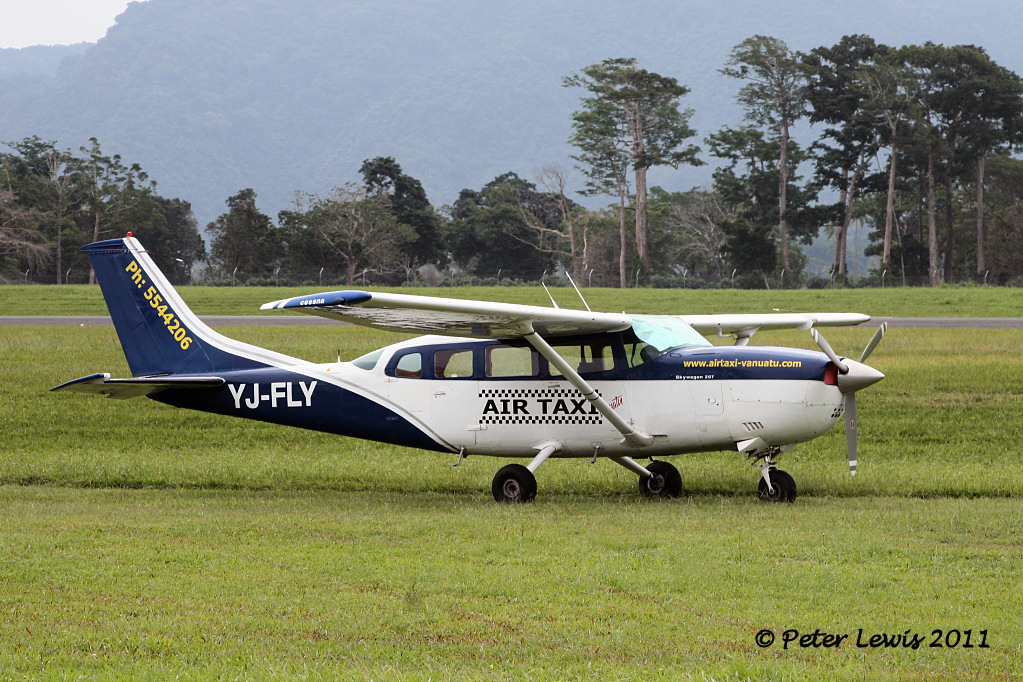
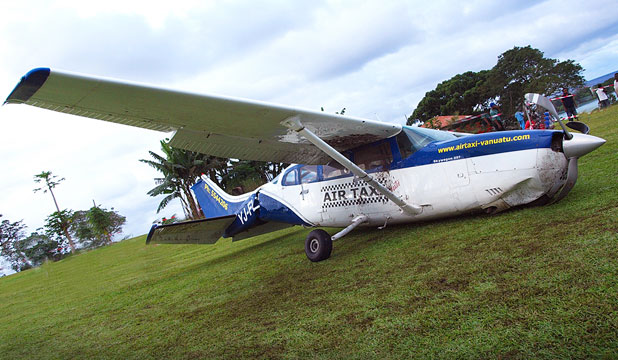
The single engine aircraft was performing a taxi flight from Whitegrass Airport located on Tannu Island, to Port Vila, with six passengers and a pilot on board. While approaching Efate Island, the pilot encountered poor weather conditions with heavy rain falls and attempted an emergency landing in the garden of the Lagon Resort, south of Port Vila. On touchdown, the airplane lost its nose gear and left main gear, cartwheeled and came to rest, broken in two. All occupants were slightly injured and the aircraft was damaged beyond repair.

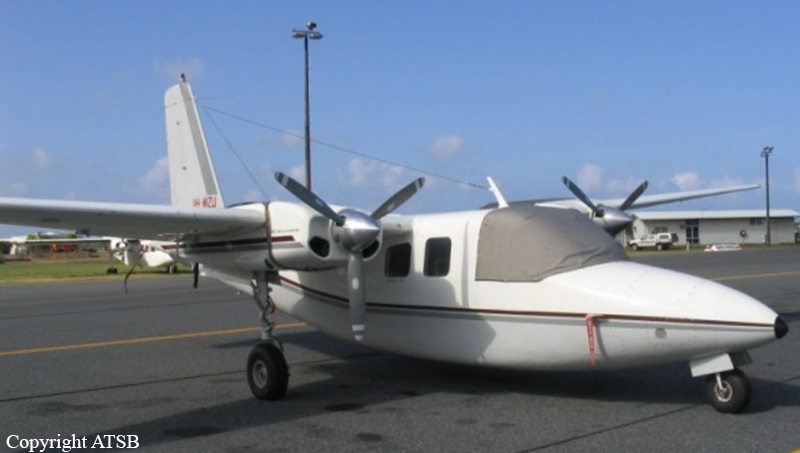
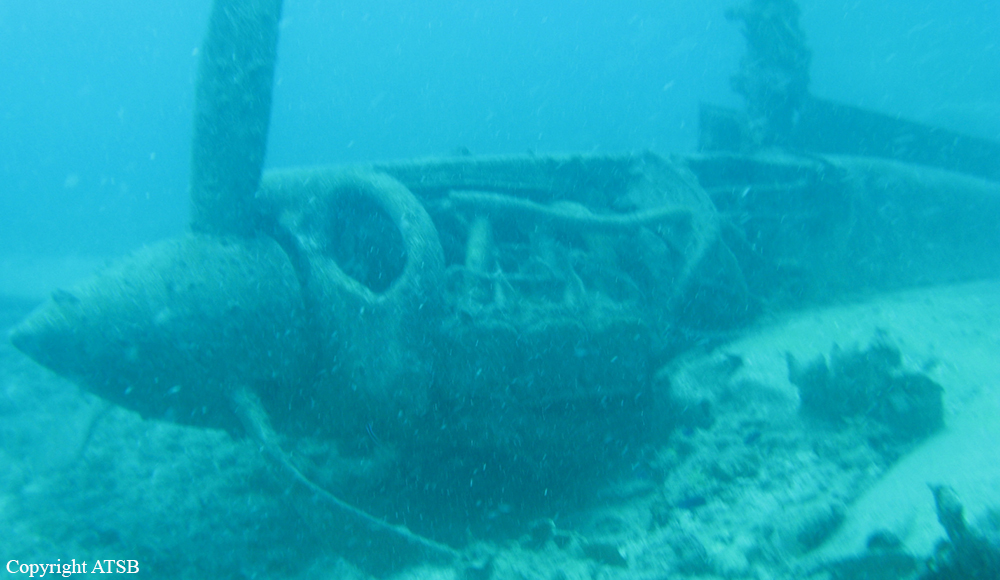
Crash of a Rockwell Shrike Commander 500S off Horn Island: 1 killed

Date & Time: Feb 24, 2011 at 0800 LT
Operator:
Registration:
VH-WZU
Flight Type:
Survivors:
No
Schedule:
Cairns - Horn Island
MSN:
3060
YOM:
1970
Country:
Region:
Crew on board:
1
Crew fatalities:
Pax on board:
0
Pax fatalities:
Other fatalities:
Total fatalities:
1
Captain / Total flying hours:
4154
Captain / Total hours on type:
209.00
Aircraft flight hours:
17545
Circumstances:
At 0445 Eastern Standard Time on 24 February 2011, the pilot of an Aero Commander 500S, registered VH-WZU, commenced a freight charter flight from Cairns to Horn Island, Queensland under the instrument flight rules. The aircraft arrived in the Horn Island area at about 0720 and the pilot advised air traffic control that he intended holding east of the island due to low cloud and rain. At about 0750 he advised pilots in the area that he was north of Horn Island and was intending to commence a visual approach. When the aircraft did not arrive a search was commenced but the pilot and aircraft were not found. On about 10 October 2011, the wreckage was located on the seabed about 26 km north-north-west of Horn Island.
Probable cause:
The ATSB found that the aircraft had not broken up in flight and that it impacted the water at a relatively low speed and a near wings-level attitude, consistent with it being under control at impact. It is likely that the pilot encountered rain and reduced visibility when manoeuvring to commence a visual approach. However, there was insufficient evidence available to determine why the aircraft impacted the water.
Several aspects of the flight increased risk. The pilot had less than 4 hours sleep during the night before the flight and the operator did not have any procedures or guidance in place to minimize the fatigue risk associated with early starts. In addition, the pilot, who was also the operator’s chief pilot, had either not met the recency requirements or did not have an endorsement to conduct the types of instrument approaches available at Horn Island and several other locations frequently used by the operator.
Final Report:
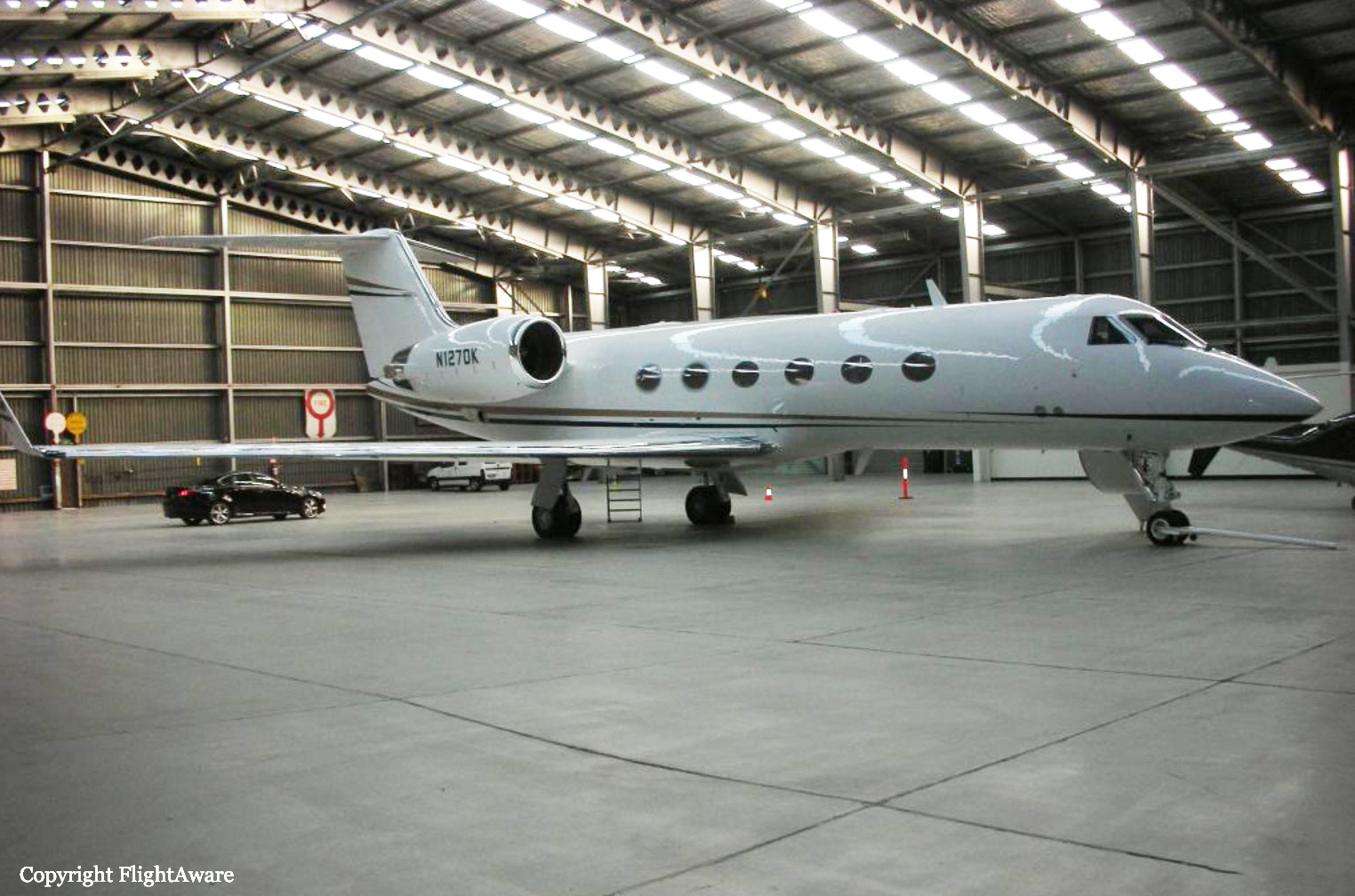
Ground accident of a Gulfstream GIV in Papeete

Date & Time: Jan 30, 2011 at 1725 LT
Type of aircraft:
Operator:
Registration:
N127DK
Flight Phase:
Flight Type:
Survivors:
Yes
MSN:
1127
YOM:
1990
Location:
Region:
Crew on board:
0
Crew fatalities:
Pax on board:
0
Pax fatalities:
Other fatalities:
Total fatalities:
0
Circumstances:
While taxiing at Papeete-Faaa Airport, the aircraft went out of control and collided with various ground handling equipment such as a catering truck, a belt loader and cargo containers. There were no injuries but the aircraft was damaged beyond repair.

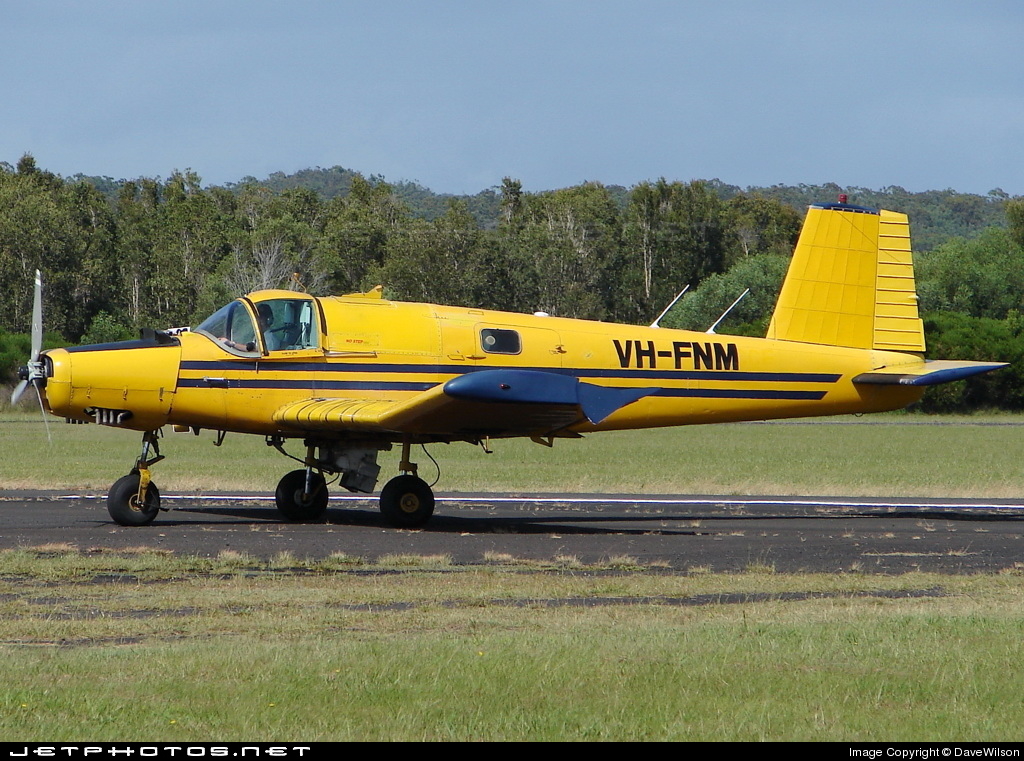
Crash of a Fletcher FU-24A-954 in Wynella Station: 1 killed

Date & Time: Dec 20, 2010 at 1700 LT
Type of aircraft:
Registration:
VH-FNM
Survivors:
No
Schedule:
Wynella Station - Wynella Station
MSN:
263
YOM:
1979
Country:
Region:
Crew on board:
1
Crew fatalities:
Pax on board:
0
Pax fatalities:
Other fatalities:
Total fatalities:
1
Captain / Total flying hours:
5815
Circumstances:
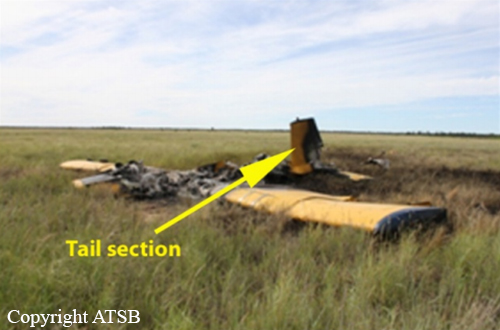
On 20 December 2010, the owner/pilot of a Pacific Aerospace Corporation FU-24-954 Fletcher aircraft, registered VH-FNM, was conducting aerial spreading of urea fertilizer at Wynella Station; a property 40 km south-south-west of Dirranbandi, Queensland. At about 1650 Eastern Standard Time, the pilot was returning to the landing strip after the completion of an application run. The aircraft impacted the terrain, and the pilot was fatally injured.
Probable cause:
Examination of the accident site indicated that the aircraft’s engine was delivering power at the time of impact. Wreckage examination did not reveal evidence of any defect or mechanical failure that would have contributed to the event. Although the post-mortem report on the pilot noted that he had significant coronary atherosclerosis, there was insufficient information available to determine whether pilot incapacitation was involved in the accident. The investigation did not identify any organisational or systemic issues that might adversely affect the future safety of aviation
operations.
Final Report:
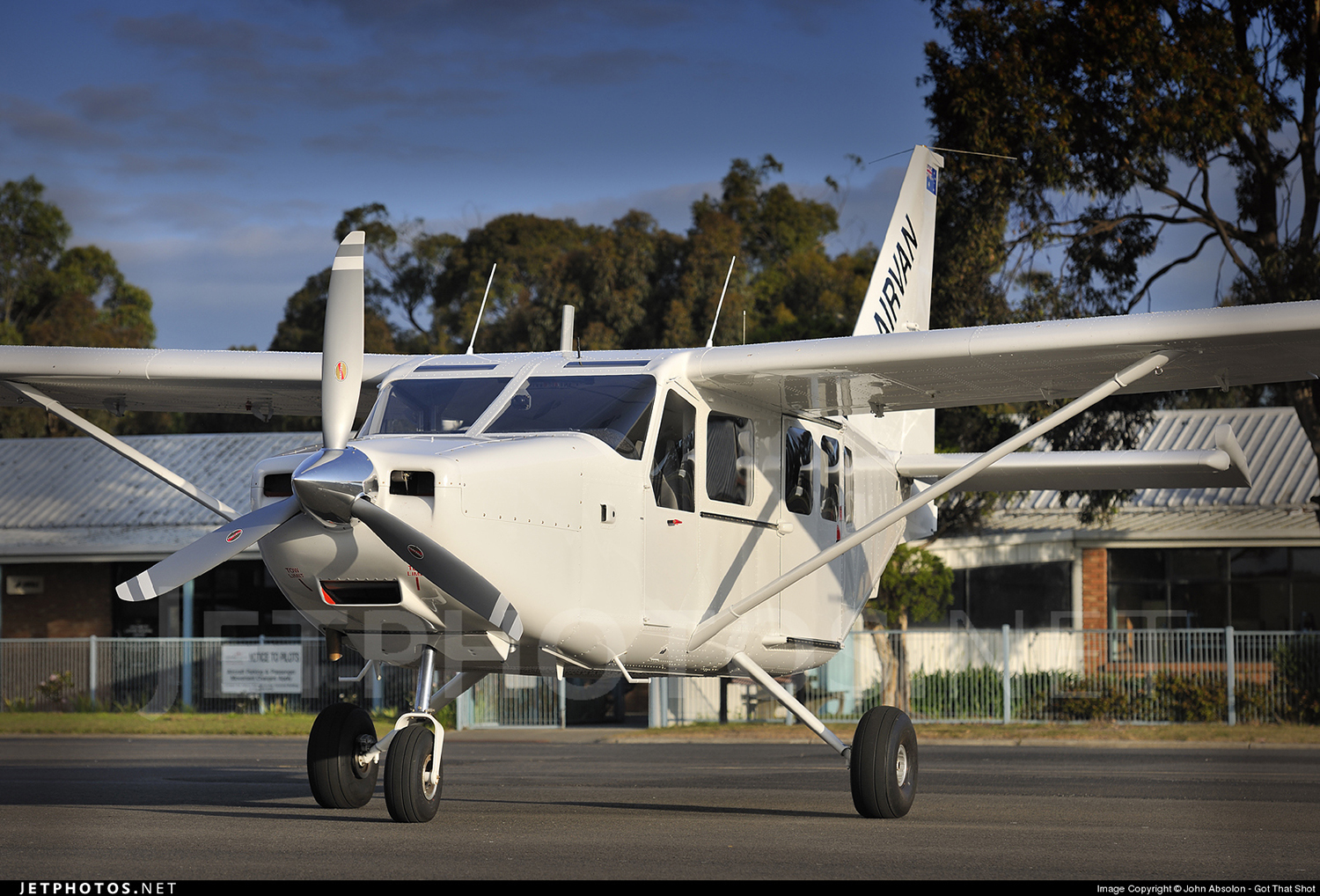
Crash of a Gippsland GA8 Airvan in Lady Barron

Date & Time: Oct 15, 2010 at 1715 LT
Type of aircraft:
Operator:
Registration:
VH-DQP
Survivors:
Yes
Site:
Schedule:
Lady Barron - Bridport
MSN:
GA8-05-075
YOM:
2005
Country:
Region:
Crew on board:
1
Crew fatalities:
Pax on board:
6
Pax fatalities:
Other fatalities:
Total fatalities:
0
Captain / Total flying hours:
2590
Captain / Total hours on type:
1355.00
Circumstances:
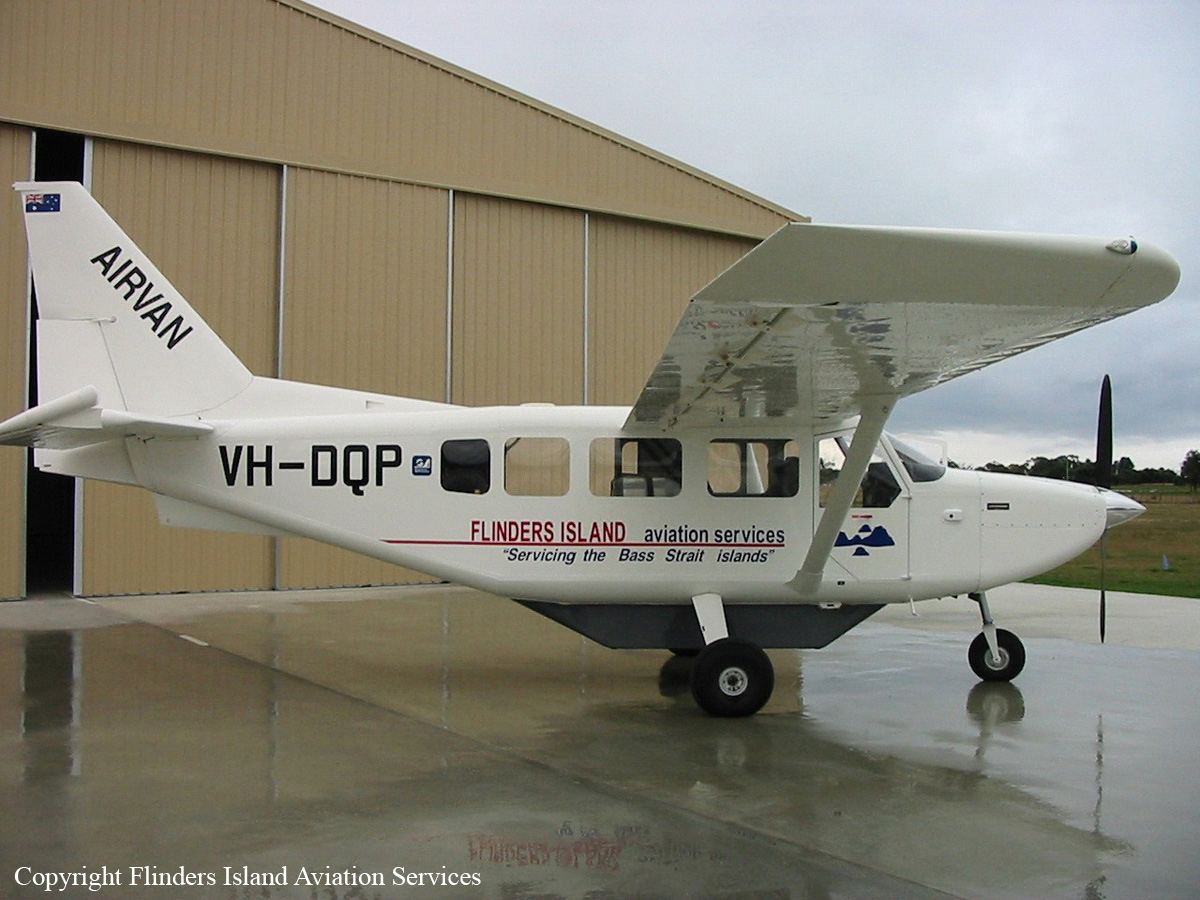
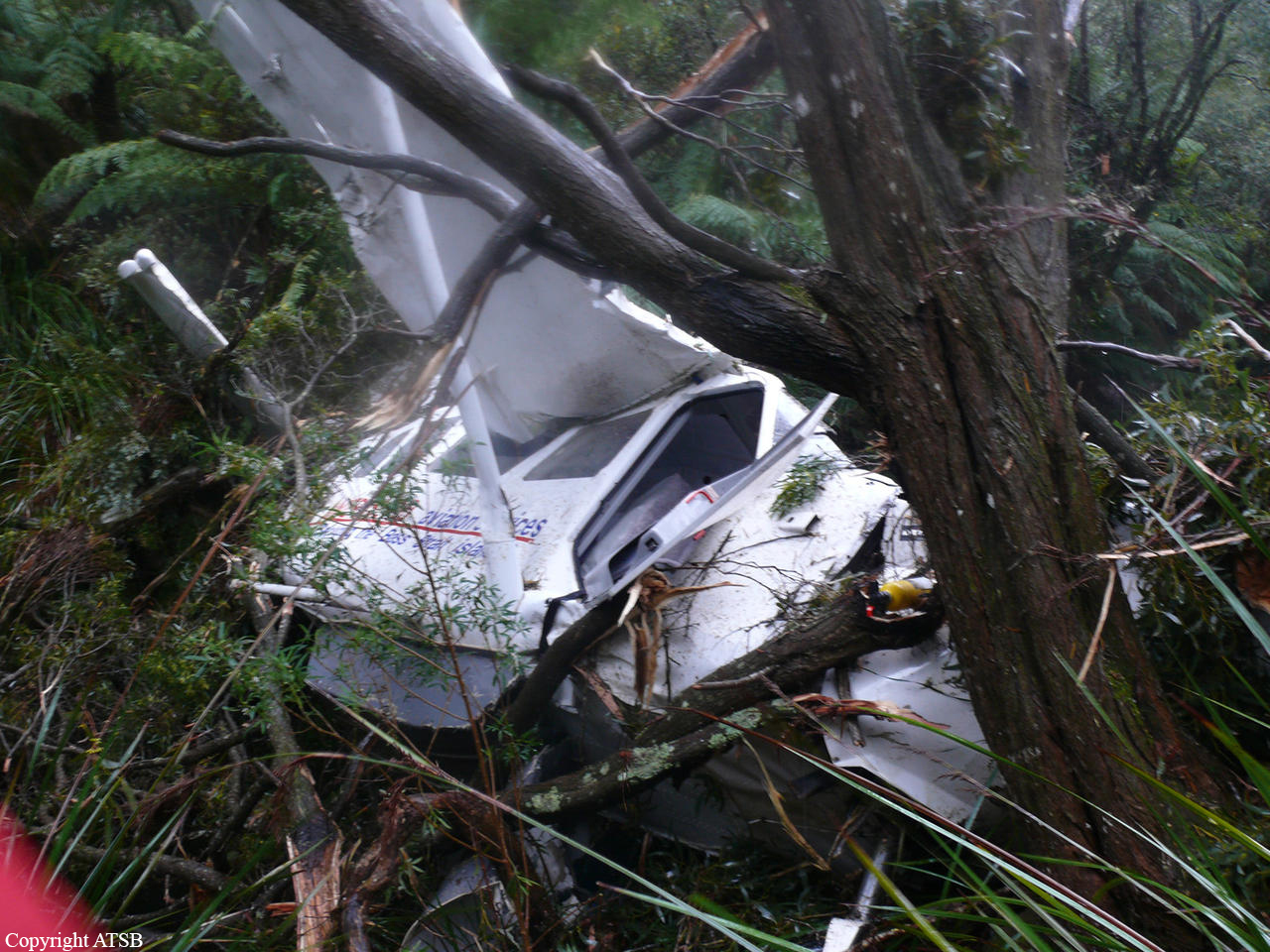
The pilot was conducting a charter flight from Lady Barron, Flinders Island to Bridport, Tasmania with six passengers on board. The aircraft departed Lady Barron Aerodrome at about 1700 Australian Eastern Daylight-saving Time and entered instrument meteorological conditions (IMC) several minutes afterwards while climbing to the intended cruising altitude of about 1,500 ft. The pilot did not hold a command instrument rating and the aircraft was not equipped for flight in IMC. He attempted to turn the aircraft to return to Lady Barron Aerodrome but became lost, steering instead towards high ground in the Strzelecki National Park in the south-east of Flinders Island. At about 1715, the aircraft exited cloud in the Strzelecki National Park, very close to the ground. The pilot turned to the left, entering a small valley in which he could neither turn the aircraft nor out climb the terrain. He elected to slow the aircraft to its stalling speed for a forced landing and, moments later, it impacted the tree tops and then the ground. The first passenger to exit the aircraft used the aircraft fire extinguisher to put out a small fire that had begun beneath the engine. The other passengers and the pilot then exited the aircraft safely. One passenger was slightly injured during the impact; the pilot and other passengers were uninjured. During the night, all of the occupants of the aircraft were rescued by helicopter and taken to the hospital in Whitemark, Flinders Island.
Probable cause:
Contributing safety factors:
• The weather was marginal for flight under the visual flight rules, with broken cloud forecast down to 500 ft above mean sea level in the area.
• The pilot, who did not hold a command instrument rating, entered instrument meteorological conditions because he was adhering to an un-written operator rule not to fly below 1,000 ft above ground level.
• The pilot became lost in cloud and flew the aircraft towards the Mt Strzelecki Range, exiting the cloud in very close proximity to the terrain.
• The aircraft exited the cloud in a small valley, within which the pilot could neither turn round nor out-climb the terrain.
Other key findings:
• The aircraft exited cloud before impacting terrain and with sufficient time for the pilot to execute a forced landing.
• The design of the aircraft’s seats, and the provision to passengers in the GA-8 Airvan of three-point automotive-type restraint harnesses with inertia reel shoulder straps contributed to the passengers’ survival, almost without injury.
Final Report:
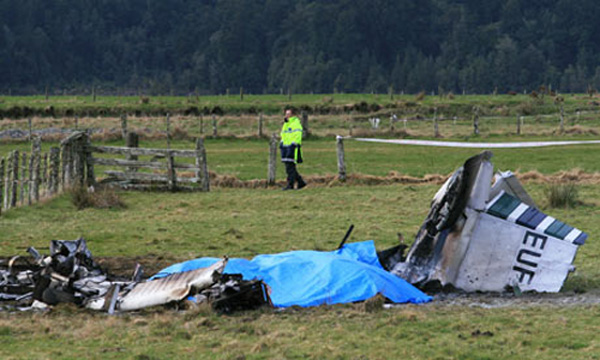
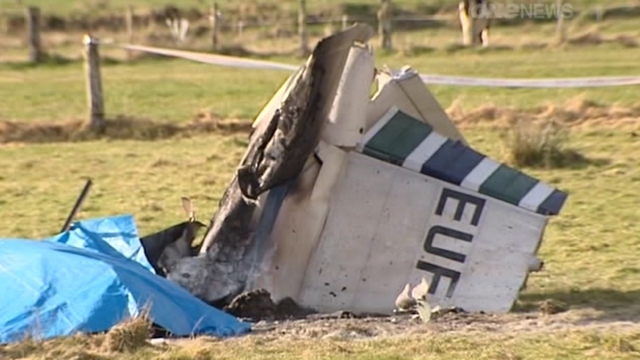
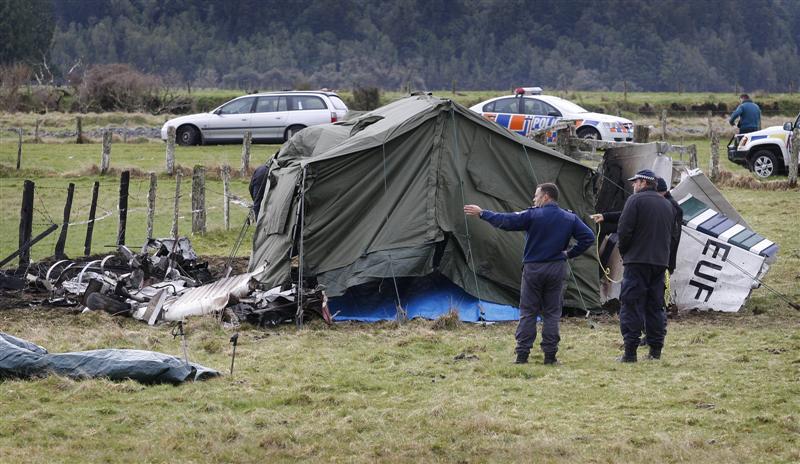
Crash of a Fletcher FU-24-954 in Fox Glacier: 9 killed

Date & Time: Sep 4, 2010 at 1327 LT
Type of aircraft:
Registration:
ZK-EUF
Flight Phase:
Survivors:
No
Schedule:
Fox Glacier - Fox Glacier
MSN:
281
YOM:
1981
Country:
Region:
Crew on board:
1
Crew fatalities:
Pax on board:
8
Pax fatalities:
Other fatalities:
Total fatalities:
9
Captain / Total flying hours:
4554
Captain / Total hours on type:
41.00
Circumstances:
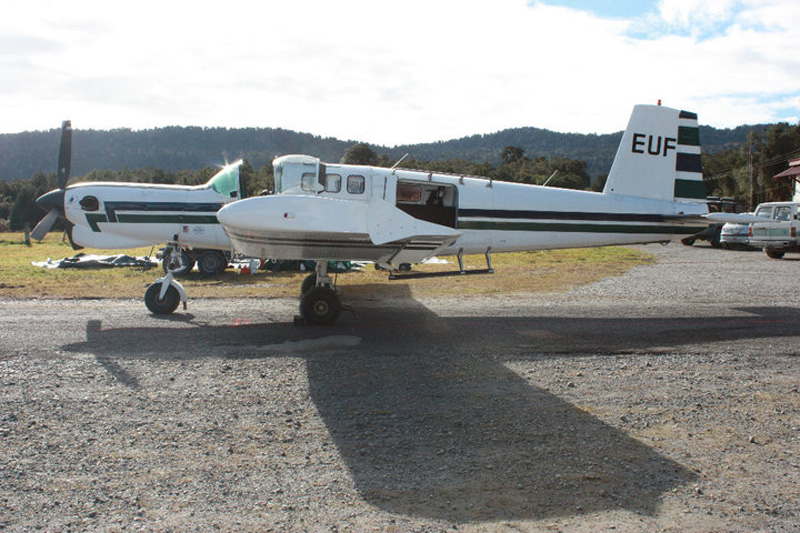
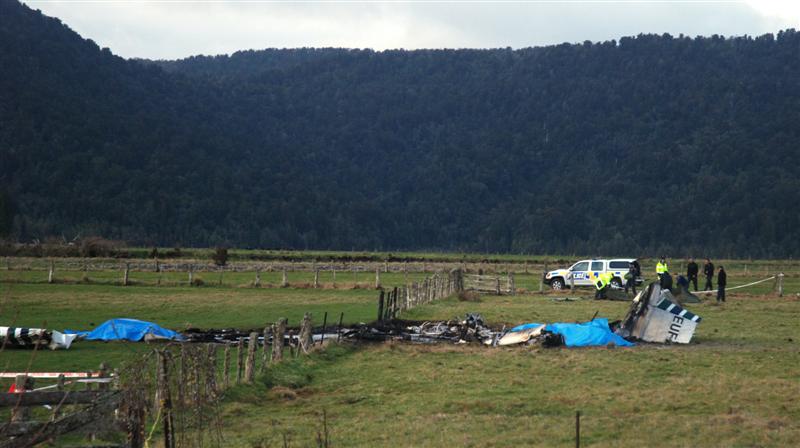
Shortly after take off from Fox Glacier aerodrome, while climbing, aircraft stalled and crashed in flames in a paddock near the airfield. All nine occupants, the pilot and 8 skydivers, were killed. The new owner and operator of the aeroplane had not completed any weight and balance calculations on the aeroplane before it entered service, nor at any time before the accident. As a result the aeroplane was being flown outside its loading limits every time it carried a full load of 8 parachutists. On the accident flight the centre of gravity of the aeroplane was well rear of its aft limit and it became airborne at too low a speed to be controllable. The pilot was unable to regain control and the aeroplane continued to pitch up, then rolled left before striking the ground nearly vertically.
Probable cause:
Findings:
- There were no technical defects identified that may have contributed to the accident and the aeroplane was considered controllable during the take-off roll, with the engine able to deliver power during the short flight.
- The aeroplane’s centre of gravity was at least 0.122m rear of the maximum permissible limit, which created a tendency for the nose to pitch up. The most likely reason for the crash was the aeroplane being excessively out of balance. In addition, the aeroplane probably became airborne early and at too low an airspeed to prevent uncontrollable nose-up pitch.
- The aeroplane reached a pitch angle that would have made it highly improbable for the unrestrained parachutists to prevent themselves sliding back towards the tail. Any shift in weight rearward would have made the aeroplane more unstable.
- The engineering company that modified ZK-EUF for parachuting operations did not follow proper processes required by civil aviation rules and guidance. Two of the modifications had been approved for a different aircraft type, one modification belonged to another design holder and a fourth was not referred to in the aircraft maintenance logbook.
- The flight manual for ZK-EUF had not been updated to reflect the new role of the aeroplane and was limited in its usefulness to the aeroplane owner for calculating weight and balance.
- Regardless of the procedural issues with the project to modify ZK-EUF, the engineering work conducted on ZK-EUF to convert it from agricultural to parachuting operations in the standard category was by all accounts appropriately carried out.
- The weight and balance of the aeroplane, with its centre of gravity at least 0.122m outside the maximum aft limit, would have caused serious handling issues for the pilot and was the most significant factor contributing to the accident.
- ZK-EUF was 17 kg over its maximum permissible weight on the accident flight, but was still 242 kg lighter than the maximum all-up weight for which the aeroplane was certified in its previous agricultural role. Had the aeroplane not been out of balance it is considered the excess weight in itself would have been unlikely to cause the accident. Nevertheless, the pilots should have made a full weight and balance calculation before each flight.
- The aeroplane owner and their pilots did not comply with civil aviation rules and did not follow good, sound aviation practice by failing to conduct weight and balance calculations on the aeroplane. This resulted in the aeroplane being routinely flown overweight and outside the aft centre of gravity allowable limit whenever it carried 8 parachutists.
- The empty weight and balance for ZK-EUF was properly recorded in the flight manual, but the stability information in that manual had not been appropriately amended to reflect its new role of a parachute aeroplane. Nevertheless, it was still possible for the aeroplane operator to initially have calculated the weight and balance of the aeroplane for the predicted operational loads before entering the aeroplane into service.
- The aeroplane owner did not comply with civil aviation rules and did not follow good, sound aviation practice when they: used the incorrect amount of fuel reserves; removed the flight manual from the aeroplane; and did not formulate their own standard operating procedures before using the aeroplane for commercial parachuting operations.
- The Director of Civil Aviation delegated the task of assessing and overseeing major modifications to Rule Part 146 design organisations and individual holders of “inspection authorisations”. The delegations did not absolve the Director of his responsibility to monitor compliance with civil aviation rules and guidance.
Page 38 | Report 10-009
- The delegations increased the risk that unless properly managed the CAA could lose control of 2 safety-critical functions: design and inspection. The Director had not appropriately managed that risk with the current oversight programme.
- The CAA had adhered strictly to its normal practice and was acting in accordance with civil aviation rules when approving the change in airworthiness category from special to standard. However, knowing the scope, size and complexity of the modifications required to change ZK-EUF from an agricultural to a parachuting aeroplane, it should have had greater participation in the process to help ensure there were no safety implications.
- There was a flaw in the regulatory system that allowed an engineering company undertaking major modification work on an aircraft to have little or no CAA involvement by using an internal or contracted design delegation holder and a person with the inspection authorisation to oversee and sign off the work.
- The level of parachuting activity in New Zealand warranted a stronger level of regulatory oversight than had been applied in recent years.
- The CAA’s oversight and surveillance of commercial parachuting were not adequate to ensure that operators were functioning in a safe manner.
- The CAA had mechanisms through the Director’s powers under the Civil Aviation Act and his designated powers under the HSE Act to effectively regulate the parachuting industry pending the introduction of Rule Part 115.
- An alcohol and drug testing regime needs to be initiated for persons performing activities critical to flight safety, to detect and deter the use of performance-impairing substances.
- In this case the impact was not survivable and the passengers wearing safety restraints would not have prevented their deaths, but in other circumstances the wearing of safety restraints might reduce injuries and save lives.
- Safety harnesses or restraints would help to prevent passengers sliding rearward and altering the centre of gravity of the aircraft. It could not be established if this was a factor in this accident.
Final Report:
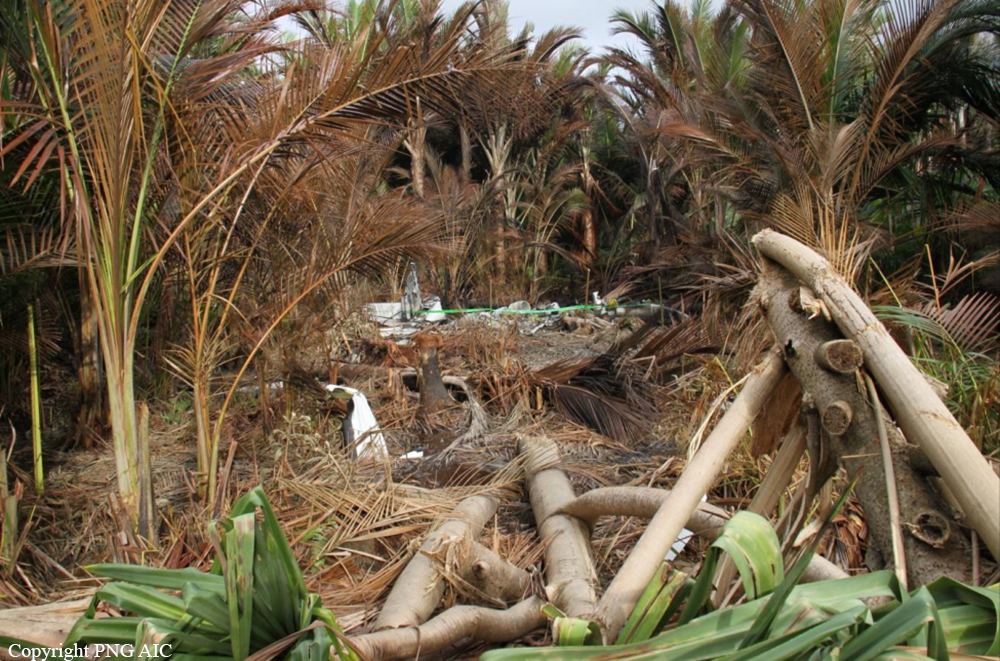
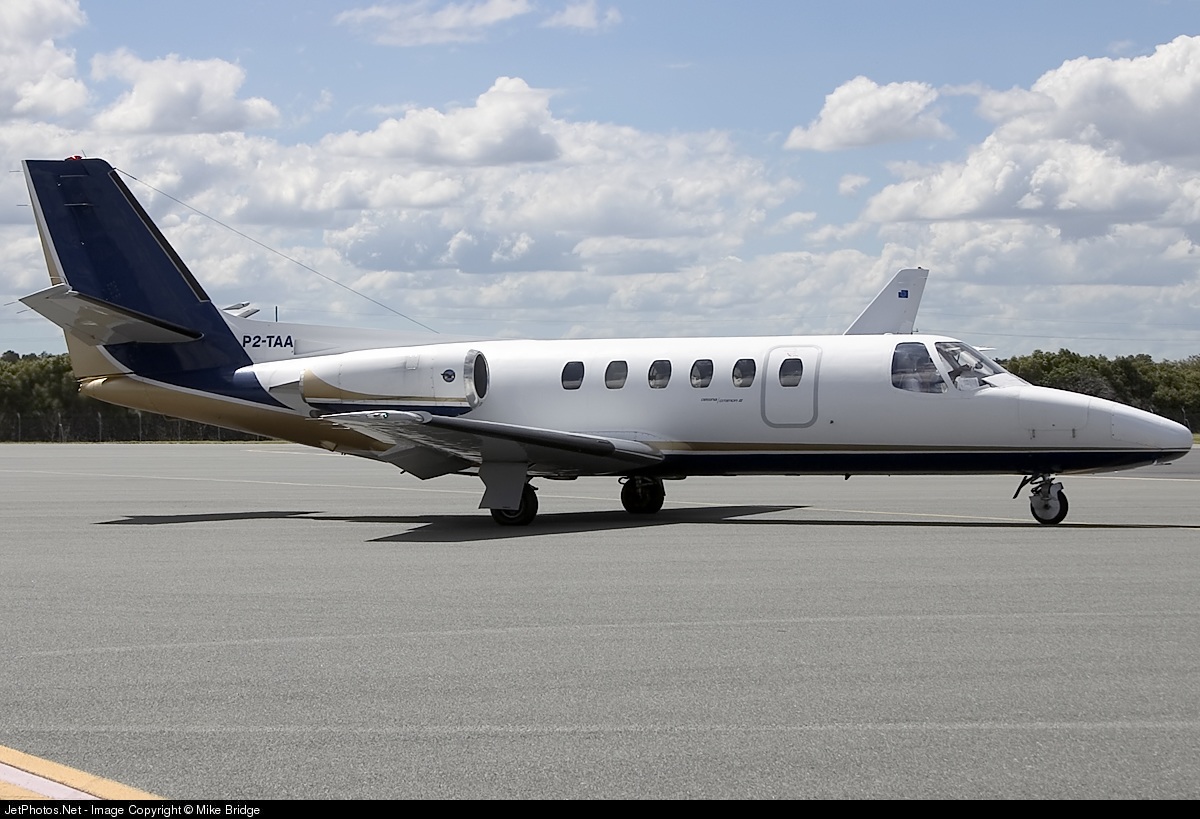
Crash of a Cessna 550 Citation II in Bwagaoia: 4 killed

Date & Time: Aug 31, 2010 at 1615 LT
Type of aircraft:
Registration:
P2-TAA
Survivors:
Yes
Schedule:
Port Moresby – Bwagaoia
MSN:
550-0145
YOM:
1980
Region:
Crew on board:
2
Crew fatalities:
Pax on board:
3
Pax fatalities:
Other fatalities:
Total fatalities:
4
Captain / Total flying hours:
14591
Copilot / Total flying hours:
872
Aircraft flight hours:
14268
Circumstances:
The aircraft was conducting a charter flight from Jackson’s International Airport, Port Moresby, National Capital District, Papua New Guinea (PNG), to Bwagaoia Aerodrome, Misima Island, Milne Bay Province, PNG (Misima). There were two pilots and three passengers on board for the flight. The approach and landing was undertaken during a heavy rain storm over Bwagaoia Aerodrome at the time, which resulted in standing water on the runway. This water, combined with the aircraft’s speed caused the aircraft to aquaplane. There was also a tailwind, which contributed the aircraft to landing further along the runway than normal. The pilot in command (PIC) initiated a baulked landing procedure. The aircraft was not able to gain flying speed by the end of the runway and did not climb. The aircraft descended into terrain 100 m beyond the end of the runway. The aircraft impacted terrain at the end of runway 26 at 1615:30 PNG local time and the aircraft was destroyed by a post-impact, fuel-fed fire. The copilot was the only survivor. Other persons who came to assist were unable to rescue the remaining occupants because of fire and explosions in the aircraft. The on-site evidence and reports from the surviving copilot indicated that the aircraft was serviceable and producing significant power at the time of impact. Further investigation found that the same aircraft and PIC were involved in a previous landing overrun at Misima Island in February 2009.
Probable cause:
Contributing safety factors:
• The operator’s processes for determining the aircraft’s required landing distance did not appropriately consider all of the relevant performance factors.
• The operator’s processes for learning and implementing change from the previous runway overrun incident were ineffective.
• The flight crew did not use effective crew resource management techniques to manage the approach and landing.
• The crew landed long on a runway that was too short, affected by a tailwind, had a degraded surface and was water contaminated.
• The crew did not carry out a go-around during the approach when the visibility was less than the minimum requirements for a visual approach.
• The baulked landing that was initiated too late to assure a safe takeoff.
Other safety factors:
• The aircraft aquaplaned during the landing roll, limiting its deceleration.
• The runway surface was described as gravel, but had degraded over time.
• The weather station anemometer was giving an incorrect wind indication.
Final Report:
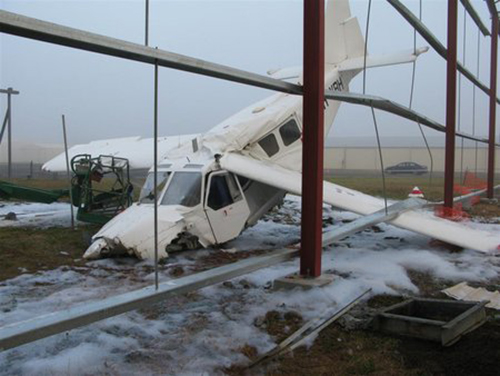
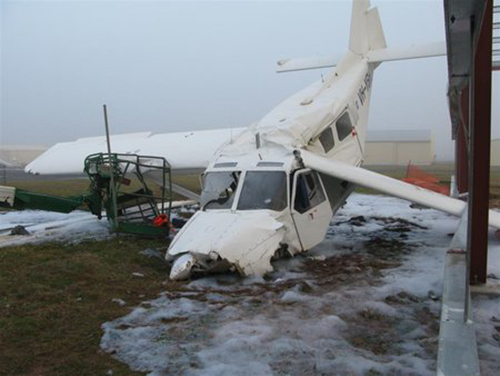
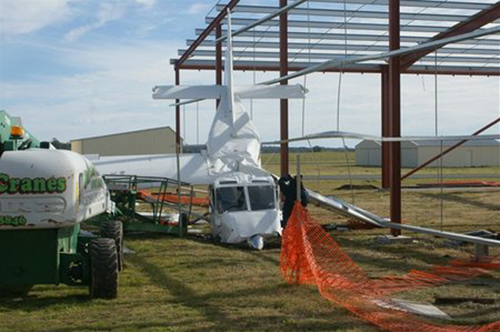
Crash of a Gippsland GA-8 Airvan in Orange

Date & Time: Jul 6, 2010 at 1745 LT
Type of aircraft:
Operator:
Registration:
VH-YBH
Flight Type:
Survivors:
Yes
Schedule:
Parkes - Orange
MSN:
GA8-08-131
YOM:
2008
Country:
Region:
Crew on board:
1
Crew fatalities:
Pax on board:
0
Pax fatalities:
Other fatalities:
Total fatalities:
0
Circumstances:
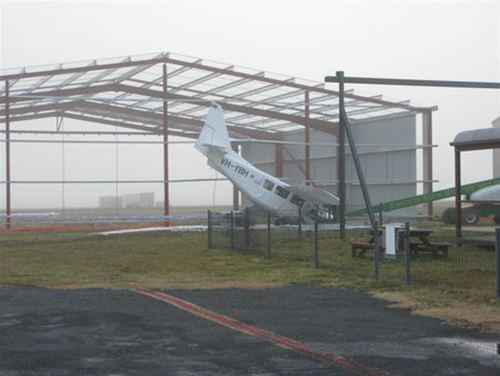
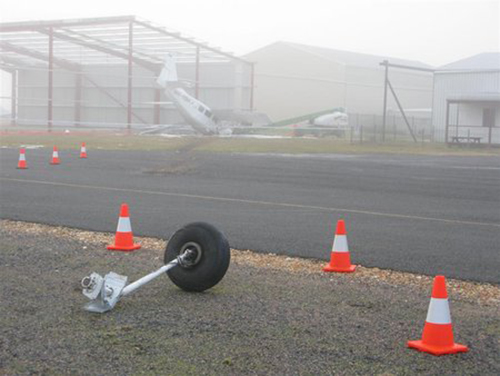
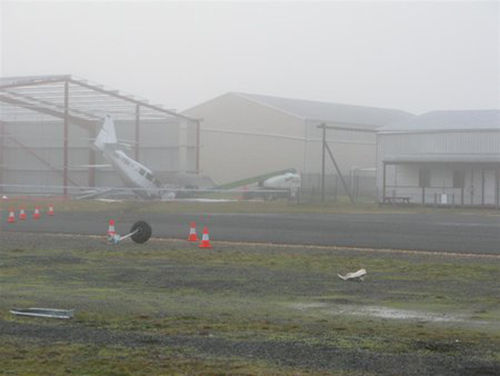
The pilot was performing a cargo flight from Parkes to Orange, New South Wales. On final approach, the single engine aircraft was too low and impacted the roof of a metal hangar located near the runway threshold. The aircraft stalled and struck the runway surface. Upon impact, the nose gear was torn off. Out of control, the aircraft veered off runway and eventually collided with a metal hangar under construction. While the pilot was injured, the aircraft was destroyed.