





Date & Time:
Jul 19, 2024 at 1904 LT
Type of aircraft:
Beechcraft 60 Duke
Operator:

Registration:
N23553
Flight Phase:
Landing (descent or approach)
Flight Type:
Private
Survivors:
No
Schedule:
Plattsburgh - Columbus
MSN:
P-453
YOM:
1978
Country:
United States of America
Region:
North America
Crew on board:
1
Crew fatalities:
1
Pax on board:
2
Pax fatalities:
2
Other fatalities:
0
Total fatalities:
3
Captain / Total hours on type:
46
Aircraft flight hours:
4579
Circumstances:
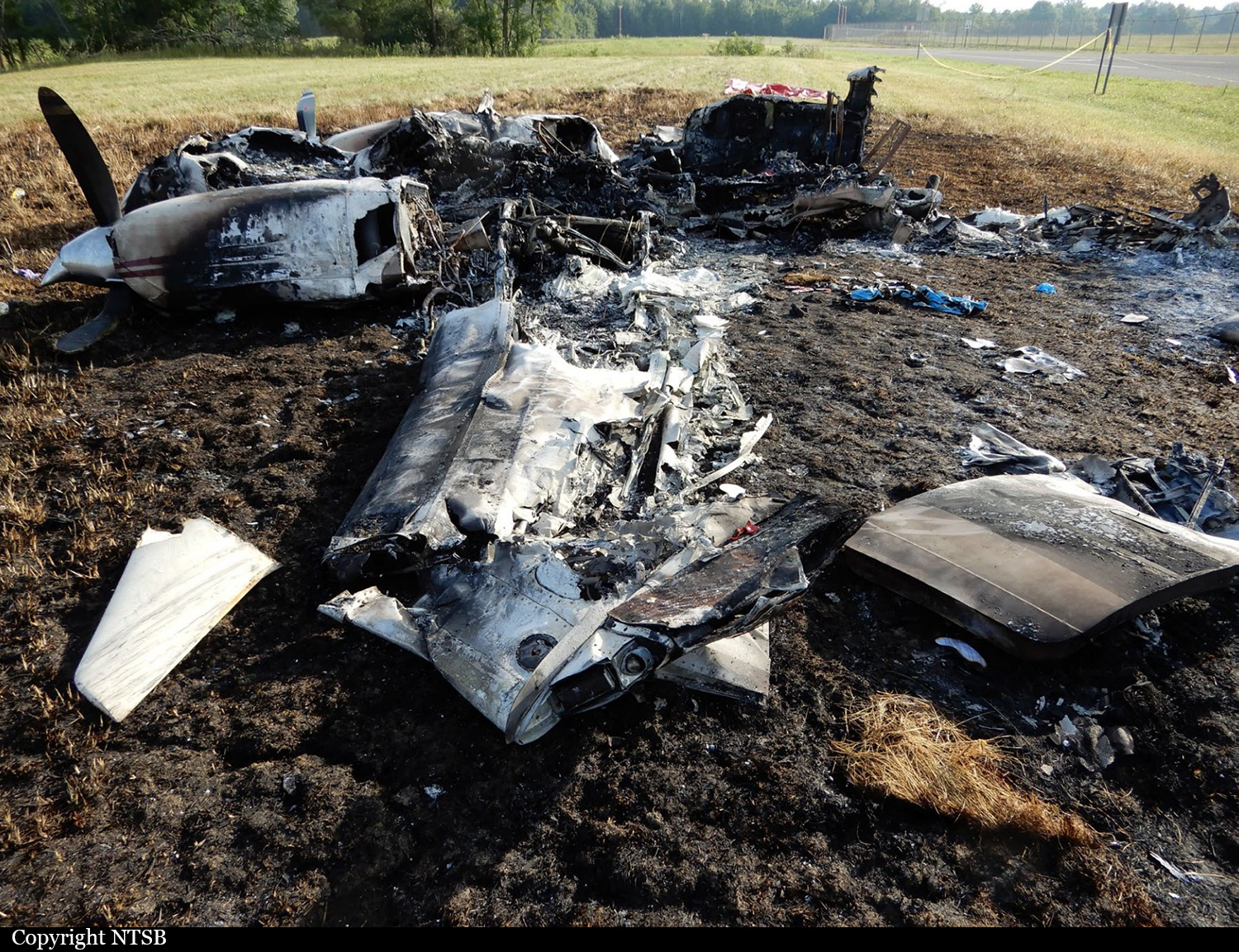
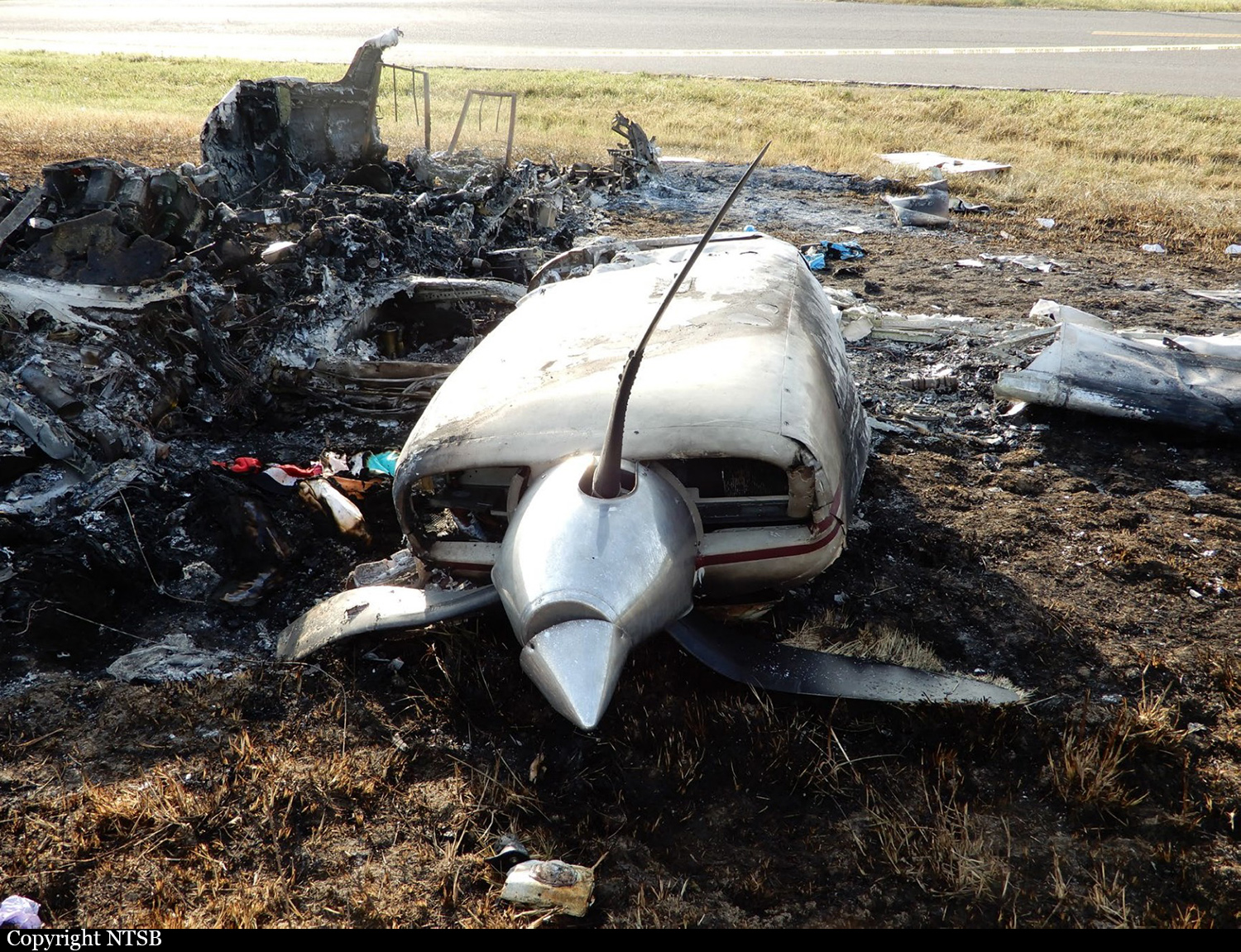
During the cruise portion of the cross-country flight, the pilot/owner informed air traffic control that the airplane’s left engine had lost power and he could not maintain altitude. The controller offered information on a nearby airport; however, the pilot requested, and then proceeded to, an airport farther away with a 9,003-ft-long runway. After twice circling the approach end of the runway to the left while descending, the pilot proceeded down the runway well above a normal glide path. A witness reported that the airplane never touched down, and track data showed that the airplane’s ground speed increased while over the runway. Airport surveillance video showed the airplane pitch up and to the left at the departure end of the runway. It continued into a left, descending turn until it impacted the ground about ¼ mile west of the departure end of the runway. Given this information, it is most likely that the pilot was unsuccessful in achieving an appropriate altitude and airspeed, which likely resulted in the pilot performing a single-engine go-around. During the subsequent climb and maneuvering, he lost control of the airplane, which resulted in an uncontrolled descent and impact with terrain. The wreckage was destroyed by impact forces and a postimpact fire. The left engine’s propeller blades were feathered and showed no indications of powered rotation at impact, while the right engine’s propeller blades showed damage signatures consistent with powered rotation at impact. A postaccident examination of the left engine revealed severe detonation damage of the No. 4 cylinder piston. Further examination of the left engine fuel servo revealed a significant amount of sand-like contamination in the servo inlet filter, which matched the properties of polyethylene terephthalate (PET), which is a thermoplastic polymer of the polyester family commonly found in fuel system components. The examination of the right engine fuel servo revealed that it was also contaminated with the same substance. The right engine’s spark plugs and one of its cylinders also displayed signatures consistent with a lean fuel to air ratio. Given this evidence, it is likely that the engines were operating with unpredictable fuel to air ratios due to the fuel system contamination, which likely contributed to the detonation in the left engine and pilot’s description that the engine lost power. The investigation was unable to determine how or when the PET was introduced into the fuel system due to the postimpact fire damage.
Probable cause:
The pilot’s loss of airplane control during a single-engine go-around. Also contributing to the accident was fuel system contamination, which resulted in detonation and a total loss of left engine power.
Final Report:
N23553.pdf1.14 MB

