



Date & Time:
Nov 11, 1969 at 1832 LT
Type of aircraft:
BAe 125
Operator:

Registration:
CF-CFL
Flight Phase:
Landing (descent or approach)
Flight Type:
Executive/Corporate/Business
Survivors:
No
Schedule:
Churchill Falls - Wabush - Montreal
MSN:
25193/NA725
YOM:
1969
Country:
Canada
Region:
North America
Crew on board:
2
Crew fatalities:
2
Pax on board:
6
Pax fatalities:
6
Other fatalities:
0
Total fatalities:
8
Captain / Total hours on type:
1200
Copilot / Total hours on type:
27
Aircraft flight hours:
53
Circumstances:
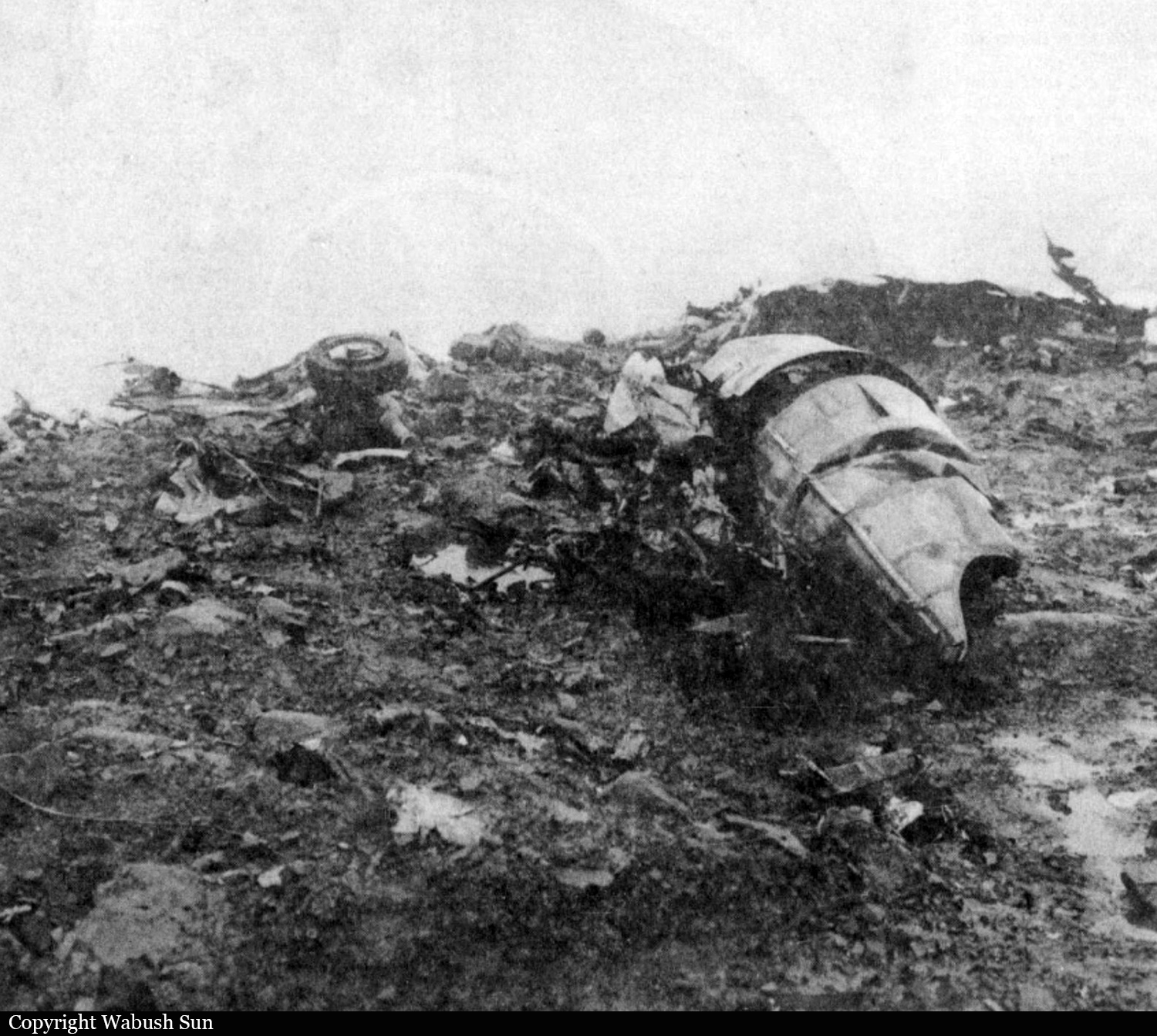
The twin engine aircraft departed Churchill Falls Airport at 1800LT on a 20-minute flight to Wabush. As it neared destination, Moncton Centre cleared the aircraft to the Wabush airport to perform an ADF approach on the WK beacon, a cancelled procedure. This clearance was acknowledged and read back by the copilot. The WK is an airway beacon; however, the only currently approved instrument approach procedure at Wabush was based on the WZ beacon. At 1829LT, the pilot reported to the tower that he had crossed the beacon and was on the final approach to the runway. Minutes later, eyewitnesses saw the aircraft north of the WK beacon clear of cloud on a northerly heading. Figure 1 shows that flying the approved approach procedure on the WK beacon rather than on the WZ resulted in a 6-mile northward displacement of the approach pattern. Having crossed over a beacon that the pilot apparently assumed incorrectly to be south of the field, he was now flying at his minimum approach altitude expecting to see the runway ahead. Routine transmissions from the aircraft were heard before the impact. The aircraft crashed 5,5 miles north of the WK beacon into the rock face of a lighted open-pit mine, killing all eight persons on board, among them Donald J. McParland, President of Churchill Falls (Labrador) Corporation, his assistant John Lethbridge, Eric Lambert and three employees of the Acres Canadian Bechtel.
Probable cause:
The following findings were identified:
- The ATC agency cleared the pilot to perform an approach procedure cancelled six months before, a procedure of which he, as an itinerant pilot with an up-to-date approach publication, would probably have no knowledge.
- One of the aircraft's two ADF sets had been unserviceable during this and preceding flights. The flight plan specified a fuel endurance limiting the flight to a region in which there were only non-directional navigation aids. For this flight, under instrument flight rules two serviceable ADFs are required.
- The copilot received and accepted the incorrect clearance. Since the copilot did not hold an instrument rating, there was no proof of competence relevant to instrument flight procedures. His effectiveness as a copilot on an IFR night flight, in a high speed jet aircraft, could have been limited as a result of his relative inexperience.
- There was evidence of uncertainty among some pilots and the ATC centre staff as to whether the WK procedure had in fact been cancelled. The cancelled procedure page of the Canada Air Pilot had been retained and used routinely by the ATC centre and some pilots.
Assigned causes:
- The pilot was cleared by the ATC centre to perform a cancelled approach procedure.
- The pilot performed the currently approved procedure on the wrong beacon.
- The ATC agency cleared the pilot to perform an approach procedure cancelled six months before, a procedure of which he, as an itinerant pilot with an up-to-date approach publication, would probably have no knowledge.
- One of the aircraft's two ADF sets had been unserviceable during this and preceding flights. The flight plan specified a fuel endurance limiting the flight to a region in which there were only non-directional navigation aids. For this flight, under instrument flight rules two serviceable ADFs are required.
- The copilot received and accepted the incorrect clearance. Since the copilot did not hold an instrument rating, there was no proof of competence relevant to instrument flight procedures. His effectiveness as a copilot on an IFR night flight, in a high speed jet aircraft, could have been limited as a result of his relative inexperience.
- There was evidence of uncertainty among some pilots and the ATC centre staff as to whether the WK procedure had in fact been cancelled. The cancelled procedure page of the Canada Air Pilot had been retained and used routinely by the ATC centre and some pilots.
Assigned causes:
- The pilot was cleared by the ATC centre to perform a cancelled approach procedure.
- The pilot performed the currently approved procedure on the wrong beacon.
Final Report:
CF-CFL.pdf6.77 MB

