Date & Time:
Jul 27, 1989 at 0709 LT
Type of aircraft:
Douglas DC-10
Operator:

Registration:
HL7328
Flight Phase:
Landing (descent or approach)
Flight Type:
Scheduled Revenue Flight
Survivors:
Yes
Site:
City
Schedule:
Seoul - Bangkok - Jeddah - Tripoli
MSN:
47887
YOM:
1973
Flight number:
KE803
Country:
Libya
Region:
Africa
Crew on board:
18
Crew fatalities:
4
Pax on board:
181
Pax fatalities:
70
Other fatalities:
6
Total fatalities:
80
Captain / Total hours on type:
7255
Copilot / Total hours on type:
7058
Aircraft flight hours:
49025
Aircraft flight cycles:
11361
Circumstances:
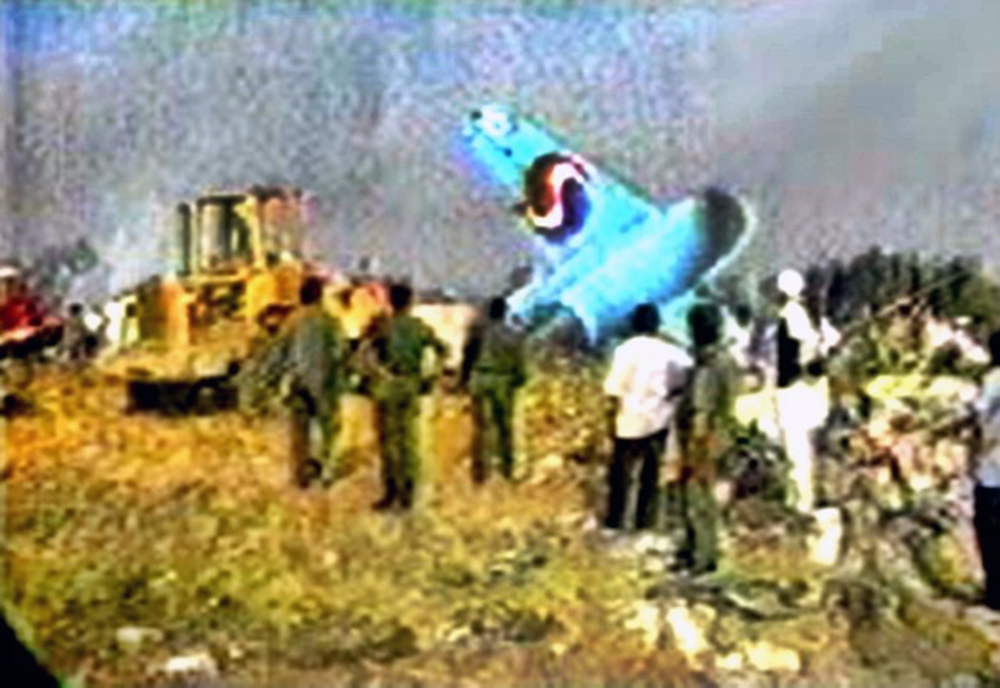
The approach to Tripoli Intl Airport was completed in below weather minima as the visibility was varying between 100 and 800 feet and the ILS on runway 27 was unserviceable. On short final, the crew failed to realize his altitude was too low when the aircraft struck the roof of a house, stalled and crashed in a residential area located 2,4 km short of runway. Four crew members and 70 passengers were killed as well as six people on the ground. 124 people in the aircraft were injured as well as few dozen on the ground.
Probable cause:
The following factors were identified:
1) Crew fatigue due to lack of proper sleep affecting their mental concentration on the operation of the aircraft and their performance led to:
a) Captain failed to make proper weather and NDB Approach Briefing.
b) The flight crew continued the approach in bad visibility below company and Jeppesen minima for NDB Approach and failed to follow the prescribed procedures.
c) The flight crew failed to grasp the actual visibility information given by the ACC as 50 metres.
d) F/O and F/E failed to follow the Captain's instructions.
2) The available GPWS failed to maintain the warning while the aircraft still in dangerous situation in colliding with terrain.
3) Flight crew simulator training was conducted on an aircraft simulator differently equipped from the crashed aeroplane especially in the GPWS.
1) Crew fatigue due to lack of proper sleep affecting their mental concentration on the operation of the aircraft and their performance led to:
a) Captain failed to make proper weather and NDB Approach Briefing.
b) The flight crew continued the approach in bad visibility below company and Jeppesen minima for NDB Approach and failed to follow the prescribed procedures.
c) The flight crew failed to grasp the actual visibility information given by the ACC as 50 metres.
d) F/O and F/E failed to follow the Captain's instructions.
2) The available GPWS failed to maintain the warning while the aircraft still in dangerous situation in colliding with terrain.
3) Flight crew simulator training was conducted on an aircraft simulator differently equipped from the crashed aeroplane especially in the GPWS.
Final Report:
HL7328.pdf3.62 MB