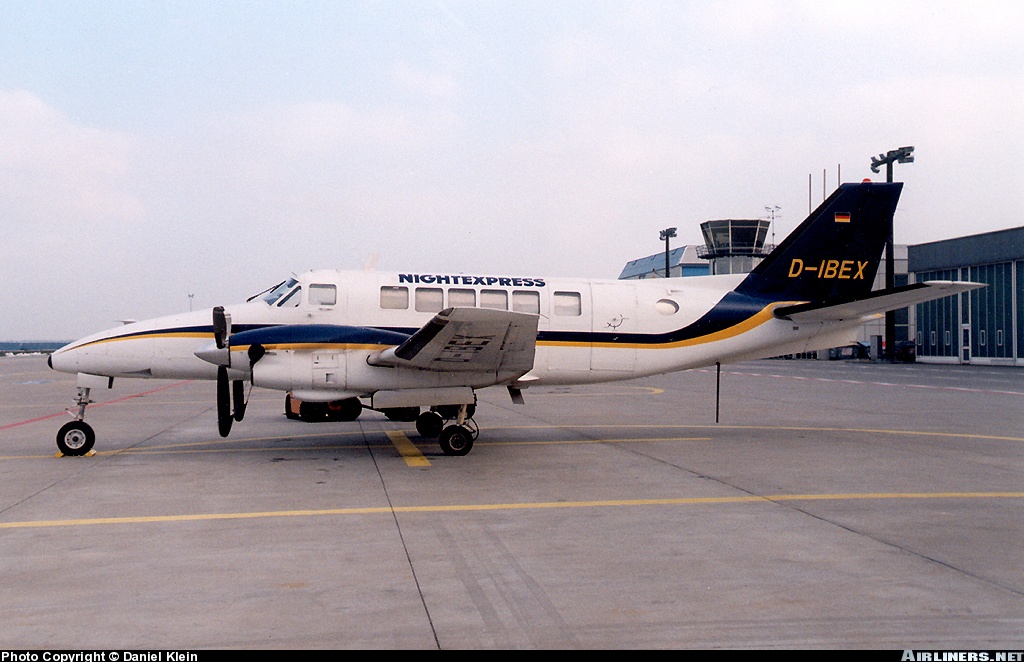
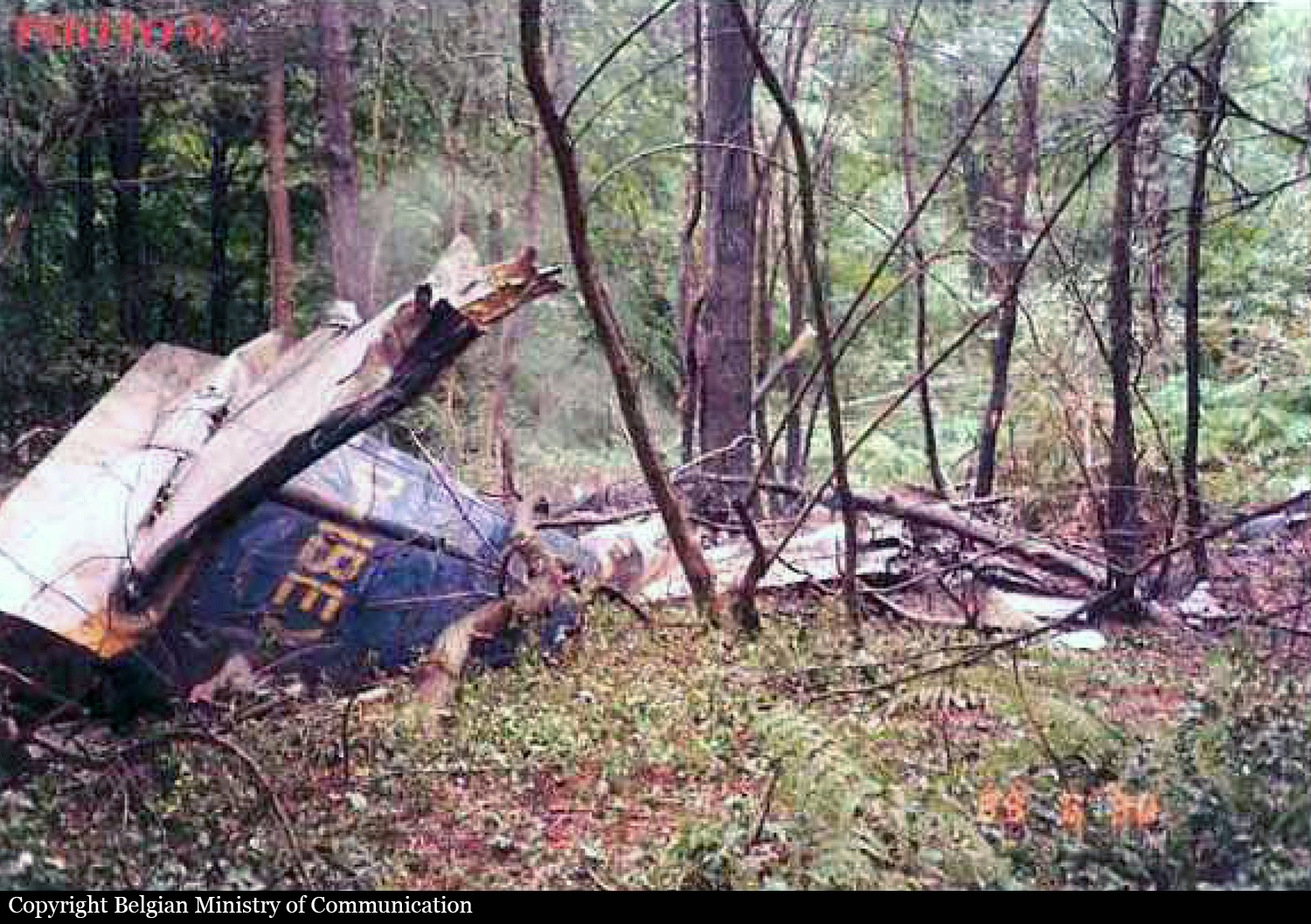
Date & Time:
Jun 30, 1999 at 0443 LT
Type of aircraft:
Beechcraft 99 Airliner
Operator:

Registration:
D-IBEX
Flight Phase:
Landing (descent or approach)
Flight Type:
Cargo
Survivors:
No
Site:
Plain, Valley
Schedule:
Luton - Frankfurt
MSN:
U-45
YOM:
1968
Flight number:
EXT114
Country:
Belgium
Region:
Europe
Crew on board:
2
Crew fatalities:
2
Pax on board:
0
Pax fatalities:
0
Other fatalities:
0
Total fatalities:
2
Captain / Total hours on type:
8200
Copilot / Total hours on type:
590
Aircraft flight hours:
34946
Circumstances:
En route from Luton to Frankfurt, while on a night cargo service (flight EXT114), at an altitude of 11,000 feet, the right engine failed and was shut down by the crew. Four minutes later, the left engine failed as well. The crew sent a Pan call and was cleared to divert to Liege-Bierset Airport. Vectored for an approach to runway 23L, the airplane passed FL040 when it entered an uncontrolled descent and crashed in a wooded area located in Seraing, in the south suburb of Liege, 8,3 km southeast of Liege Airport. The aircraft was destroyed by impact forces and both pilots were killed.
Probable cause:
Following the deterioration of the right engine’s turbine blade, one of them broke off, causing significant damage to the turbine and downstream components, which led to the engine shutting down. At that point, in violation of company regulations, the captain decided to continue the flight on one engine while maintaining altitude and a relatively high speed, which required maximum or near-maximum power from the left engine. About four minutes after the right engine shut down, the left engine also failed, following the failure of a compressor turbine blade; the exact cause could not be determined with certainty, but the stress imposed on it at high RPM and temperature certainly contributed to this failure. The crew did not transmit a Mayday call to Air Traffic Control, but did transmit a Pan call on the frequency. The crew did not set the distress code 7700 on their transponder. The controller interpreted this message as a medical issue, which did not strike him as urgent. When the aircraft was transferred to approach control, the problem reported was a medical issue. Immediately, the controller instructed the crew to proceed with a landing procedure to runway 23L at Liege Airport, which was much longer than bringing the aircraft directly in a cross-traffic procedure to runway 05R. When the crew switched frequencies to approach control, the approach controller continued the procedure for runway 23L. The problem reported to him was medical, and, in his mind, there was no reason to clear the crew for a short approach to runway 05R. It was only when the aircraft approached FL040 it was supposed to maintain and the crew told him it was impossible due to a lack of engine power that the approach controller realized the urgency of the situation and directed the aircraft toward the runway at a 90° procedure. At that moment, the aircraft was at such an altitude and distance from the runway that it was impossible for it to reach the runway. At no point did the crew appear to have taken any initiative to attempt to resolve their problem.
The following contributing factors were identified:
- The absence of the seal on the inner guide vane drum of the right engine led to abnormal wear of the guide vanes and subsequently the fracture of a turbine blade, resulting in the engine shutdown.
- At that point, the crew decided to continue the flight, thereby violating the Standard Operating Procedures. An immediate diversion would have subjected the left engine to less stress.
- Approximately four minutes after the right engine shut down, a blade in the left engine’s compressor turbine broke, causing that engine to shut down.
- The crew did not clearly inform ATC about their situation. Sending a Mayday call was fully justified.
- The air traffic controller interpreted the Pan Call as a medical emergency and therefore initiated a standard landing procedure at Liege Airport instead of a cross-traffic emergency procedure. Had the latter been initiated in time and executed correctly, it would have allowed the aircraft to reach the runway.
- The time of day when the events occurred and the lighting conditions contributed to impairing the performance of the crew and the controllers.
- The lack of initiative on part of the crew.
The following contributing factors were identified:
- The absence of the seal on the inner guide vane drum of the right engine led to abnormal wear of the guide vanes and subsequently the fracture of a turbine blade, resulting in the engine shutdown.
- At that point, the crew decided to continue the flight, thereby violating the Standard Operating Procedures. An immediate diversion would have subjected the left engine to less stress.
- Approximately four minutes after the right engine shut down, a blade in the left engine’s compressor turbine broke, causing that engine to shut down.
- The crew did not clearly inform ATC about their situation. Sending a Mayday call was fully justified.
- The air traffic controller interpreted the Pan Call as a medical emergency and therefore initiated a standard landing procedure at Liege Airport instead of a cross-traffic emergency procedure. Had the latter been initiated in time and executed correctly, it would have allowed the aircraft to reach the runway.
- The time of day when the events occurred and the lighting conditions contributed to impairing the performance of the crew and the controllers.
- The lack of initiative on part of the crew.
Final Report:
D-IBEX-1.pdf40.75 MB