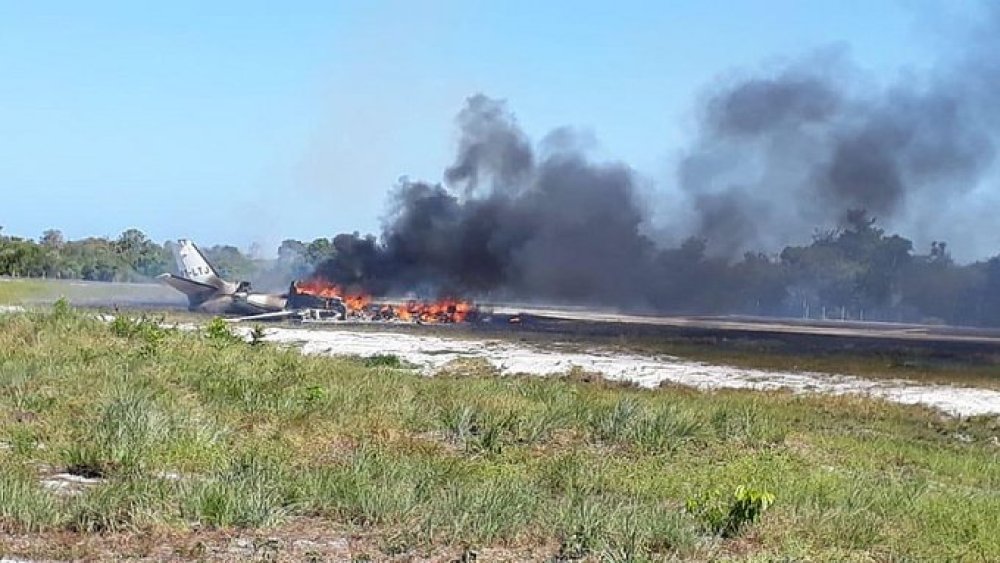
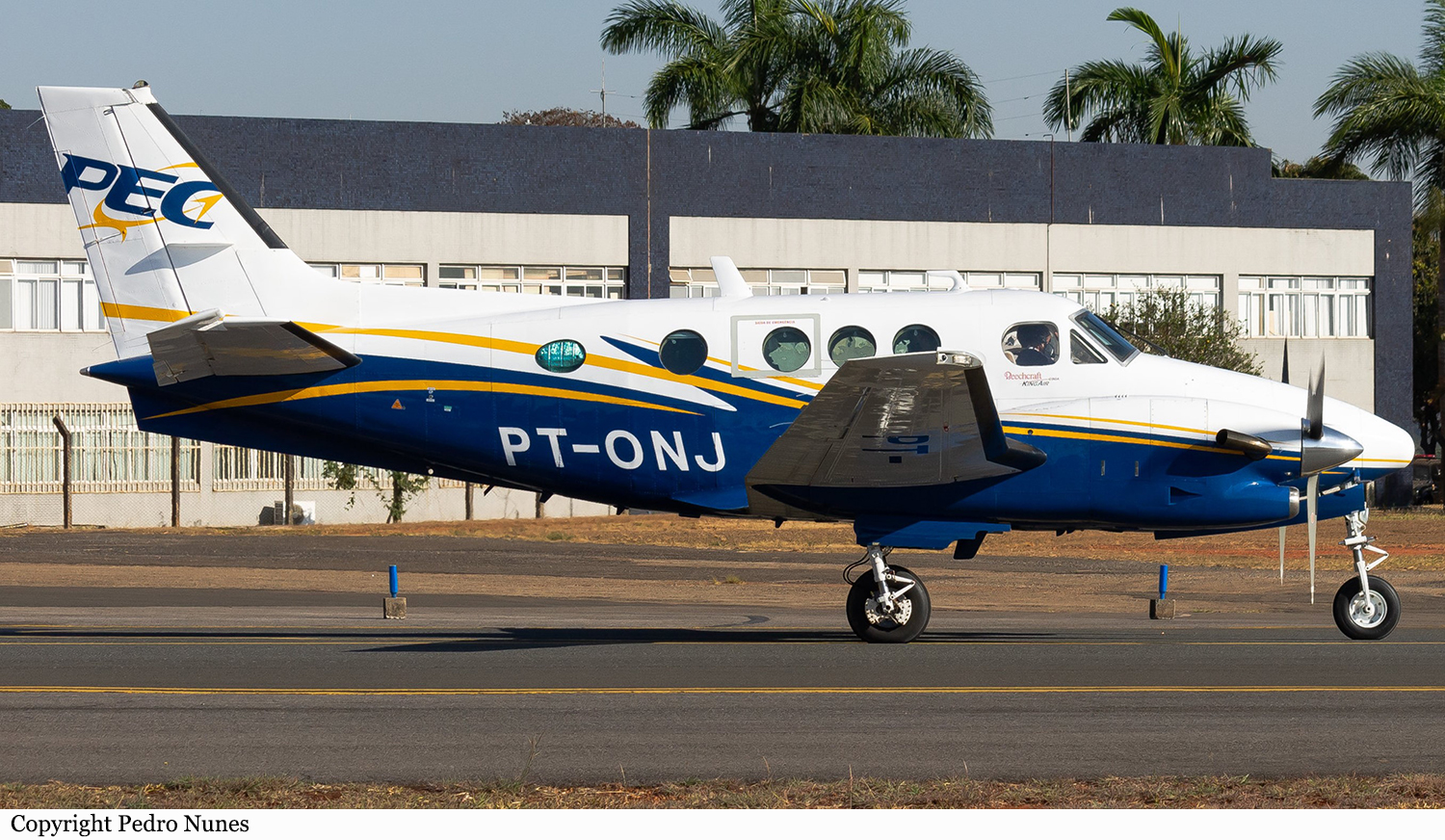
Crash of a Beechcraft C90A King Air in Caratinga: 5 killed

Date & Time: Nov 5, 2021 at 1515 LT
Type of aircraft:
Operator:
Registration:
PT-ONJ
Survivors:
No
Schedule:
Goiânia – Caratinga
MSN:
LJ-1078
YOM:
1984
Country:
Crew on board:
2
Crew fatalities:
Pax on board:
3
Pax fatalities:
Other fatalities:
Total fatalities:
5
Captain / Total flying hours:
16352
Copilot / Total flying hours:
2768
Circumstances:
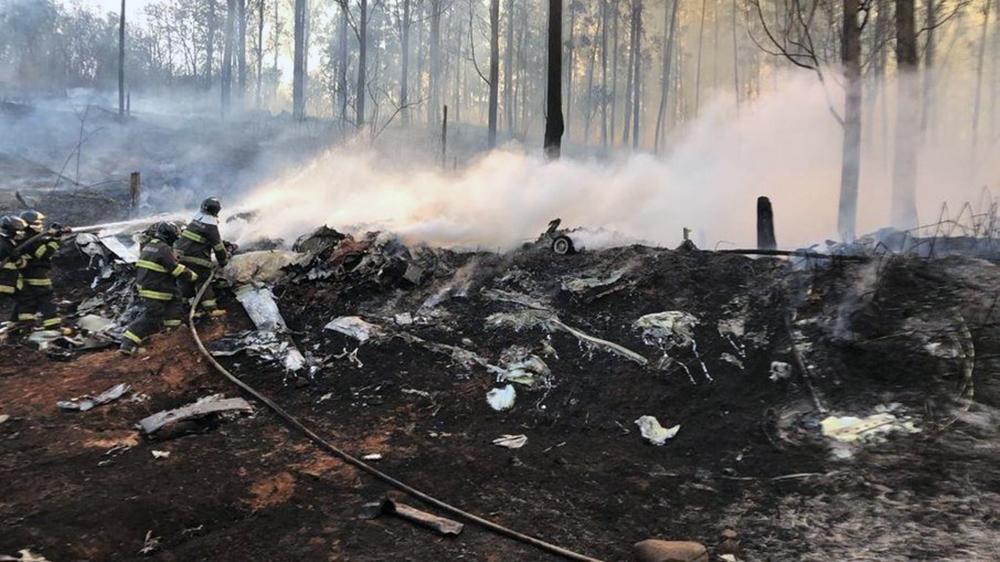
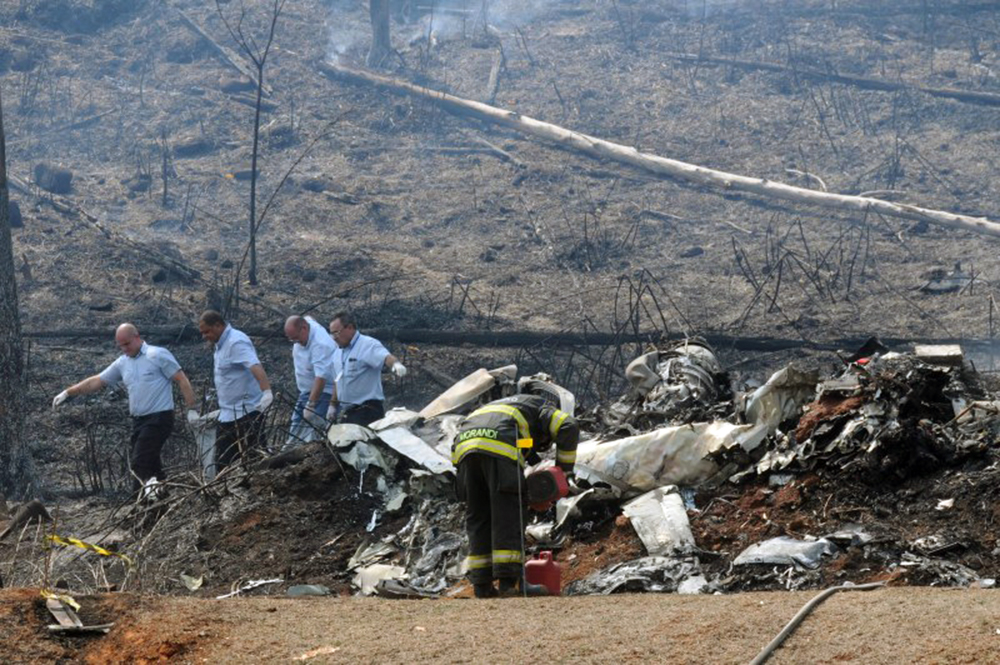
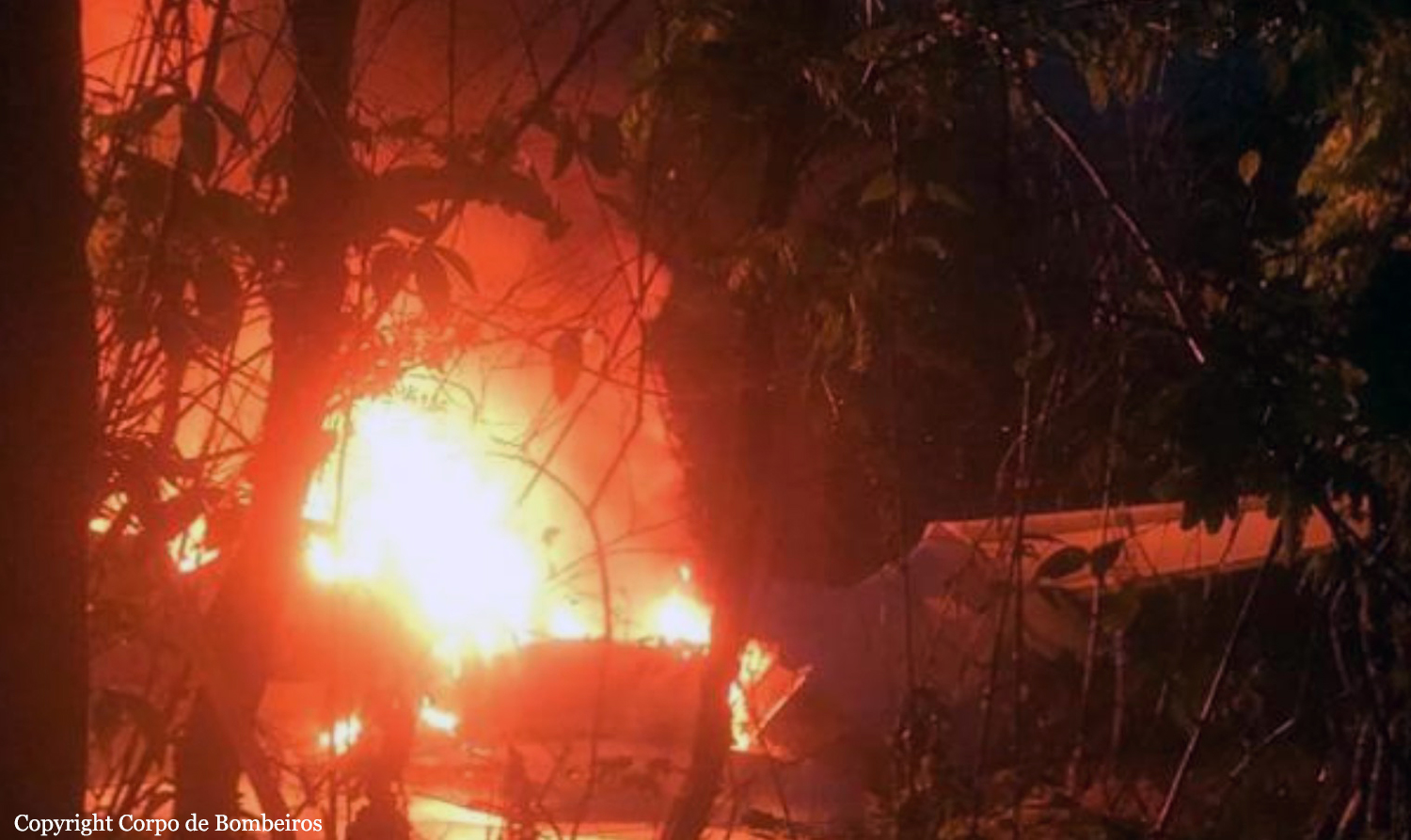
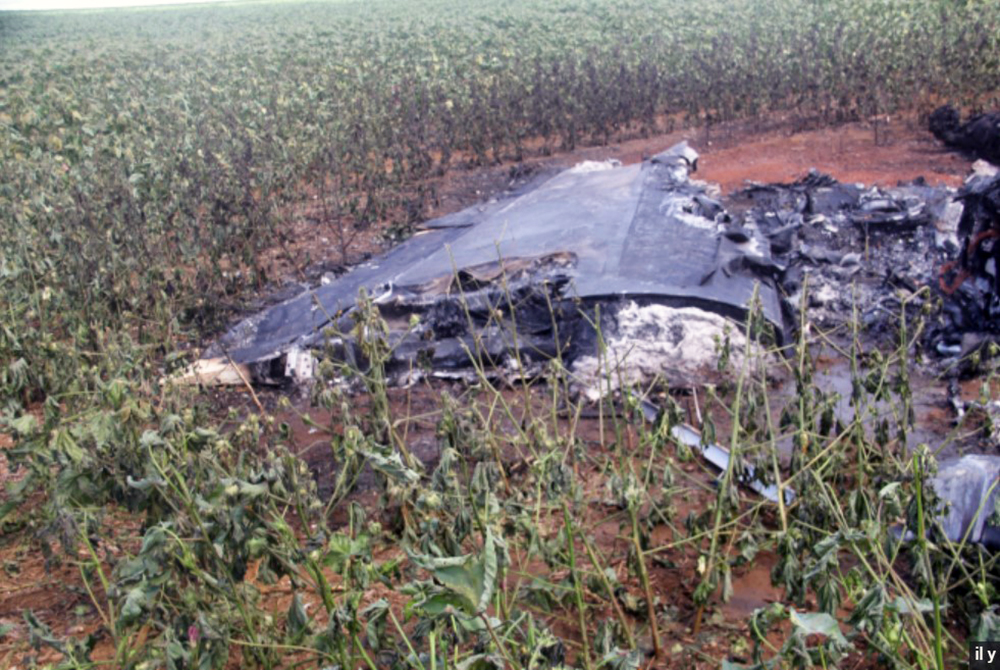
The twin engine airplane departed Goiânia-Santa Genoveva Airport on a taxi flight to Caratinga, carrying three passengers and two pilots. On final approach to Caratinga-Ubaporanga Airport in VFR conditions, the airplane collided with a lightning rod located on the top of a high-voltage pylon. Upon impact, the left engine was torn off and the airplane stalled before crashing in a river bed located about 4,1 km short of runway 02. The airplane was destroyed by impact forces and all five occupants were killed, among them the Brazilian singer Marília Mendonça aged 26.
Probable cause:
The following factors were identified:
- Attention – undetermined.
It was found the possibility that the PT-ONJ aircraft crew had their attention (focused vision) on the runway at the expense of maintaining proper separation with the terrain on a visual approach.
- Piloting judgment – a contributor.
Regarding the approach to landing profile, there was an inadequate assessment of the aircraft's operating parameters, since the downwind leg was elongated by a significantly greater distance than that expected for a "Category B" aircraft in landing procedures under VFR.
- Memory – undetermined.
It is likely that, based on the experience of ten years of operation in a company governed by the RBAC 121, the PIC procedural memory has influenced the decisions made concerning the conduct of the aircraft. The habit of performing long final approaches in another type of operation may have activated his procedural memory, involving cognitive activities and motor skills, making the actions automated in relation to the profile performed in the accident.
- Flight planning – undetermined.
A possible non-use of the available aeronautical charts (CAP 9453 and WAC 3189), which were intended to meet the needs of visual flight, may have contributed to low situational awareness about the characteristics of the relief around the SNCT Aerodrome and the presence of the power grid that interfered with the aircraft's landing approach.
Final Report:
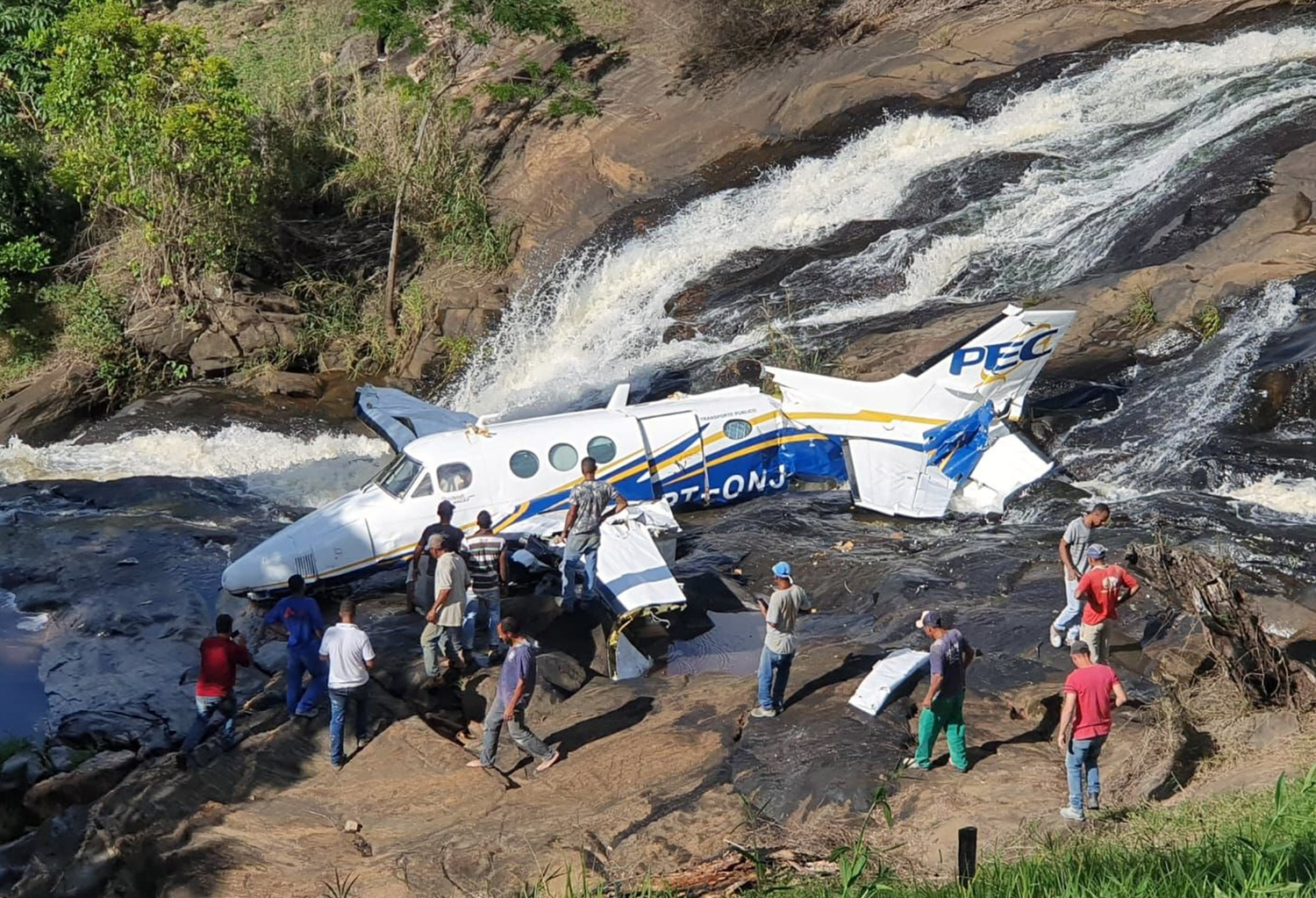
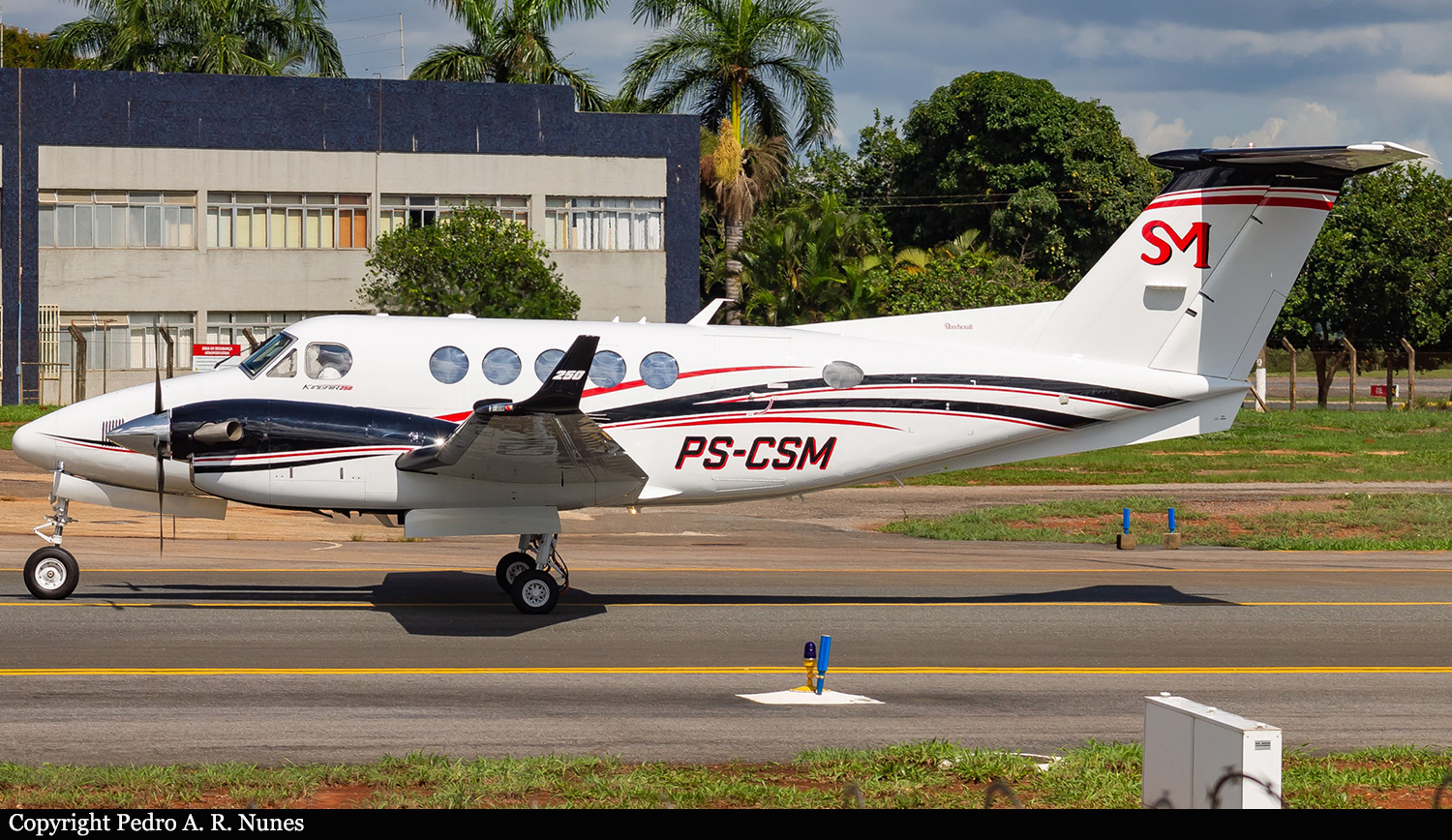
Crash of a Beechcraft B250GT Super King Air in Piracicaba: 7 killed

Date & Time: Sep 14, 2021 at 0835 LT
Operator:
Registration:
PS-CSM
Flight Phase:
Flight Type:
Survivors:
No
Schedule:
Piracicaba - Fazenda Tarumã
MSN:
BY-364
YOM:
2019
Country:
Crew on board:
2
Crew fatalities:
Pax on board:
5
Pax fatalities:
Other fatalities:
Total fatalities:
7
Captain / Total flying hours:
8366
Captain / Total hours on type:
297.00
Copilot / Total flying hours:
504
Copilot / Total hours on type:
85
Aircraft flight hours:
268
Circumstances:
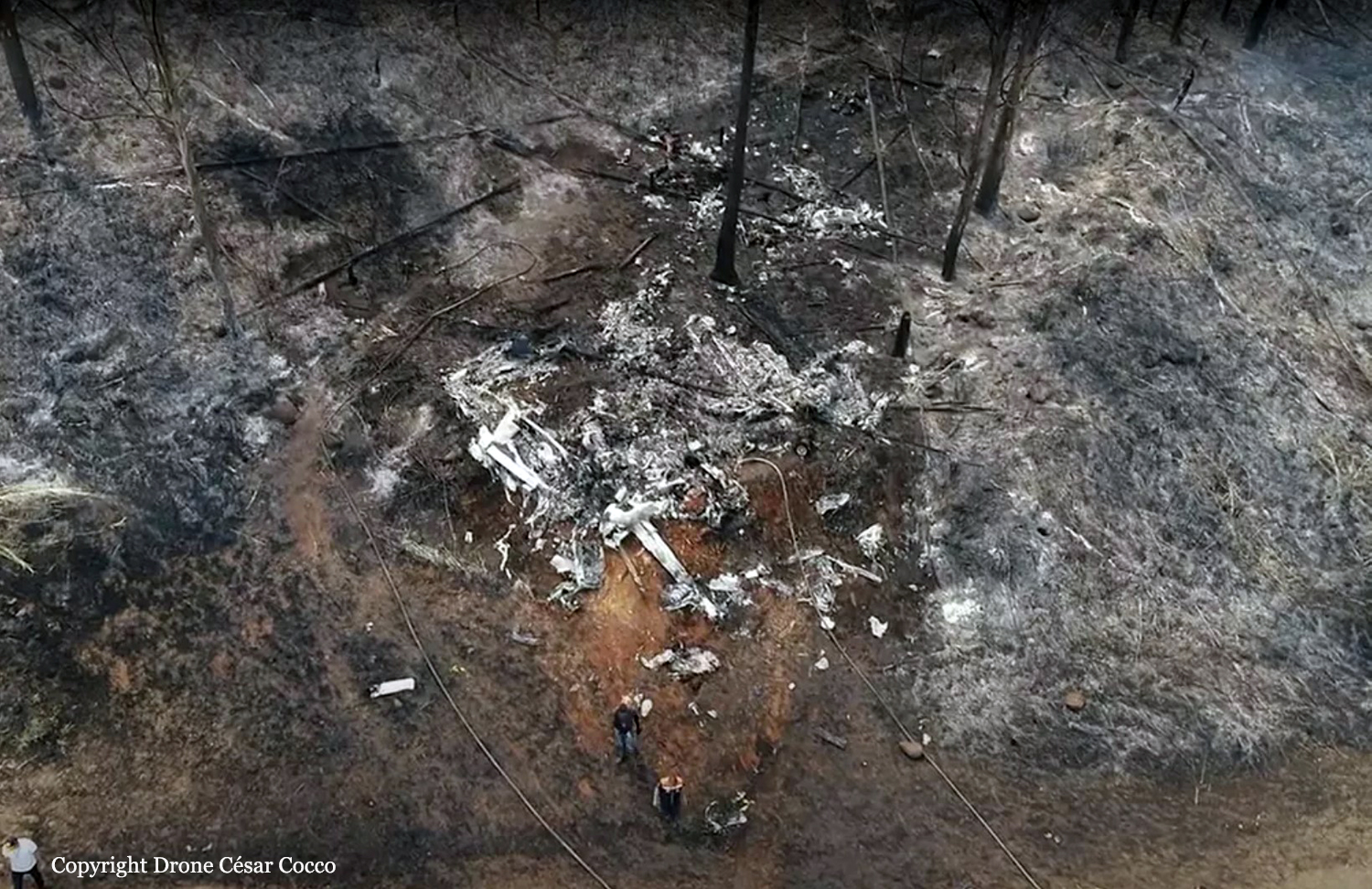
Shortly after takeoff from Piracicaba Airport Runway 35, while in initial climb, the stall warning alarm sounded in the cockpit and the twin engine airplane encountered difficulties to gain height. It entered a right turn then descended to the ground and crashed in a eucalyptus forest located about 1,5 km north of the airport. The airplane disintegrated on impact and all seven occupants were killed, among them the Brazilian businessman Celso Silveira Mello Filho aged 73 who was travelling with his wife and three kids.
Crew:
Celso Elias Carloni, pilot,
Giovani Dedini Gulo, copilot.
Passengers:
Celso Silveira Mello Filho,
Maria Luiza Meneghel,
Celso Meneghel Silveira Mello,
Camila Meneghel Silveira Mello Zanforlin,
Fernando Meneghel Silveira Mello.
Probable cause:
Contributing factors:
- Attention - a contributor.
The analysis of the pilots' performance during the flight of the previous day revealed episodes of inattention, such as those related to the lowering of the landing gear. In the accident flight, the crew fixated on the excessive RPM, failing to notice in a timely manner that the speed was decreasing, something that limited their ability to promptly respond to the stall condition.
- Attitude - a contributor.
During the accident flight, it was noted that the aircraft rotated at a speed of 102 knots, being such speed consistent with the prescribed aircraft’s maximum takeoff weight. However, because the aircraft’s weight was 1,374 pounds above the MTOW, when it rotated at the referred speed, a continuous 1 kHz alarm sounded, indicating that it had entered a pre-stall condition. Such improvisational approach regarding the MTOW exacerbated the situation, contributing to the outcome of the accident.
Training - undetermined.
The classification of the aircraft by the Brazilian Regulatory Agency as a “class aircraft” may have contributed to the training required from pilots being insufficient to ensure their proficiency in handling emergencies on the B200GT aircraft.
- Work-group culture - undetermined.
According to reports, the belief that the King Air aircraft was capable of taking off with a weight greater than the one specified by the manufacturer was common among operators to whom the investigators had access. This belief may have contributed to the decision made to conduct the flight under those conditions, influencing the takeoff performance.
- Handling of aircraft flight controls - undetermined.
After the retraction of the landing gear, a command to reduce aircraft power was applied by the PIC, which preceded the stall warning. Following this warning, a possible command for feathering one of the propellers may have triggered loss of control of the aircraft.
- Piloting judgment - a contributor.
The takeoff in which the accident occurred was performed 1,374 pounds above the weight limit prescribed in the AFM. Speeds and parameters of a typical takeoff were used, with power being reduced shortly after the landing gear retraction. In this context, there was no adequate assessment of the flight parameters, culminating in the aircraft’s stall condition.
- Aircraft maintenance - undetermined.
Although one engine N2 maximum of 25 RPM greater than the Takeoff and Max Continuous value of 2,000 RPM verified at takeoff cannot be directly linked to the adjustments made to the propellers during the last inspection, the early release of the aircraft may have prevented a sufficiently thorough check of the maintenance tasks performed. This was found to have occurred the day before the accident after the first attempt to start up the engines. There were erasures on the record sheet that documented the engine parameters at entry and exit, leading to discrepancies in relation to the records made in the corresponding Service Order.
- Memory - undetermined.
The analysis of the Cockpit Voice Recorder’s audio spectrum revealed that the propellers were adjusted after the “propeller overspeed” callout was made by the PIC. Although this procedure was not prescribed for the B200GT, it was found to be practiced in the E110 aircraft, in which the PIC had developed much of his professional experience. It is possible that this action originated from the retrieval of previous conditioning, characterizing what is known as “negative transfer”.
- Perception - a contributor.
The stall condition, likely related to the gradual reduction in speed that followed the reduction of the power levers, was not perceived in a timely manner for a reaction to be planned. In that context, there was exclusively a perception of the slightly excessive propeller RPM, a maximum amount of 25 RPM, which impaired the situational awareness regarding the other aspects of the flight.
Final Report:

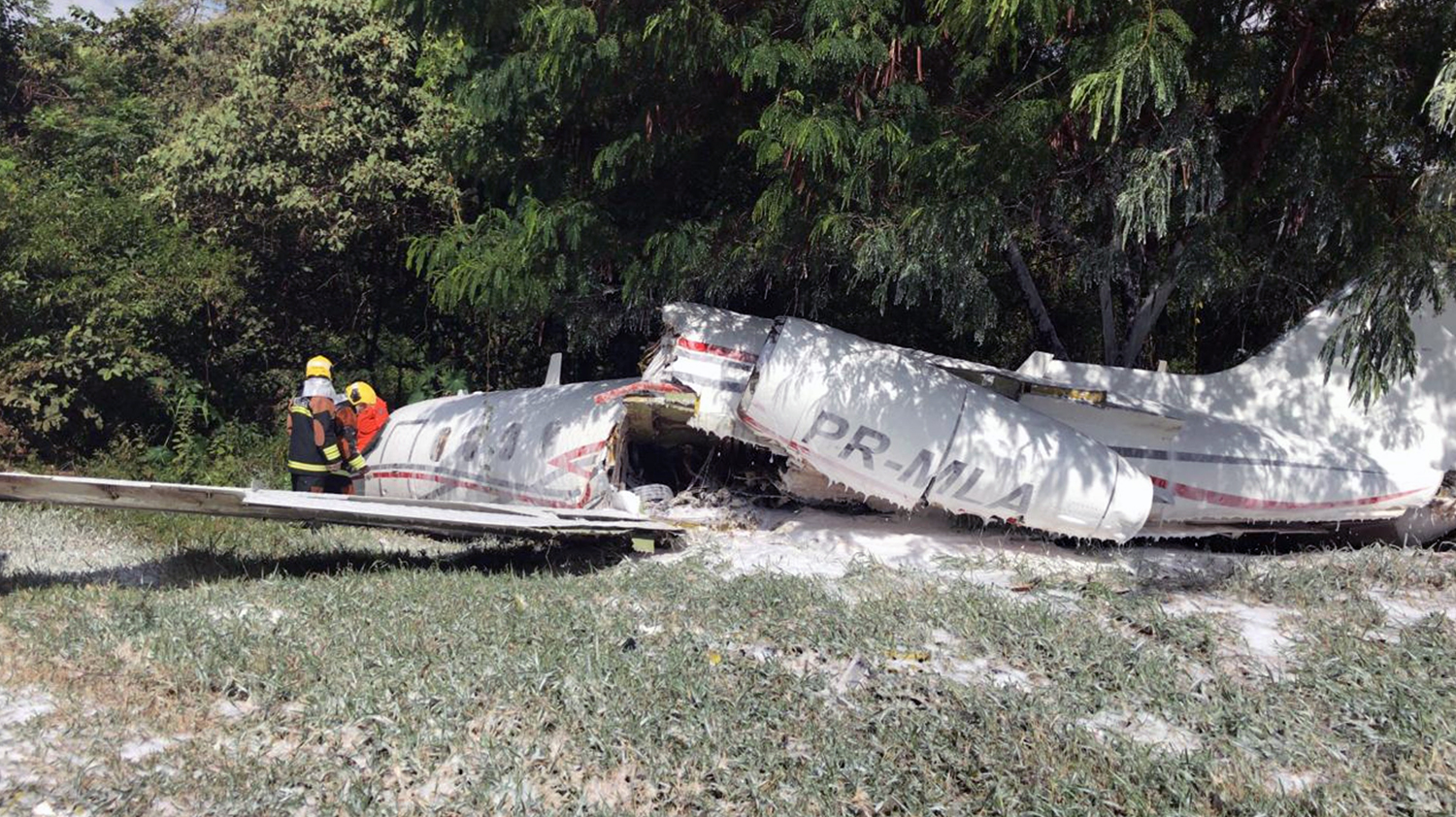
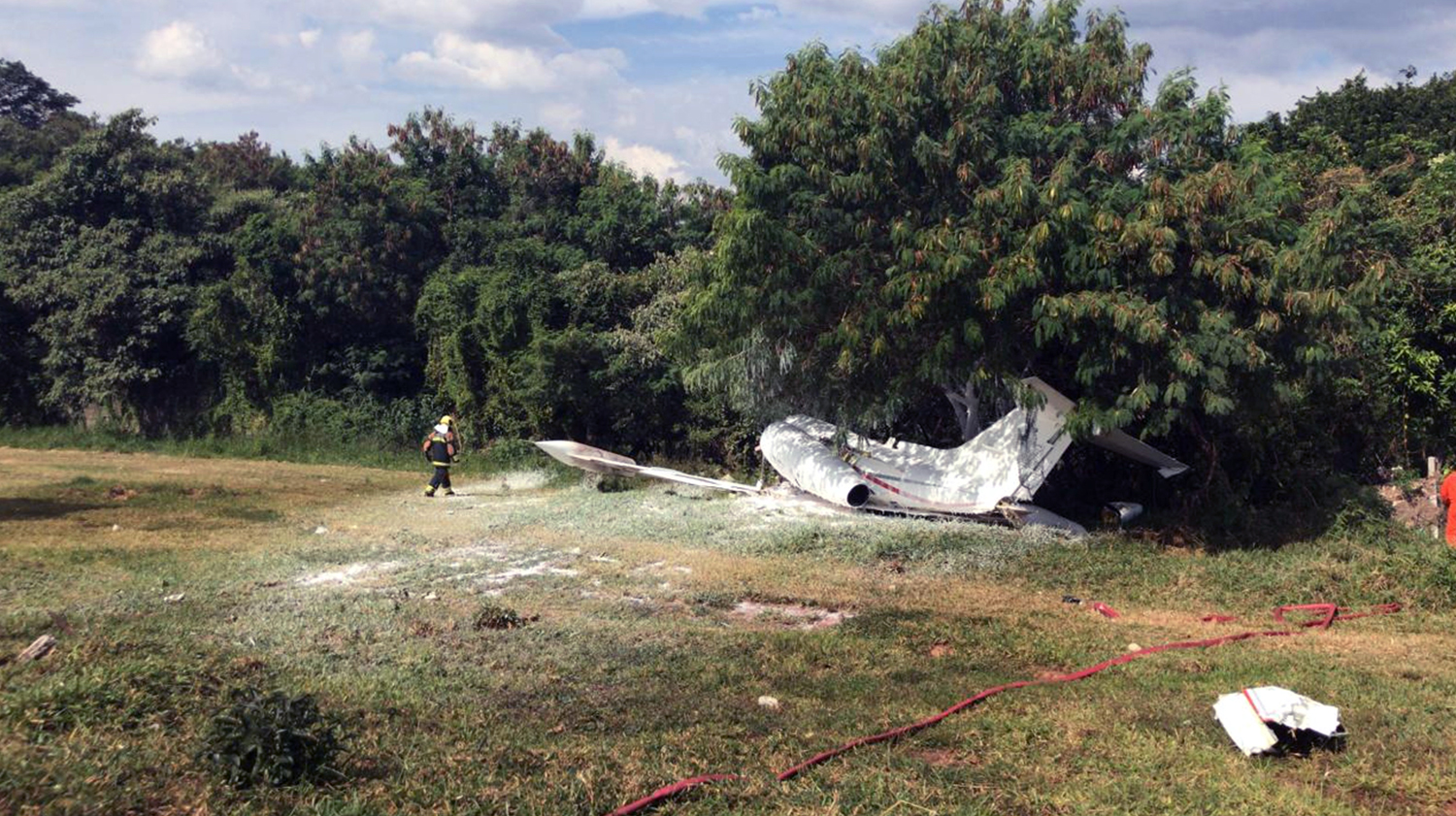
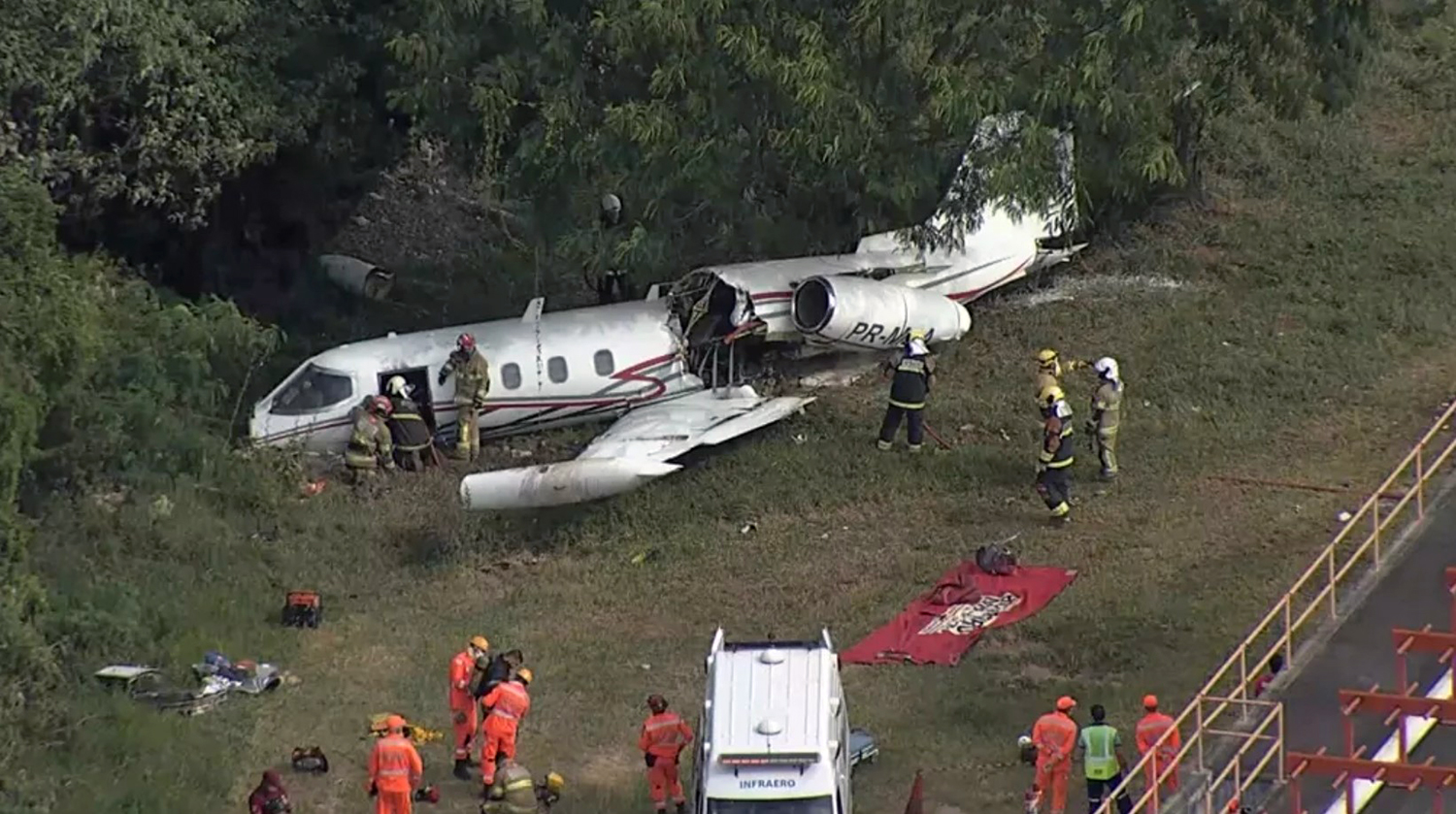
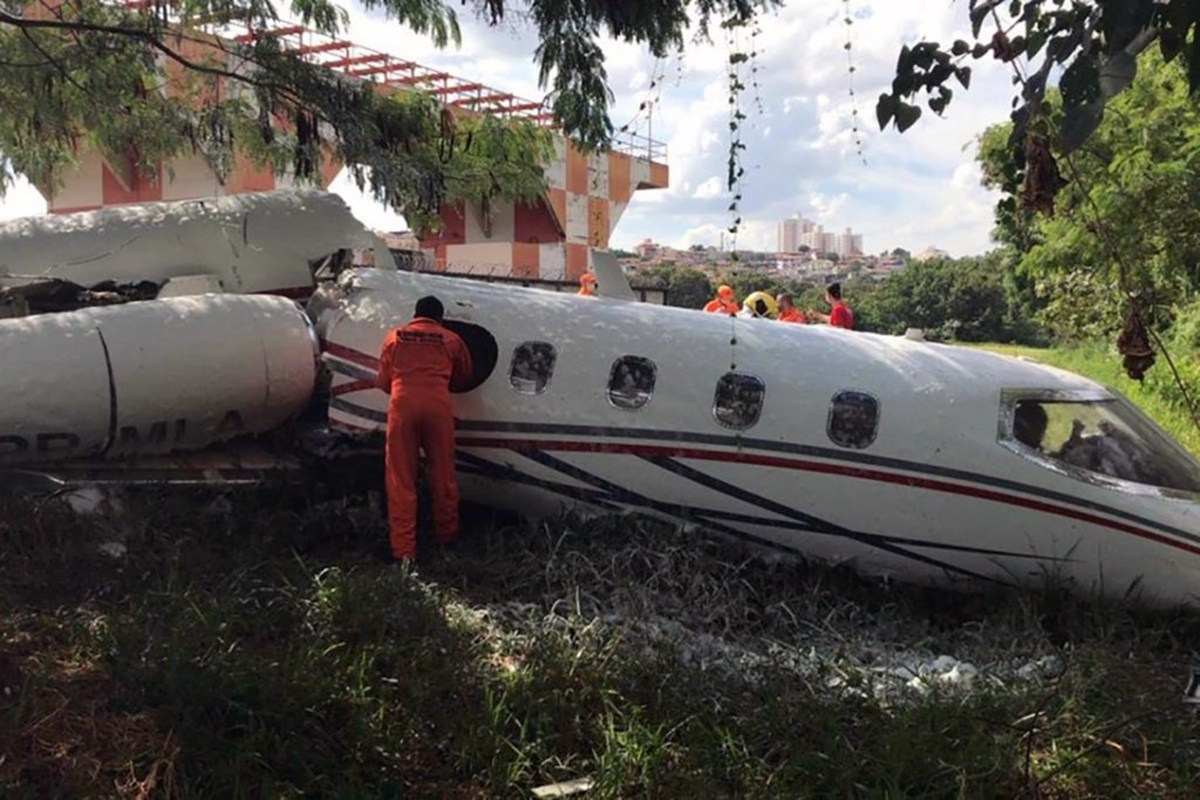
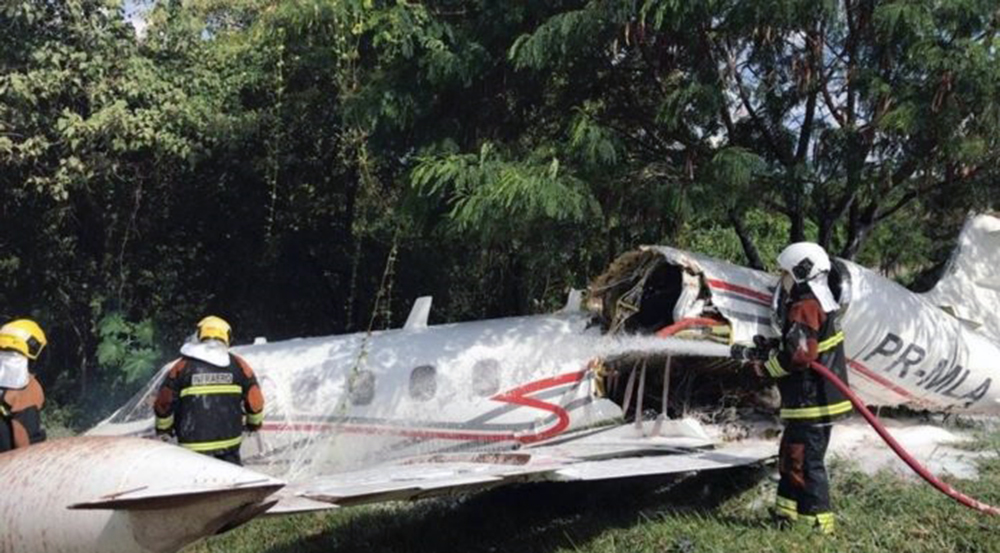
Crash of a Learjet 35A in Belo Horizonte: 1 killed

Date & Time: Apr 20, 2021 at 1452 LT
Type of aircraft:
Registration:
PR-MLA
Flight Type:
Survivors:
Yes
Schedule:
Belo Horizonte - Belo Horizonte
MSN:
35-072
YOM:
1976
Country:
Crew on board:
2
Crew fatalities:
Pax on board:
1
Pax fatalities:
Other fatalities:
Total fatalities:
1
Captain / Total flying hours:
3432
Captain / Total hours on type:
41.00
Copilot / Total flying hours:
3034
Copilot / Total hours on type:
2211
Circumstances:
The airplane departed Belo Horizonte-Pampulha-Carlos Drummond de Andrade Airport at 1420LT on a local training fight. On board were two pilots and one passenger. After 30 minutes of flight over the area, the crew returned to the airport and initiated the approach to runway 13 to complete a touch and go manoeuvre. On final approach, the crew forgot to lower the gear, causing the airplane to land on its belly. It slid for few hundred metres, overran, went through the perimeter fence (striking concrete poles) and came to rest against trees, broken in two. The copilot aged 76 was killed while both other occupants were injured.
Probable cause:
Contributing factors:
- Attention – undetermined.
It is possible that the aircraft’s encounter with a kite led to a delayed and imprecise response to operational cues, which may have resulted in a breakdown in the alert and distraction management system, specifically regarding landing gear extension.
- Attitude – undetermined.
Conducting the flight with an unqualified pilot reflected the adoption of inappropriate attitudes such as complacency, overconfidence, and disregard for the requirements established in RBACs 91 and 61, which may have contributed to this accident.
- Crew Resource Management – a contributor.
Inefficient use of the human resources available for the aircraft operation led to inadequate task management among the crew. The PIC never questioned the aircraft’s readiness for landing, and the pilot occupying the right seat failed to monitor the aircraft configuration or assertively advise on the landing gear position for touchdown.
- Perception – a contributor.
During the approach, the aural warning indicating that the landing gear was still retracted was activated and could be heard on the CVR audio. However, the pilots took no corrective action, evidencing impaired ability to recognize and interpret internal environmental cues, which led to reduced situational awareness and culminated in a gear up landing.
- Limited pilot’s experience – undetermined.
Considering the PIC’s operational background, developed almost entirely in rotary wing aviation, it is possible that his limited experience with fixed-wing aircraft had not yet enabled him to acquire the full range of skills and knowledge necessary for the safe operation of Learjet 35 flights.
Final Report:

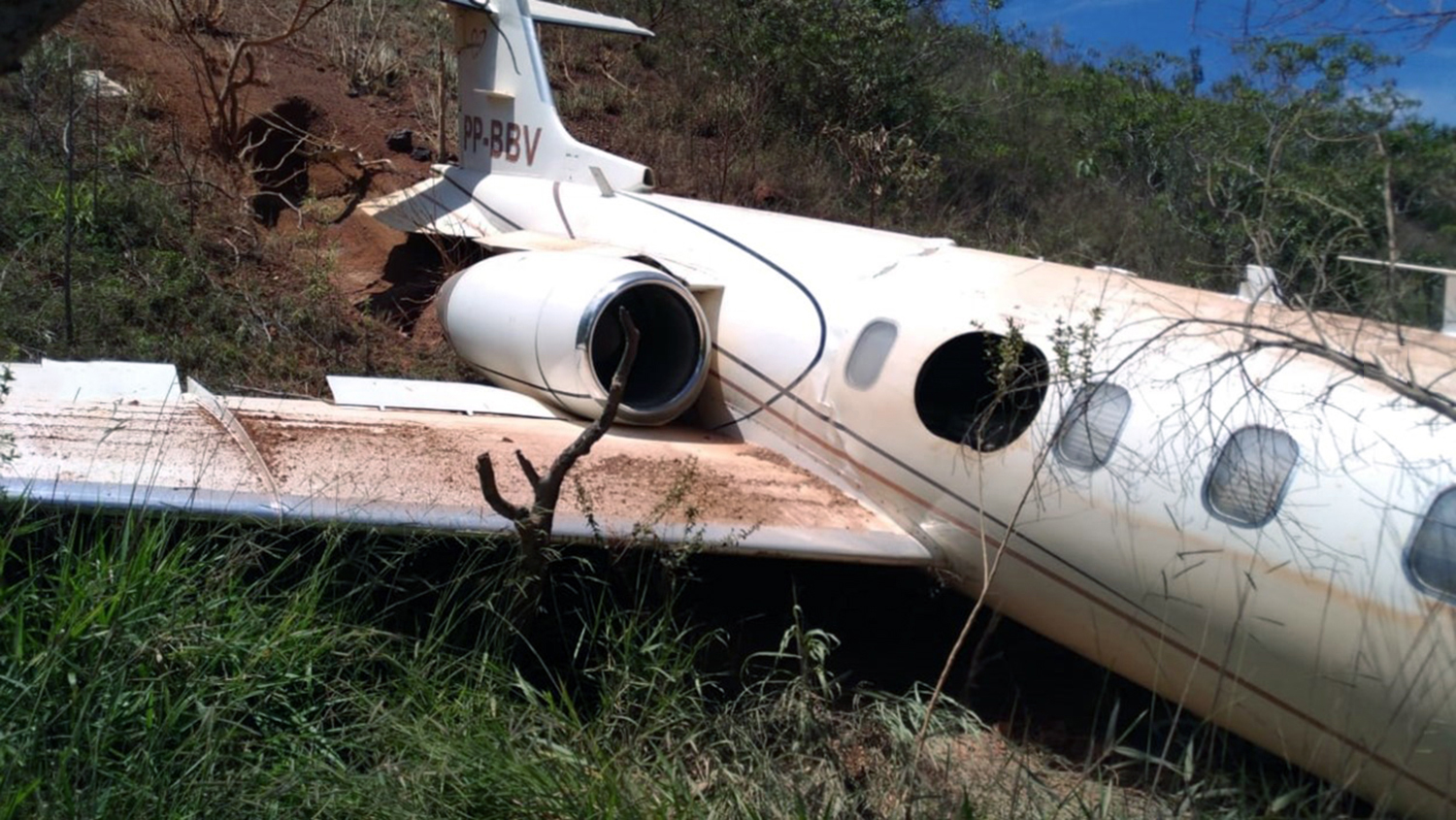
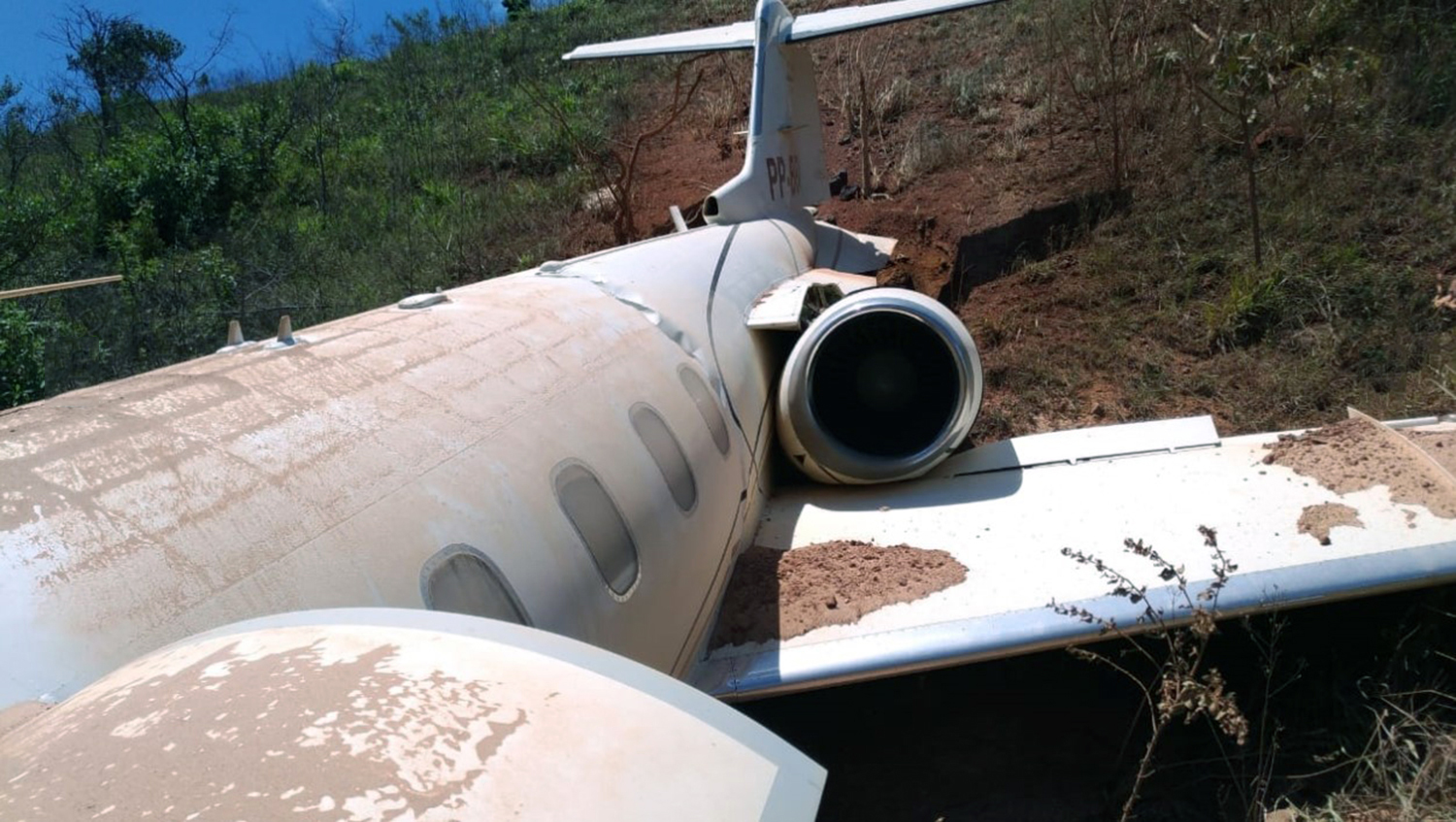
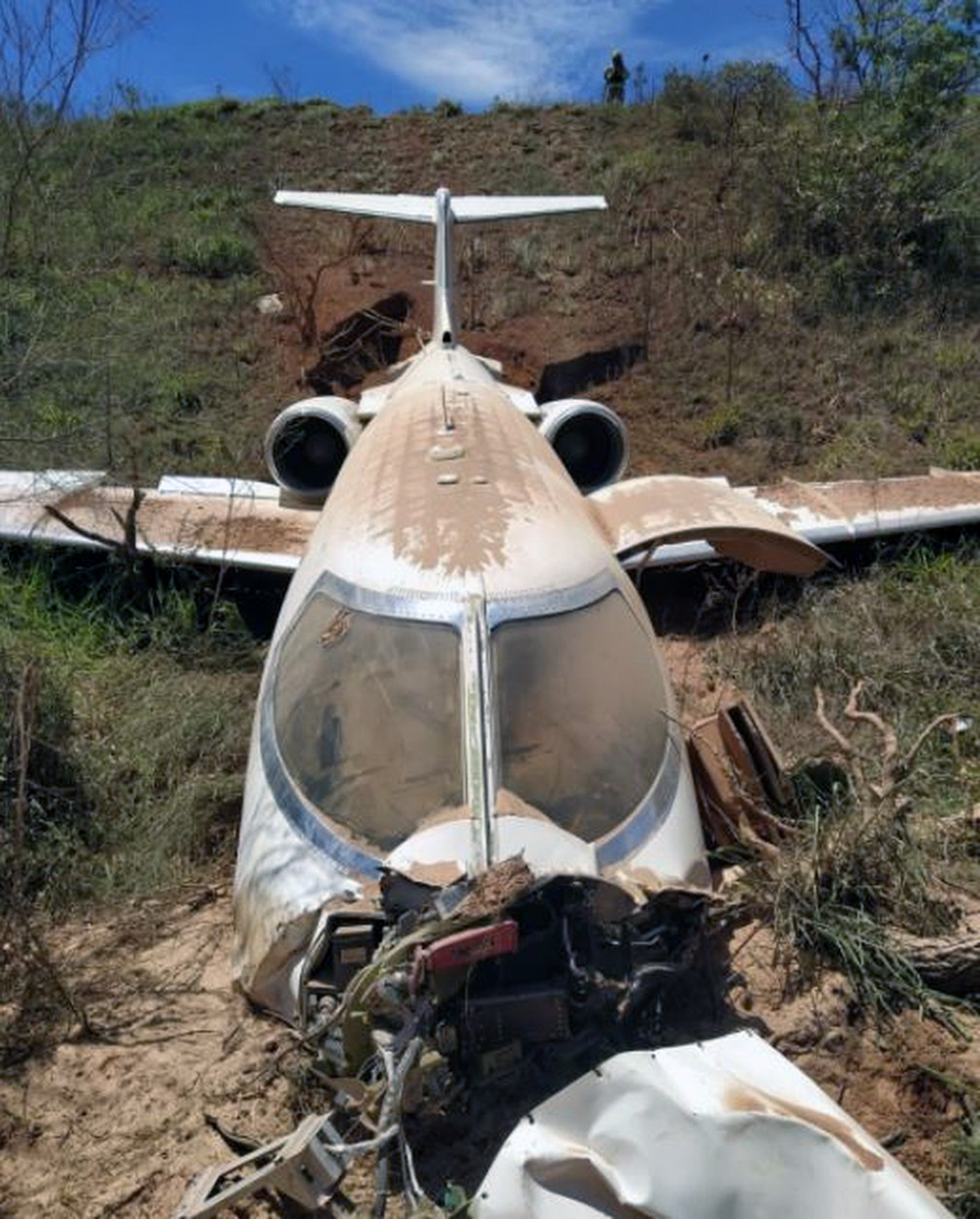
Crash of a Learjet 31A in Diamantina

Date & Time: Jan 2, 2021 at 0851 LT
Type of aircraft:
Operator:
Registration:
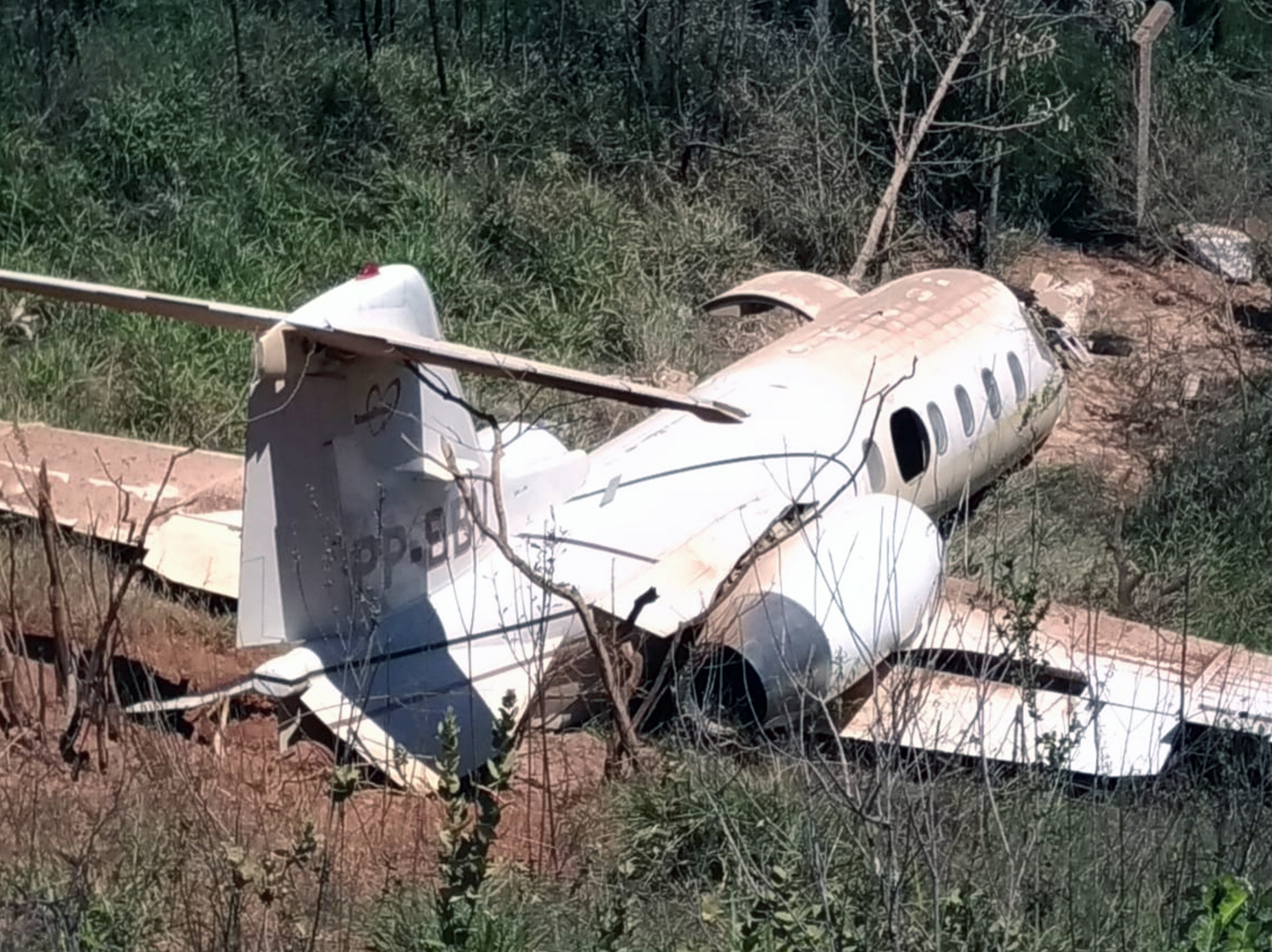
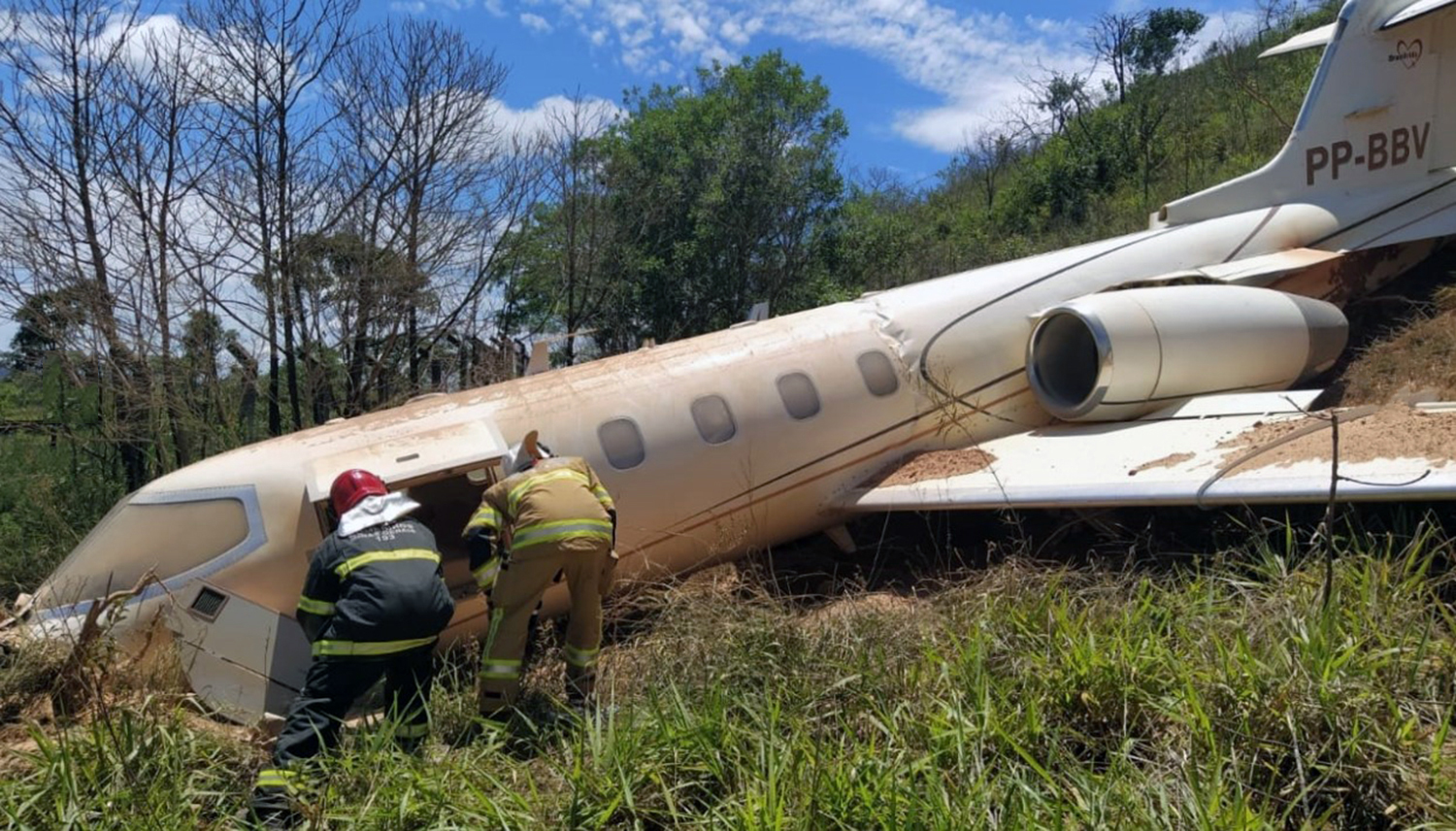
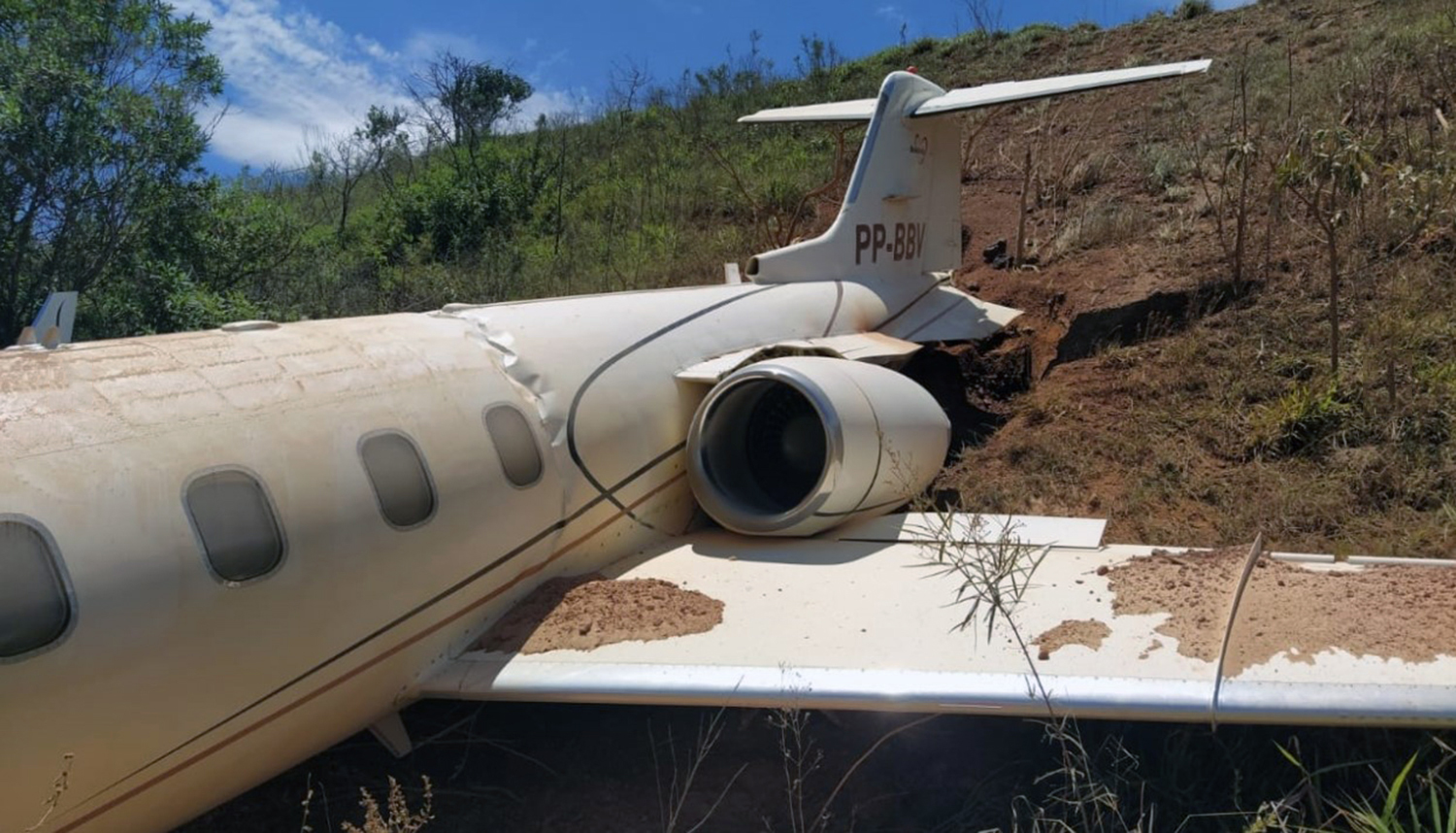
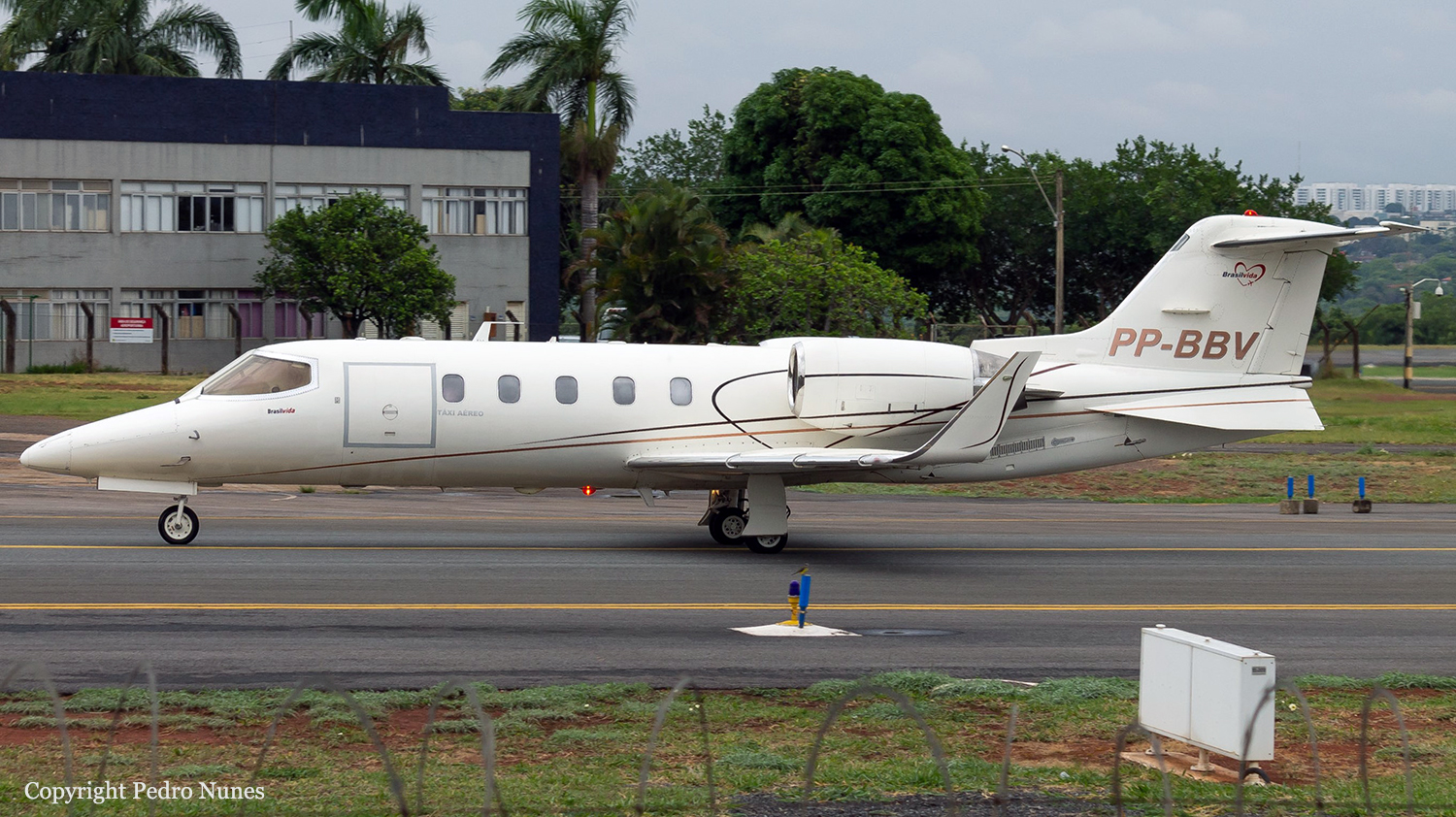
PP-BBV
Flight Type:
Survivors:
Yes
Schedule:
São Paulo – Diamantina
MSN:
31-113
YOM:
1995
Country:
Crew on board:
2
Crew fatalities:
Pax on board:
2
Pax fatalities:
Other fatalities:
Total fatalities:
0
Captain / Total flying hours:
4606
Captain / Total hours on type:
1138.00
Copilot / Total flying hours:
1475
Copilot / Total hours on type:
680
Circumstances:
The airplane departed São Paulo-Congonhas Airport on an ambulance flight to Diamantina-Juscelino Kubitschek Airport, carrying two doctors and two pilots. Following an unstabilized approach, the airplane landed too far down the runway 03 and was unable to stop within the remaining distance. It overran, went down a ravine and came to rest. All four occupants evacuated with minor injuries while the aircraft was damaged beyond repair.
Probable cause:
Following a wrong approach configuration on part of the crew, it was determined that the airplane landed about 600 metres from the runway end. In such conditions, the airplane could not be stopped within the remaining distance.
The following contributing factors were identified:
- Both pilots knew each other well and often flew together, thus it is possible that they over-relied on each other during the final phase of the flight,
- This over-confidence led the crew to neglect certain parameters related to the approach manoeuvre,
- Lack of crew coordination,
- Post-accident medical examinations revealed that the pilot-in-commands' (PF) lack of reaction to the pilot monitoring's (PM) warnings, and his impaired alertness, could indicate that he was suffering from the effects of alcohol and fatigue, reducing his performances,
- The pilots' decision to continue with the landing procedure despite an unstabilized approach characterized by inadequate situational awareness,
- Poor judgment on the part of the crew who failed to take the correct decision to initiate a go-around procedure.
Final Report:

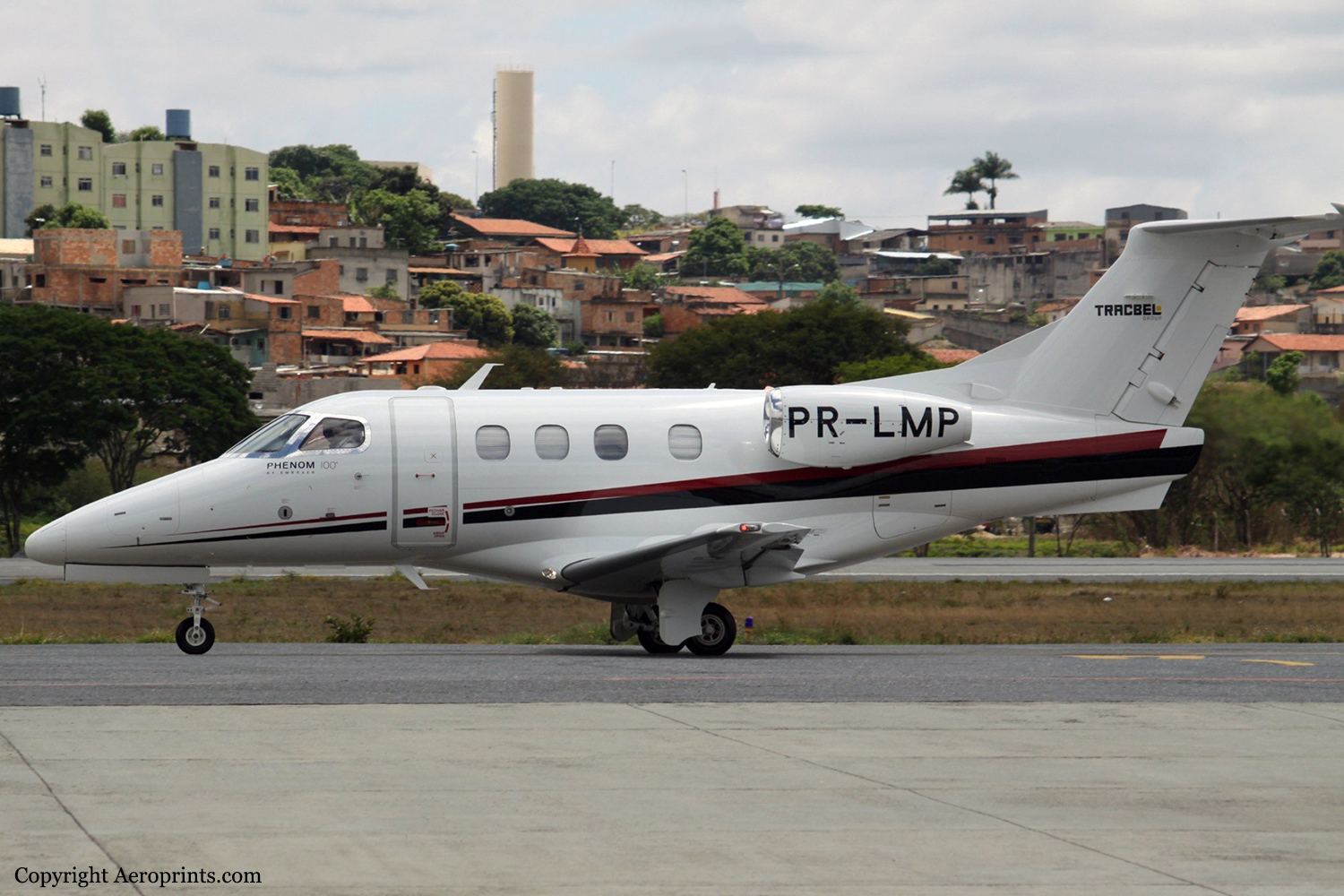
Crash of a Embraer EMB-500 Phenom 100 in São Pedro

Date & Time: Oct 30, 2020 at 1750 LT
Type of aircraft:
Operator:
Registration:
PR-LMP
Survivors:
Yes
Schedule:
São Paulo – São Pedro
MSN:
500-00094
YOM:
2009
Country:
Crew on board:
2
Crew fatalities:
Pax on board:
2
Pax fatalities:
Other fatalities:
Total fatalities:
0
Captain / Total flying hours:
7300
Captain / Total hours on type:
2350.00
Copilot / Total flying hours:
676
Copilot / Total hours on type:
409
Circumstances:
After touchdown on runway 29 at São Pedro Airport, the crew initiated the breaking procedure but the airplane failed to stop within the remaining distance. It overran, collided with various obstacles, went down an embankment of 10 metres and eventually came to rest 130 metres further, bursting into flames. All four occupants evacuated safely and the airplane was destroyed by a post crash fire.
Probable cause:
Studies and research showed that the low deceleration of the aircraft and the limitation of the hydraulic pressure provided by the brake system were compatible with a slippery runway scenario. Thus, one inferred that the runway was contaminated, a condition that would reduce its coefficient of friction and impair the aircraft's braking performance, making it impossible to stop within the runway limits. On account of the mirroring condition of the runway in SSDK, it is possible that the crew had some difficulty perceiving, analyzing, choosing alternatives, and acting appropriately, given a possible inadequate judgment of the aircraft's landing performance on contaminated runways.
Final Report:

Crash of a Gulfstream G200 in Belo Horizonte

Date & Time: Sep 7, 2020 at 1845 LT
Type of aircraft:
Operator:
Registration:
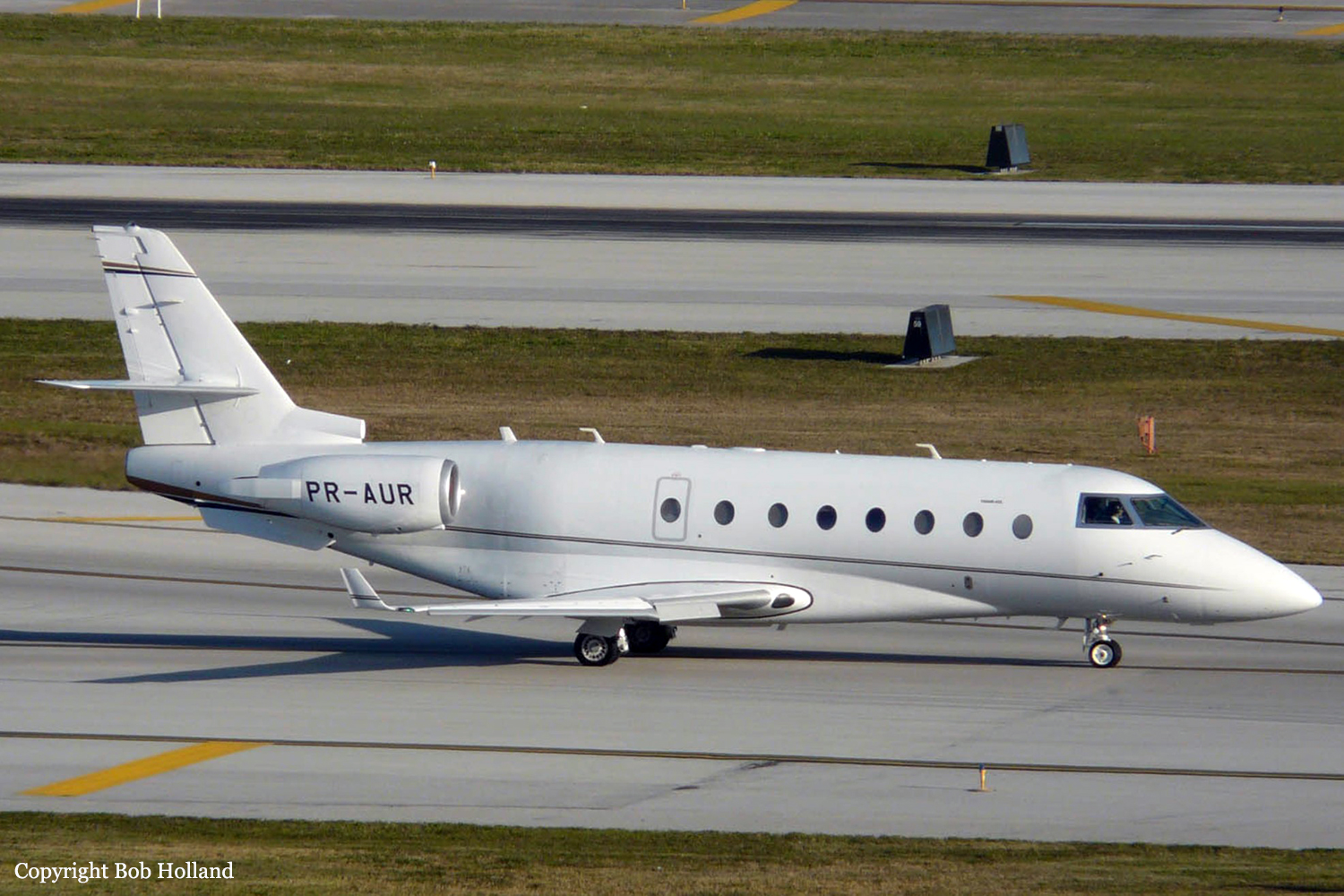
PR-AUR
Flight Type:
Survivors:
Yes
Schedule:
Belo Horizonte - Belo Horizonte
MSN:
140
YOM:
2006
Country:
Crew on board:
3
Crew fatalities:
Pax on board:
0
Pax fatalities:
Other fatalities:
Total fatalities:
0
Captain / Total flying hours:
7000
Captain / Total hours on type:
200.00
Copilot / Total flying hours:
225
Copilot / Total hours on type:
67
Circumstances:
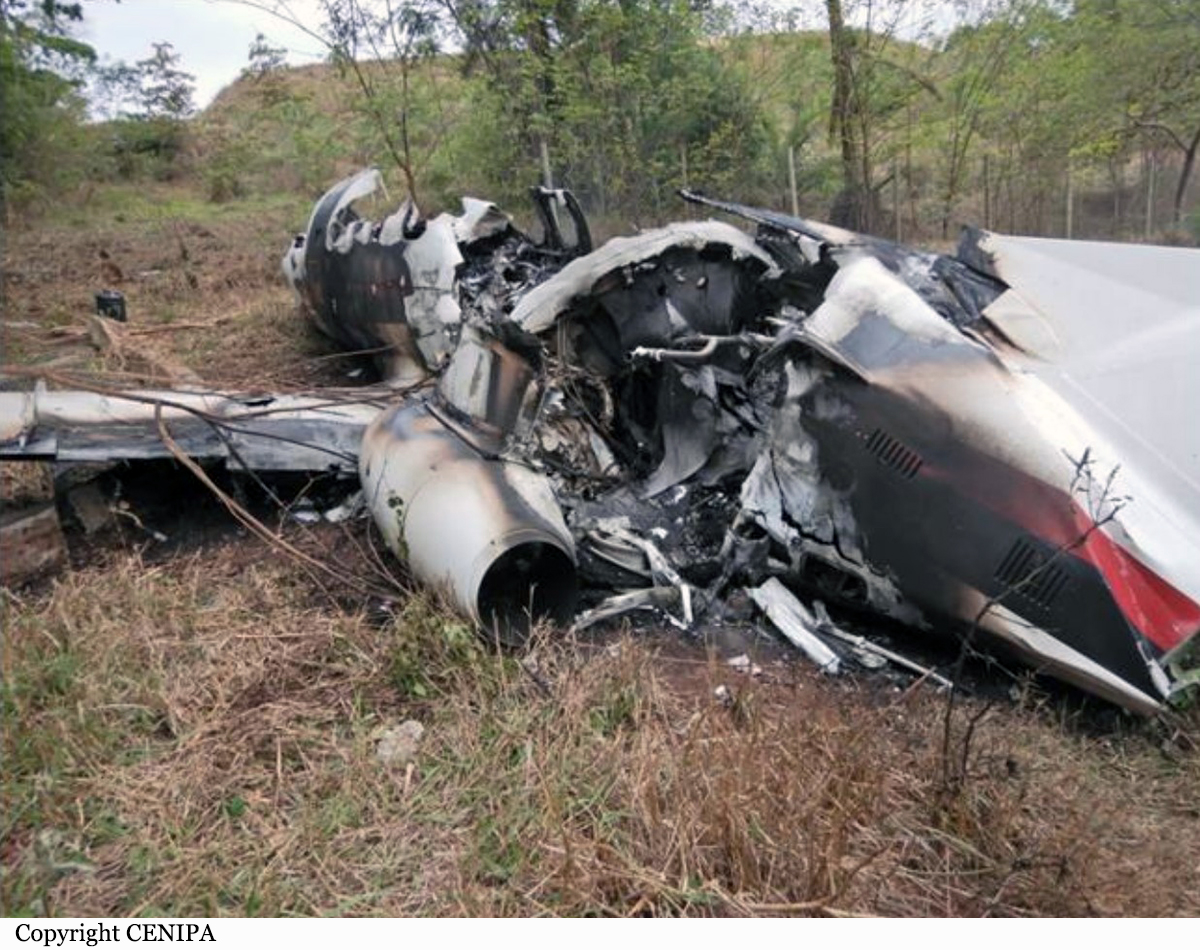
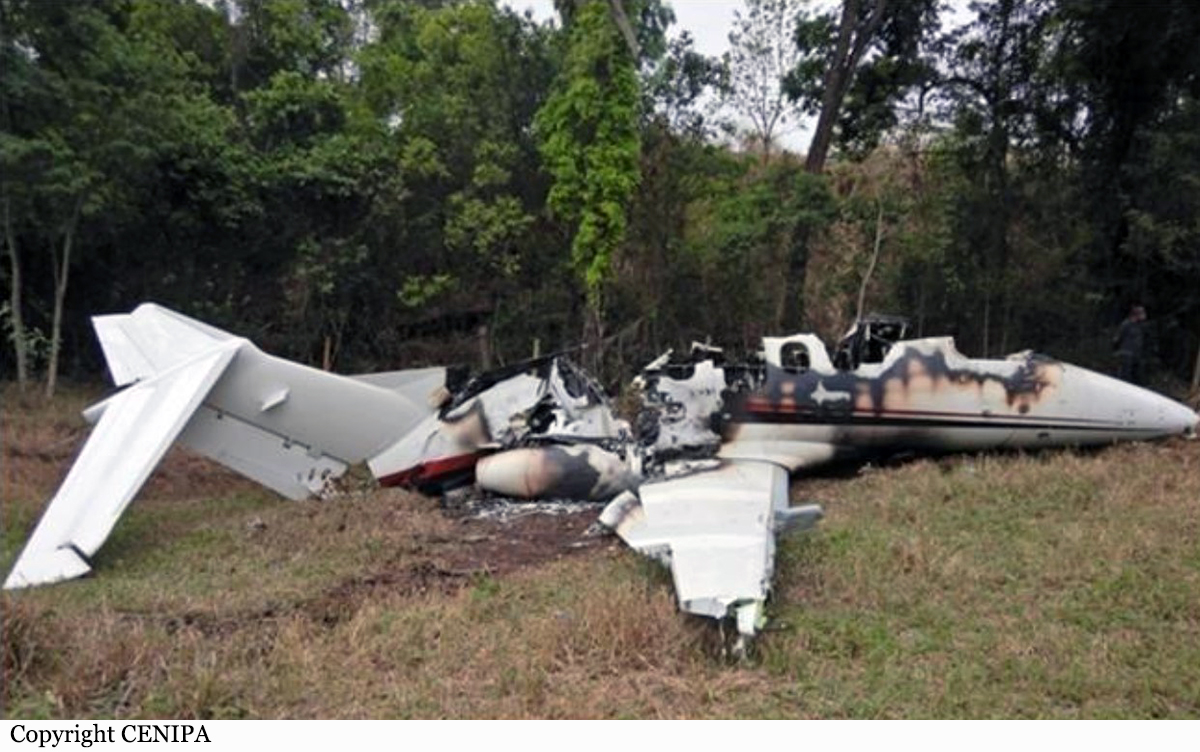
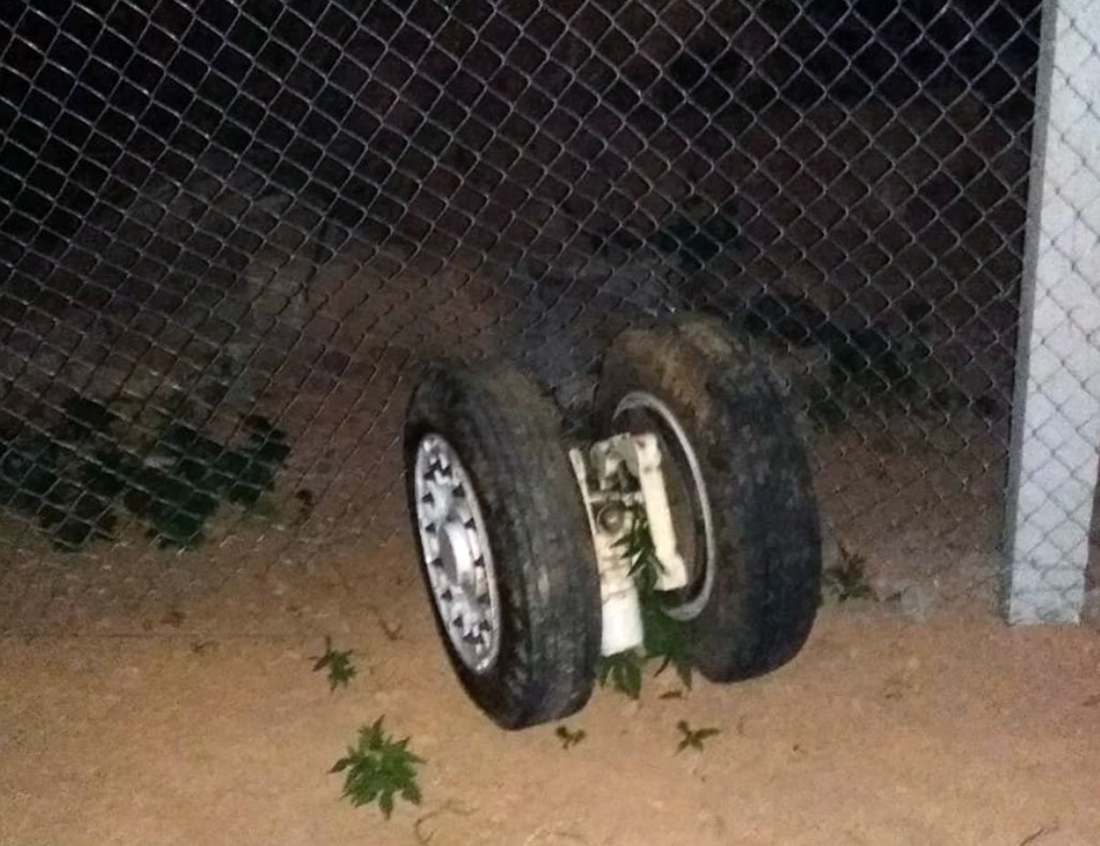
At approximately 1835LT, the aircraft took off from SBBH (Pampulha - Carlos Drummond de Andrade - Aerodrome, Belo Horizonte, State of Minas Gerais) on a local instrument training flight with touch and goes, with 03 POB (two pilots and an extra crew member). The flight proceeded uneventfully until the first approach. During the run after touching down, the aircraft overran the departure end of the runway in a direction slightly to the right of the longitudinal axis, and collided with a nearby protective fence located past the departure end of runway 13. The airplane came to a stop at a distance of 95 m from the runway limits. The aircraft sustained substantial damage. The PIC suffered minor injuries. The SIC and the extra crew member were not injured.
Probable cause:
The following contributing factors were identified:

Attitude – a contributor.
The contribution of the pilots’ attitude to the outcome of this occurrence can be found in two distinct moments: when the go-around procedures were improvised, and when the approach was continued under marginal safety conditions, reflecting difficulties in the way the crew thought and acted.

Communication – a contributor.
One considered that the lack of clear and assertive communication between the pilots at the time of the decision to abort the takeoff, and the lack of definition as to which pilot had the aircraft controls in that moment contributed to the aircraft exceeding the departure end of the runway.

Crew Resource Management – a contributor.
The lack of adequate management of the tasks performed by the pilots during the transition to the takeoff run after the touch-down, a critical moment of the flight, combined with the lack of clear communication between them contributed to the inadequate handling of the aircraft on the ground and its consequent runway excursion.

Handling of aircraft flight controls – a contributor.
The ineffective control inputs during the final approach and during the attempt to stop the aircraft after touchdown, as well as the application of the elevator trim to the opposite side after the touchdown on the runway, indicated inadequacies in the handling of the controls that contributed to the airplane's runway excursion.

Piloting judgment – a contributor.
An inadequate assessment of the parameters related to the aircraft's operation was observed when there was an attempt to abort the takeoff after the airplane had reached 147 knots, without evaluating the remaining runway length to ensure full stop of the aircraft within the runway limits.

Flight planning – a contributor.
One concluded that the flight preparation was not adequately executed, as the planning did not allocate enough time for the pilots to prepare the aircraft for the return and carry-out of the descent procedure, resulting in an unstable approach.
Final Report:
Crash of an Embraer EMB-121A Xingu in Tegará da Serra: 2 killed

Date & Time: Jun 14, 2020 at 0840 LT
Type of aircraft:
Registration:
PT-MBV
Flight Phase:
Flight Type:
Survivors:
No
Schedule:
Tangará da Serra – Goiânia
MSN:
121-053
YOM:
1982
Country:
Crew on board:
2
Crew fatalities:
Pax on board:
0
Pax fatalities:
Other fatalities:
Total fatalities:
2
Captain / Total flying hours:
607
Captain / Total hours on type:
41.00
Copilot / Total flying hours:
425
Aircraft flight hours:
4453
Circumstances:
Four minutes after takeoff from Tengará da Serra Airport Runway 20, while climbing, the twin engine airplane entered an uncontrolled descent. One minute later, it crashed with a high angle of attack in a cornfield, bursting into flames. The airplane disintegrated on impact and both occupants were killed.
Probable cause:
One should not rule out the hypothesis of a possible malfunction of the aircraft's angle-of-attack control system, considering that the records related to the provision of the calibration service (a necessary condition for the proper functioning of the referred system, and prescribed in the aircraft's maintenance manual) were not identified in the pertinent
control documents.
Final Report:
Crash of a Comp Air CA-8 in Campo Verde: 1 killed

Date & Time: Apr 13, 2020 at 1232 LT
Type of aircraft:
Operator:
Registration:
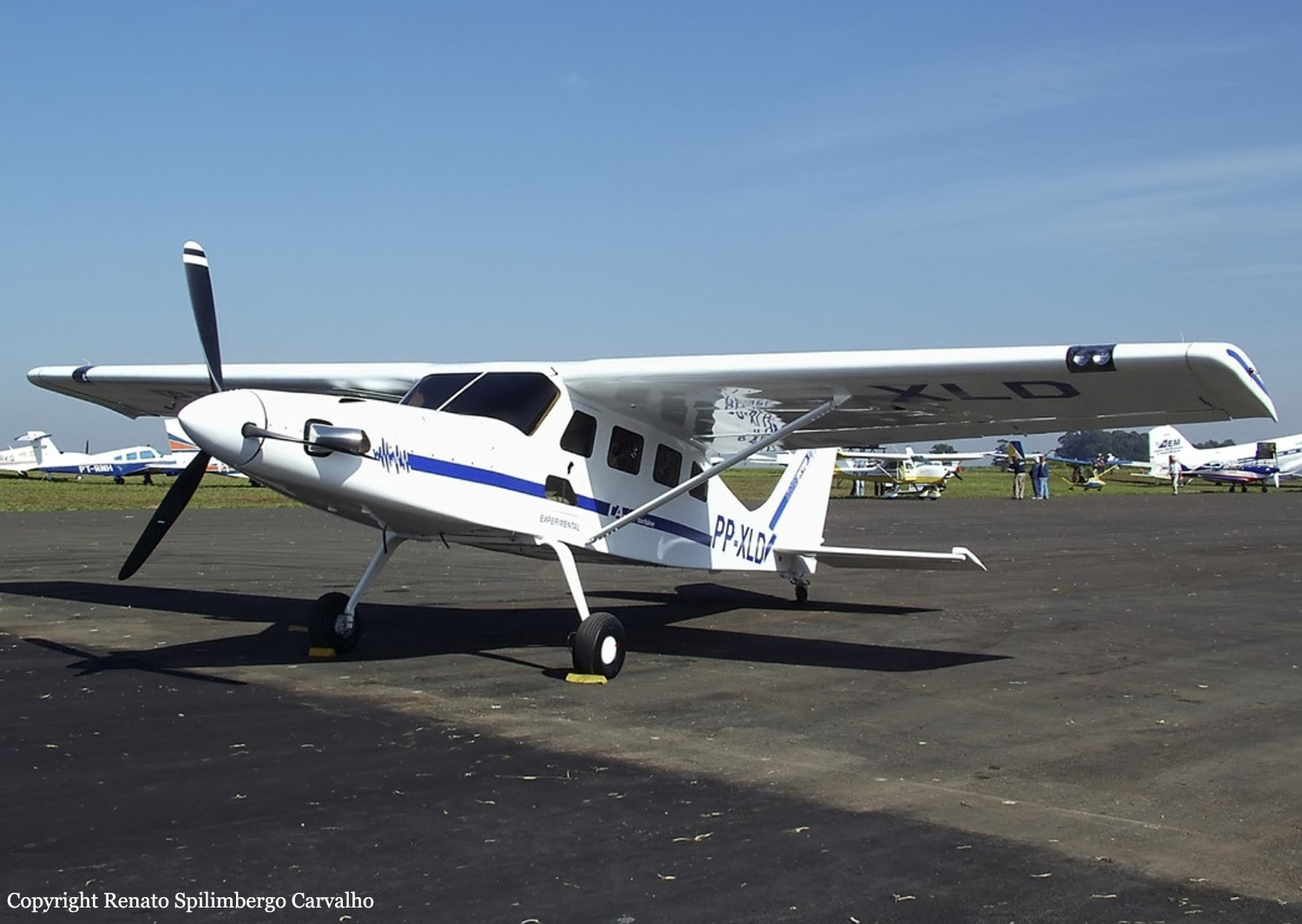
PP-XLD
Flight Phase:
Flight Type:
Survivors:
No
Schedule:
Campo Verde – Vera Cruz
MSN:
038SSW624
YOM:
2004
Country:
Crew on board:
1
Crew fatalities:
Pax on board:
0
Pax fatalities:
Other fatalities:
Total fatalities:
1
Captain / Total flying hours:
628
Captain / Total hours on type:
3.00
Circumstances:
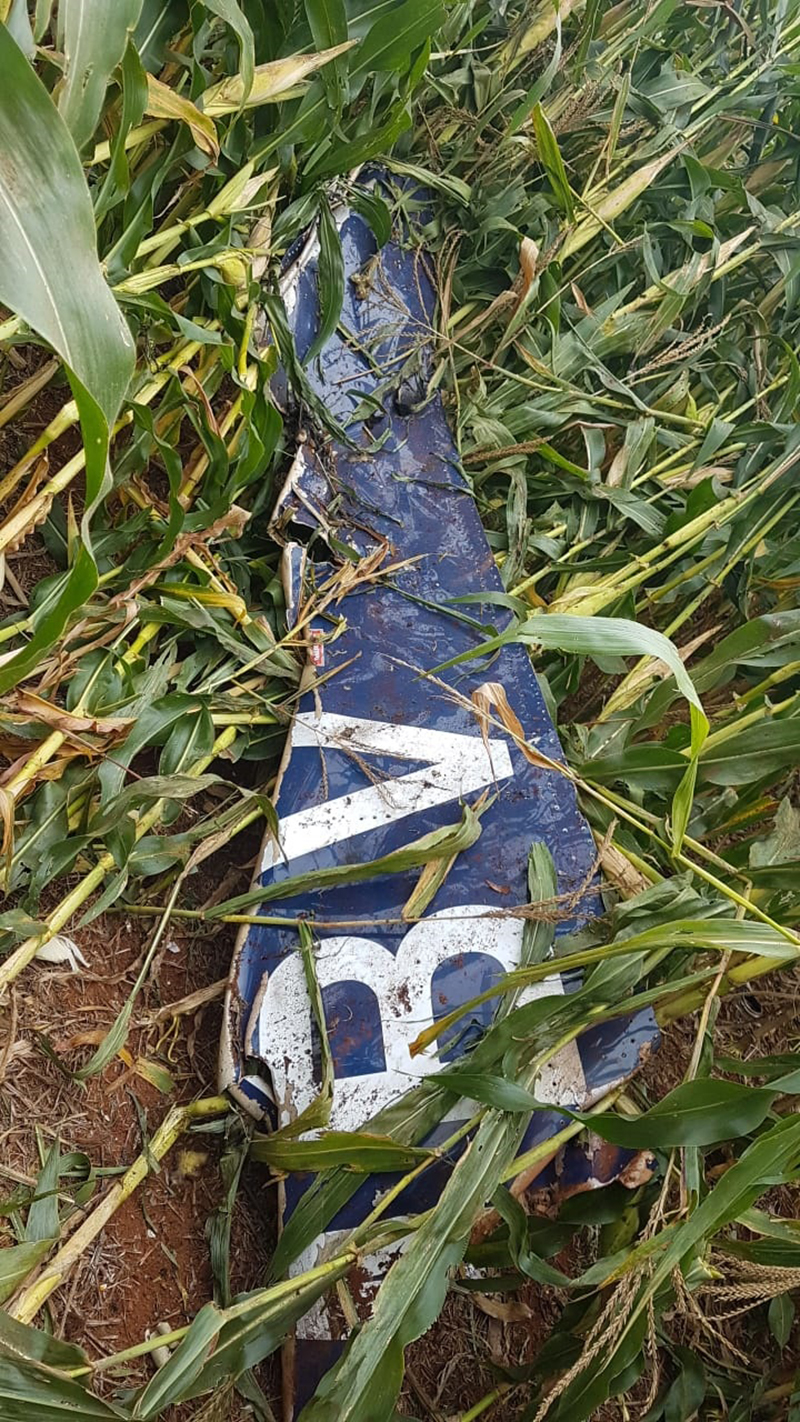
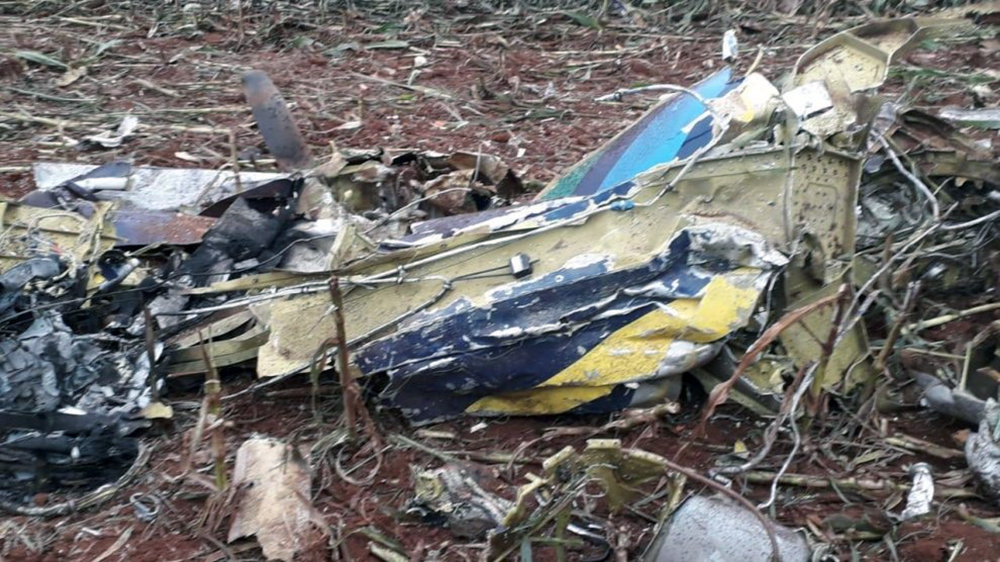
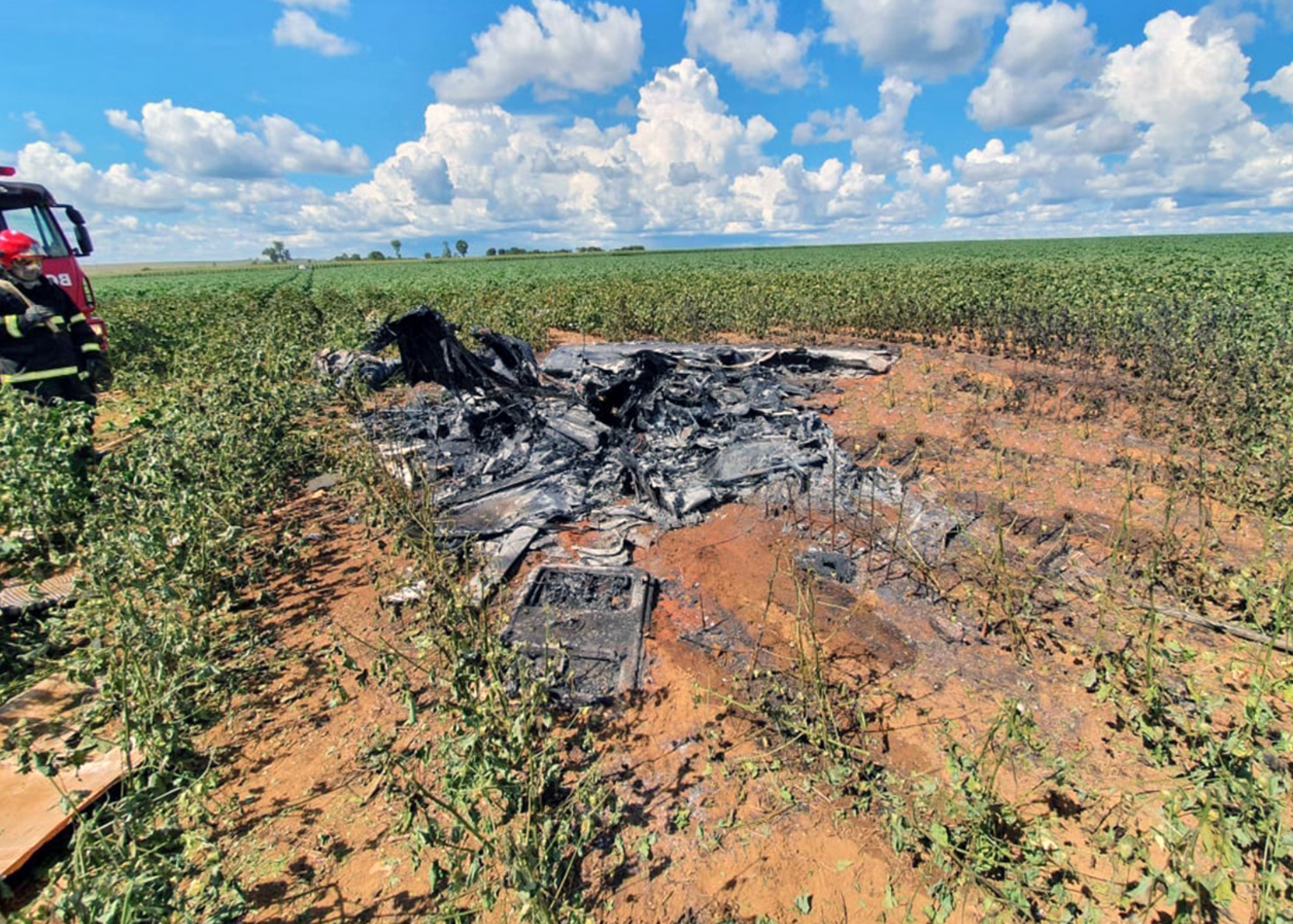
After takeoff from Campo Verde-Luiz Eduardo Magalhães Airport, while climbing, the airplane entered a high pitch angle. The pilot initiated a sharp turn to the left when control was lost. The airplane dove into the ground and crashed in an open field, some 900 metres from the takeoff point, bursting into flames. The pilot, sole on board, was killed.
Probable cause:
The exact cause of the accident could not be determined. However, it is believed that the pilot may have encountered an unexpected situation that he was unable to manage due to his relative low experience.
Final Report:

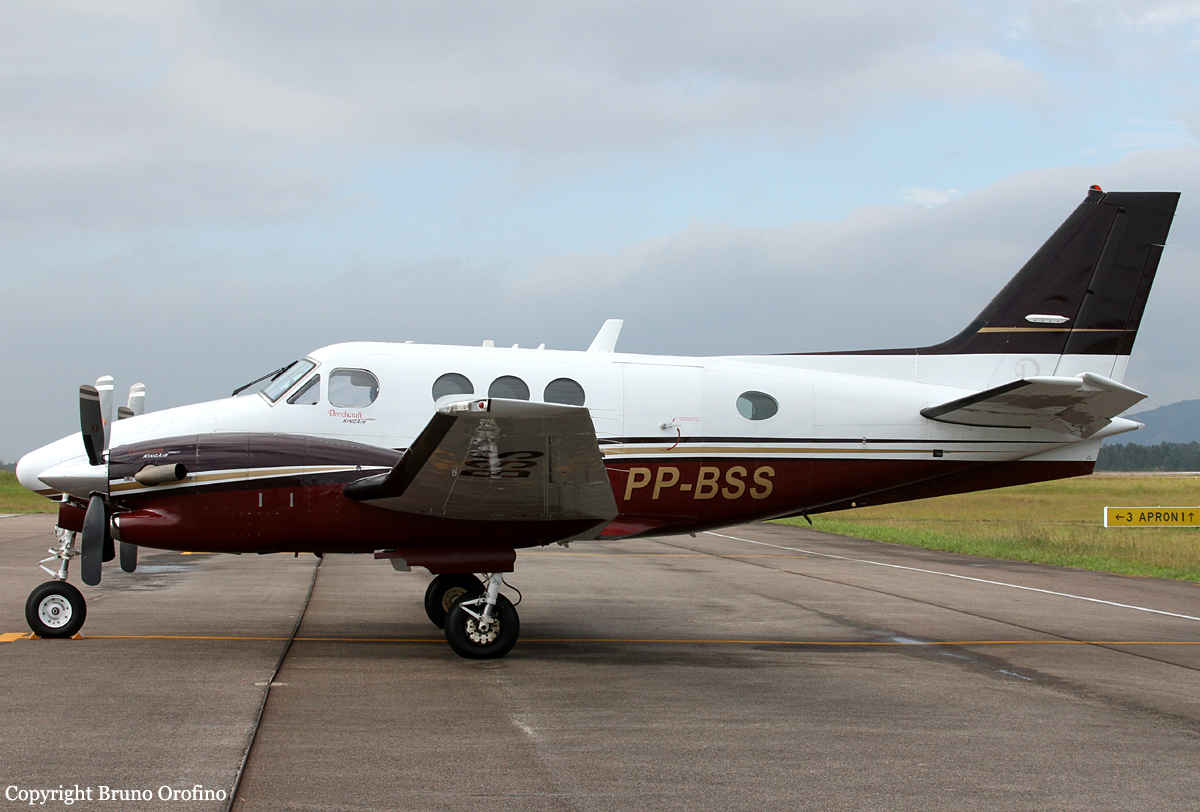
Crash of a Beechcraft C90GT King Air near Caieiras: 1 killed

Date & Time: Dec 2, 2019 at 0602 LT
Type of aircraft:
Registration:
PP-BSS
Flight Phase:
Flight Type:
Survivors:
No
Site:
Schedule:
Jundiaí – Campo de Marte
MSN:
LJ-1839
YOM:
2008
Country:
Crew on board:
1
Crew fatalities:
Pax on board:
0
Pax fatalities:
Other fatalities:
Total fatalities:
1
Captain / Total flying hours:
6000
Captain / Total hours on type:
211.00
Circumstances:
The pilot departed Jundiaí-Comandante Rolim Adolfo Amaro Airport at 0550LT on a short transfer flight to Campo de Marte, São Paulo. While descending to Campo de Marte Airport, he encountered poor weather conditions and was instructed by ATC to return to Jundiaí. Few minutes later, while flying in limited visibility, the twin engine airplane impacted trees and crashed in a wooded area located in Mt Cantareira, near Caieiras. The aircraft was destroyed by impact forces and a post crash fire and the pilot, sole on board, was killed.
Probable cause:
The accident was the consequence of the combination of the following factors:
- Attention – undetermined.
It is likely that the pilot has experienced a lowering of his attention in relation to the available information and the stimuli of that operational context in face of the adverse conditions faced.
- Attitude – a contributor.
It was concluded that there was no reaction to the warnings of proximity to the ground (Caution Terrain) and evasive action to avoid collision (Pull Up), a fact that revealed difficulties in thinking and acting in the face of an imminent collision condition, in which the aircraft was found.
- Adverse meteorological conditions – a contributor.
The clouds height and visibility conditions did not allow the flight to be conducted, up to SBMT, under VFR rules.
- Piloting judgment – a contributor.
The attempt to continue with the visual flight, without the minimum conditions for such, revealed an inadequate assessment, by the pilot, of parameters related to the operation of the aircraft, even though he was qualified to operate it.
- Perception – a contributor
The ability to recognize and project hazards related to continuing flight under visual rules, in marginal ceiling conditions and forward visibility, was impaired, resulting in reduced pilot situational awareness, probable geographic disorientation, and the phenomenon known as " tunnel vision''.
- Decision-making process – a contributor.
The impairment of the pilot's perception in relation to the risks related to the continuation of the flight in marginal safety conditions negatively affected his ability to perceive, analyze, choose alternatives and act appropriately due to inadequate judgments and the apparent fixation on keeping the flight under visual rules, which also contributed to this occurrence.
Final Report:

Crash of a Cessna 550 Citation II in Maraú: 5 killed

Date & Time: Nov 14, 2019 at 1417 LT
Type of aircraft:
Registration:
PT-LTJ
Flight Type:
Survivors:
Yes
Schedule:
Jundiaí – Maraú
MSN:
550-0225
YOM:
1981
Country:
Crew on board:
2
Crew fatalities:
Pax on board:
8
Pax fatalities:
Other fatalities:
Total fatalities:
5
Captain / Total flying hours:
8000
Captain / Total hours on type:
2500.00
Copilot / Total flying hours:
350
Copilot / Total hours on type:
25
Aircraft flight hours:
6978
Aircraft flight cycles:
6769
Circumstances:
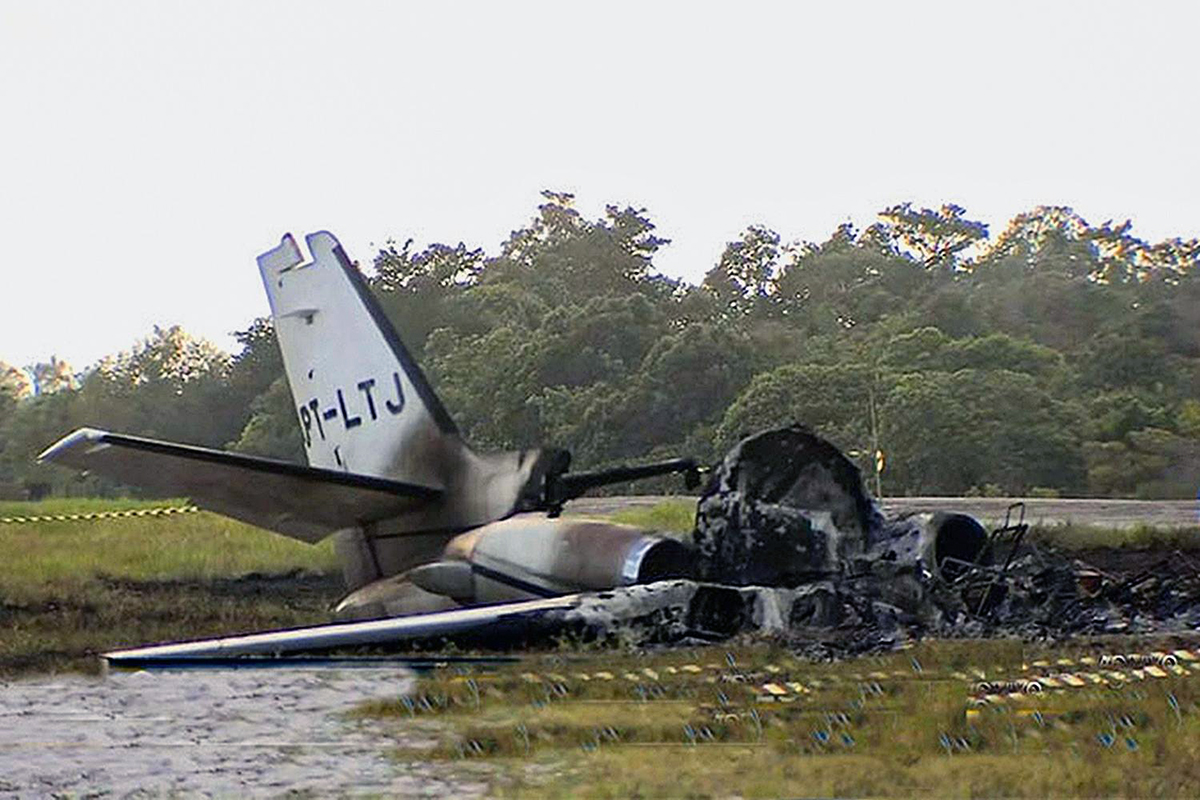
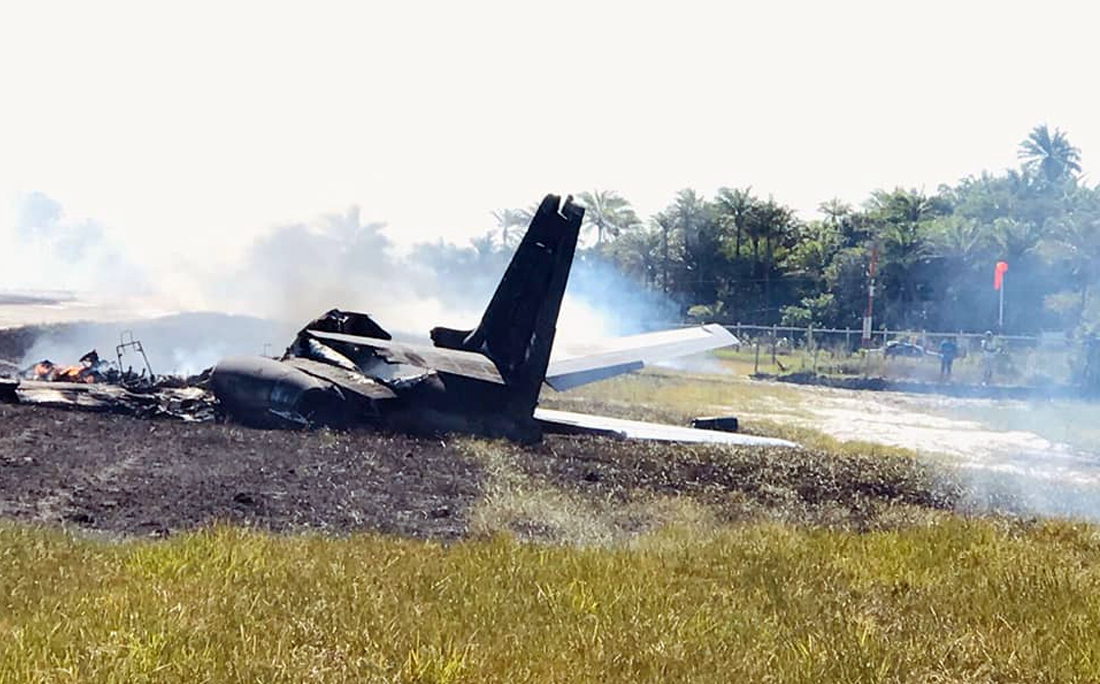
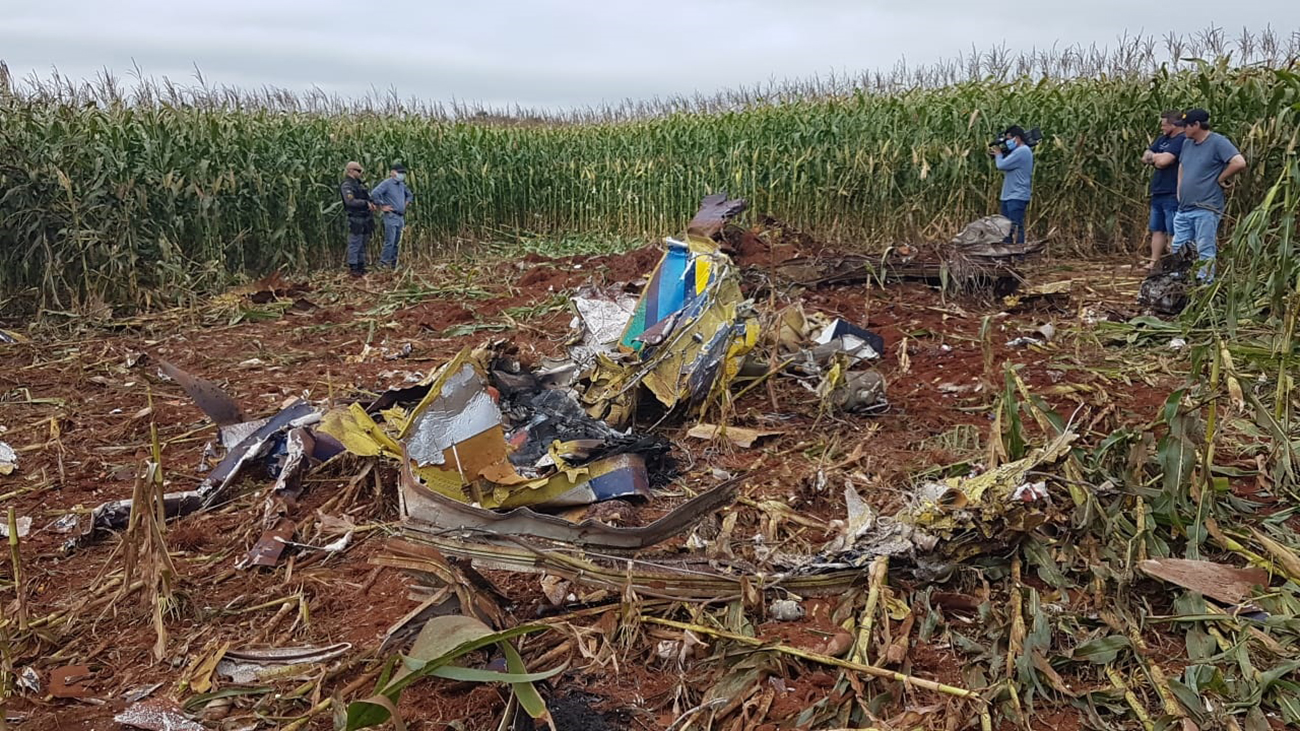
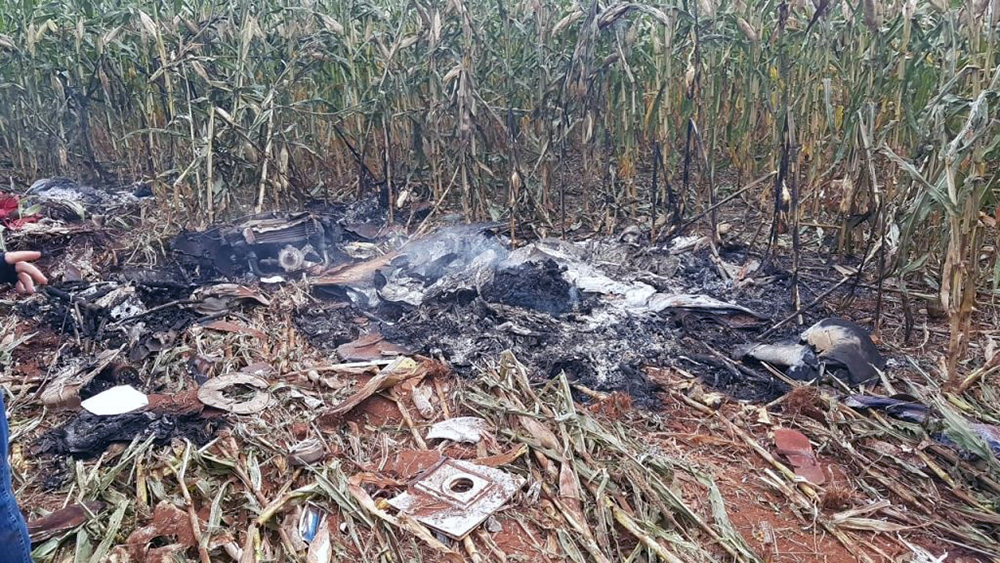
The aircraft took off from the Comandante Rolim Adolfo Amaro Aerodrome (SBJD), Jundiaí - SP, to the Barra Grande Aerodrome (SIRI), Maraú - BA, at about 1458 (UTC), in order to carry out a private flight, with two pilots and eight passengers on board. Upon arriving at the destination Aerodrome, at 1717 (UTC), the aircraft made an undershoot landing on runway 11, causing the main and auxiliary landing gear to burst. The airplane moved along the runway, dragging the lower fuselage and the lower wing, leaving the runway by its left side, and stopping with the heading lagged, approximately, 210º in relation to the landing trajectory. Afterwards, there was a fire that consumed most of the aircraft. The aircraft was destroyed. One crewmember and four passengers suffered fatal injuries and the other crewmember and four passengers suffered serious injuries.
Probable cause:
Contributing factors.
- Control skills – a contributor
The inadequate performance of the controls led the aircraft to make a ramp that was lower than the ideal. This condition had the consequence of touching the ground before the runway’s threshold.
- Attention – undetermined
During the approach for landing, the commander divided his attention between the supervision of the copilot's activities and the performance of the aircraft's controls. Such circumstances may have impaired the flight management and limited the reaction time to correct the approach ramp.
- Attitude – undetermined
The report that the commander took two photographs of the runway and of the Aerodrome with his cell phone, during the wind leg, reflected an inadequate and complacent posture in relation to his primary tasks at that stage of the flight, which may have contributed to this occurrence.
- Communication – undetermined
As reported by the commander, the low tone and intensity of voice used by the copilot during the conduct of callouts, associated with the lack of use of the head phones, limited his ability to receive information, which may have affected his performance in management of the flight.
- Crew Resource Management – a contributor
The lack of proper use of CRM techniques, through the management of tasks on board, compromised the use of human resources available for the operation of the aircraft, to the point of preventing the adoption of an attitude (go-around procedure) that would avoid the accident, from the moment when the recommended parameters for a stabilized VFR approach are no longer present.
- Illusions – undetermined
It is possible that the width of the runway, narrower than the normal for the pilots involved in the accident, caused the illusion that the aircraft was higher than expected, for that distance from the thrashold 11 of SIRI, to the point of influence the judgment of the approach ramp. In addition, the fact that the pilot was surprised by the geography of the terrain (existence of dunes) and the coloring of the runway (asphalt and concrete), may have led to a false visual interpretation, which reflected in the evaluation of the parameters related to the approach ramp.
- Piloting judgment – a contributor
The commander's inadequate assessment of the aircraft's position in relation to the final approach ramp and landing runway contributed to the aircraft touching the ground before the thrashold.
- Perception – undetermined
It is possible that a decrease in the crew's situational awareness level resulted in a delayed perception that the approach to landing was destabilized and made it impossible to correct the flight parameters in a timely manner to avoid touching the ground before the runway.
- Flight planning – undetermined
It is possible that, during the preparation work for the flight, the pilots did not take into account the impossibility of using the perception and alarm system of proximity to the ground that equipped the aircraft, and the inexistence of a visual indicator system of approach ramp at the Aerodrome.
- Other / Physical sensory limitations – undetermined
The impairment of the hearing ability of the aircraft commander, coupled with the lack of the use of head phones, may have interfered with the internal communication of the flight cabin, in the critical phase of the flight.
Final Report: