


Date & Time:
May 5, 2024 at 0854 LT
Type of aircraft:
Rockwell Grand Commander 690
Operator:
Commander 690 BM
Registration:
N690BM
Flight Phase:
Flight
Flight Type:
Private
Survivors:
No
Site:
Plain, Valley
Schedule:
Manassas - Georgetown
MSN:
690-11311
YOM:
1976
Country:
United States of America
Region:
North America
Crew on board:
1
Crew fatalities:
1
Pax on board:
1
Pax fatalities:
1
Other fatalities:
0
Total fatalities:
2
Captain / Total hours on type:
18
Aircraft flight hours:
9069
Circumstances:
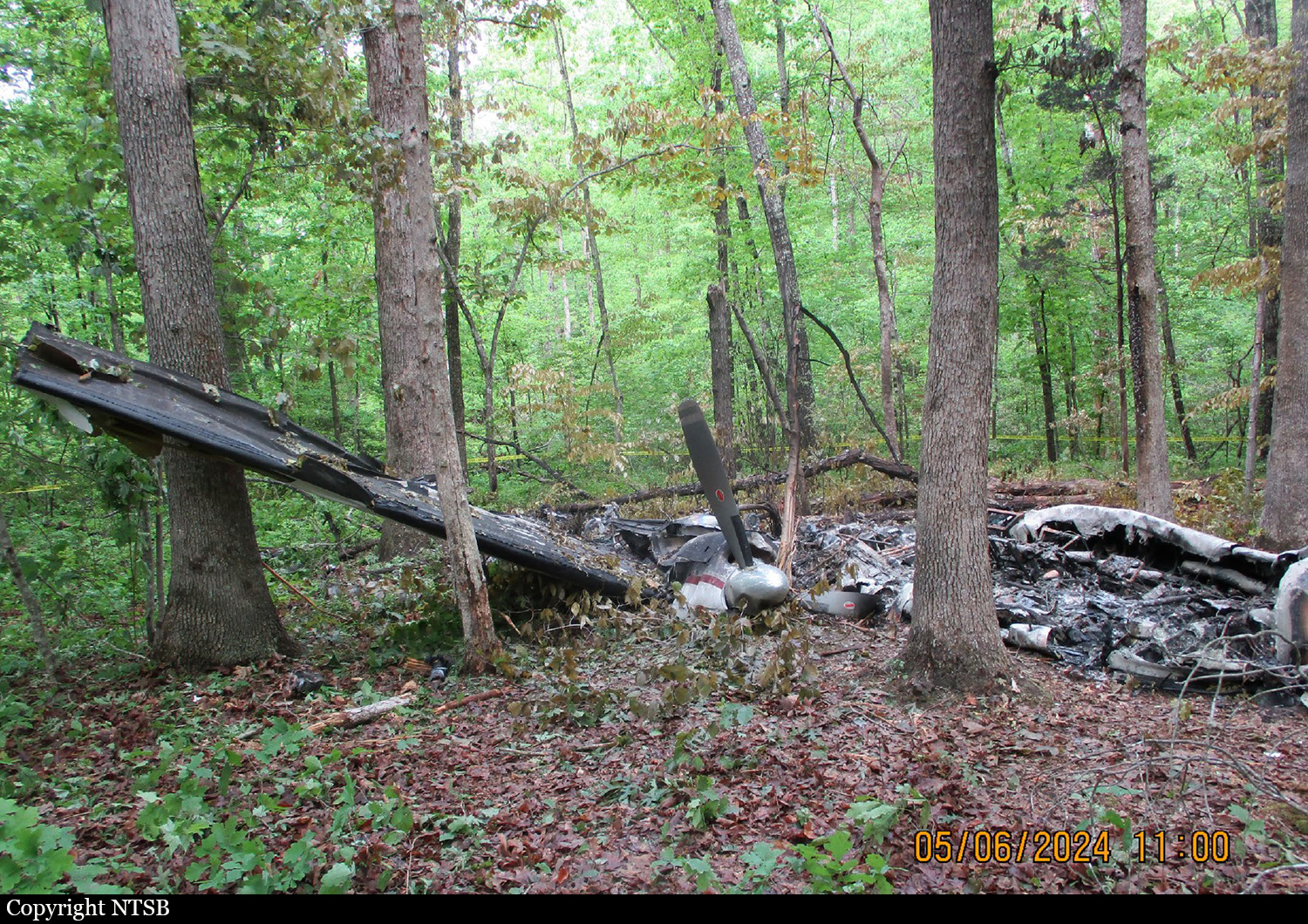
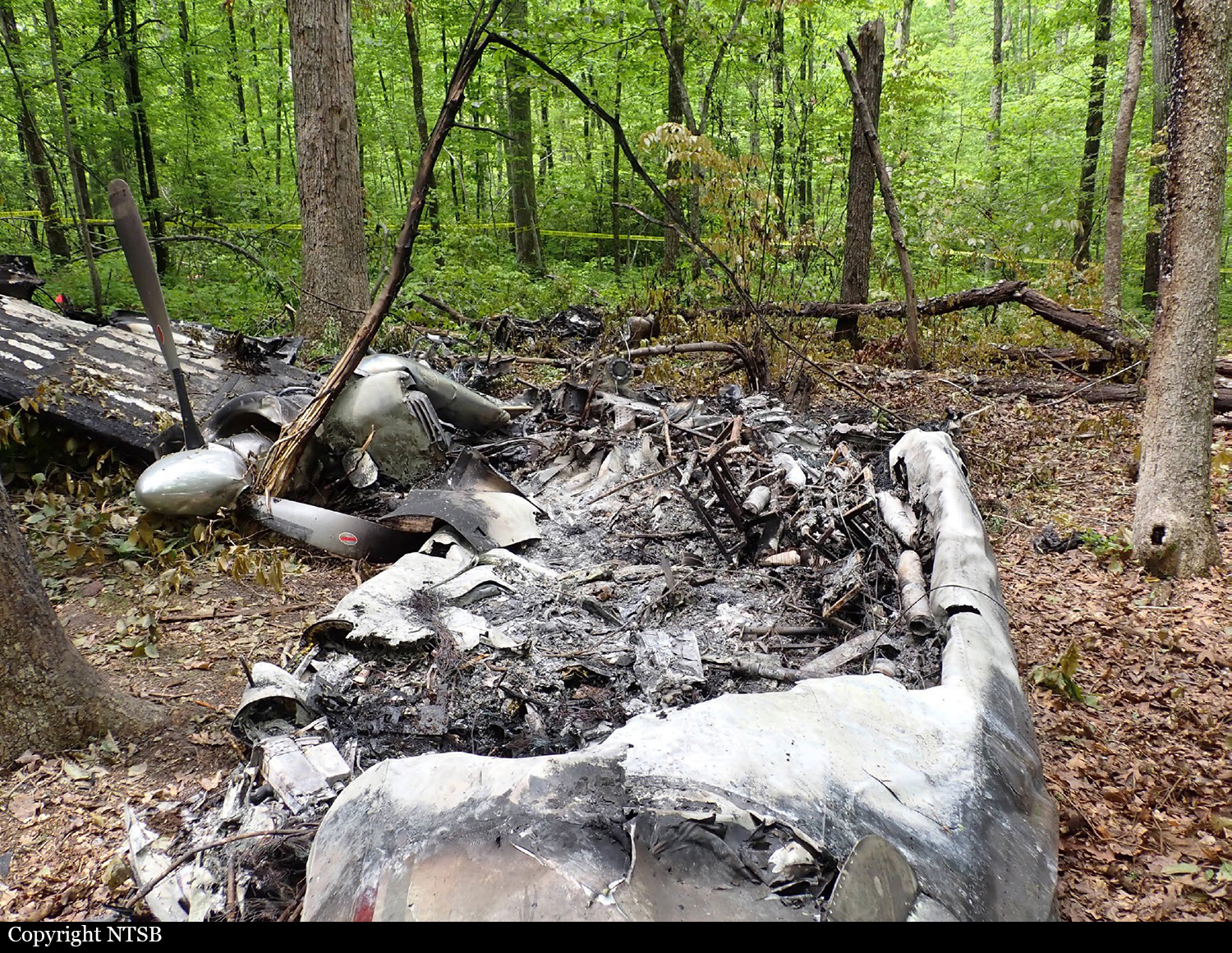
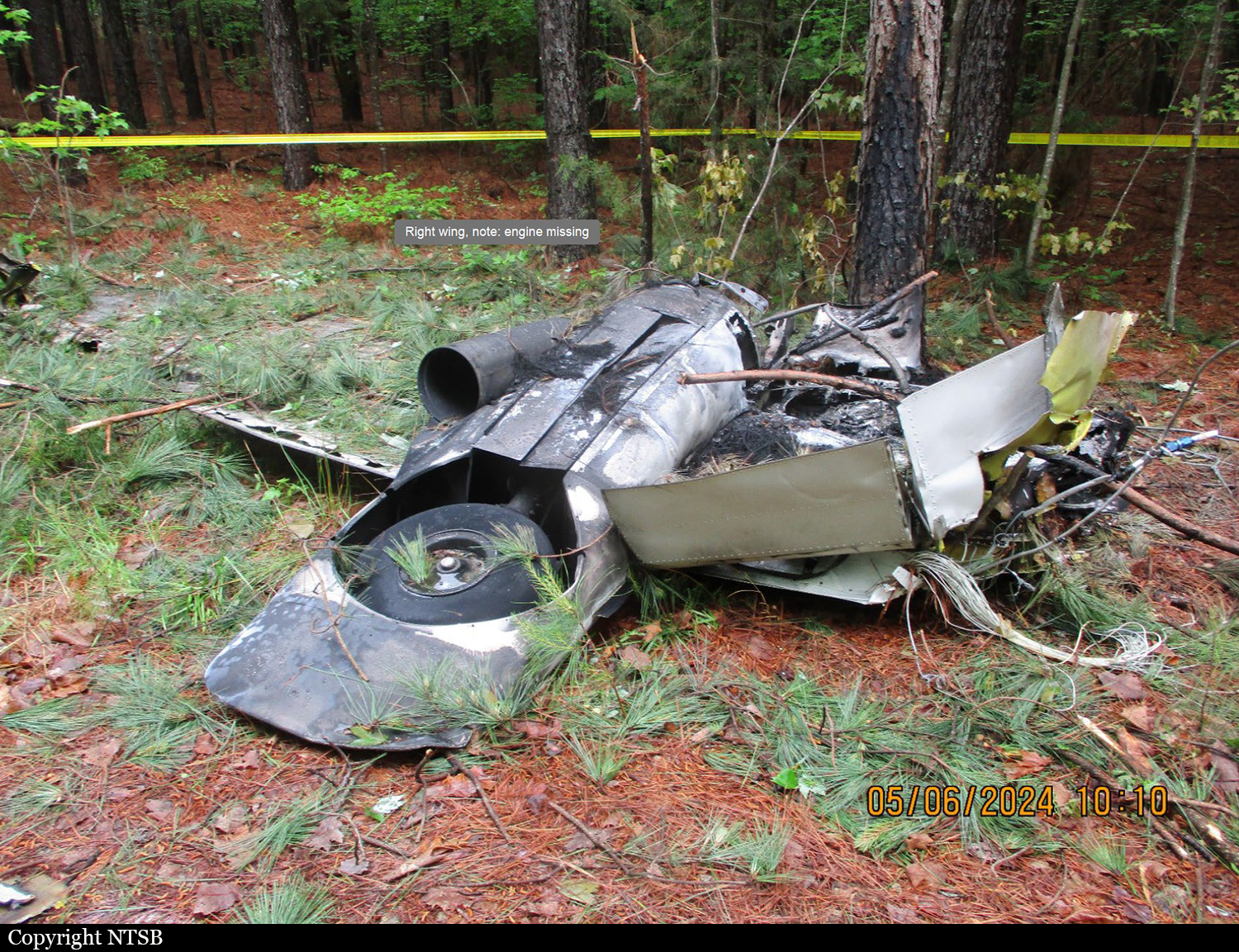
The airplane was in cruise flight at 20,000 ft on an instrument flight rules (IFR) cross-country flight when the pilot reversed course. When an air traffic controller queried the pilot, he replied, “we have lost…we need to climb.” The controller then asked the pilot, “what is your issue?” and the pilot responded, “we have lost autopilot.” There were no further communications received from the pilot and radar contact with the airplane was lost shortly thereafter. A witness who saw the airplane as it descended toward ground impact described that it was on fire. The wreckage of the airplane was heavily fragmented and scattered amongst a wooded area, with a debris path over 3 miles long. The left wing, left engine, left propeller, and empennage were heavily burnt and found at the main wreckage site. The right wing was separated at the wing root and was found 1/4-mile north of the main wreckage. The right wing was fire damaged, and the right engine and right propeller were not located. The vertical and horizontal stabilizers were found about 3/4-mile north of the main wreckage. All fractures exhibited overstress features consistent with an in-flight breakup. Mapping of the wreckage indicated that the tail components likely separated first, followed by the right wing. This structural failure resulted in the horizontal and vertical stabilizers deforming and subsequently separating from the airplane. The lack of heat damage indicated that this separation occurred before the fire and that the inflight fire observed by the witness was likely a result of the inflight breakup. No evidence of any mechanical malfunctions or failures that would have preceded the inflight breakup was found during the postaccident wreckage examination. Both occupants were killed.
Probable cause:
The pilot’s loss of control following an encounter with structural icing, which resulted in an inflight breakup of the airplane.
Final Report:
N690BM.pdf2.15 MB

