


Date & Time:
Dec 18, 2023 at 1429 LT
Type of aircraft:
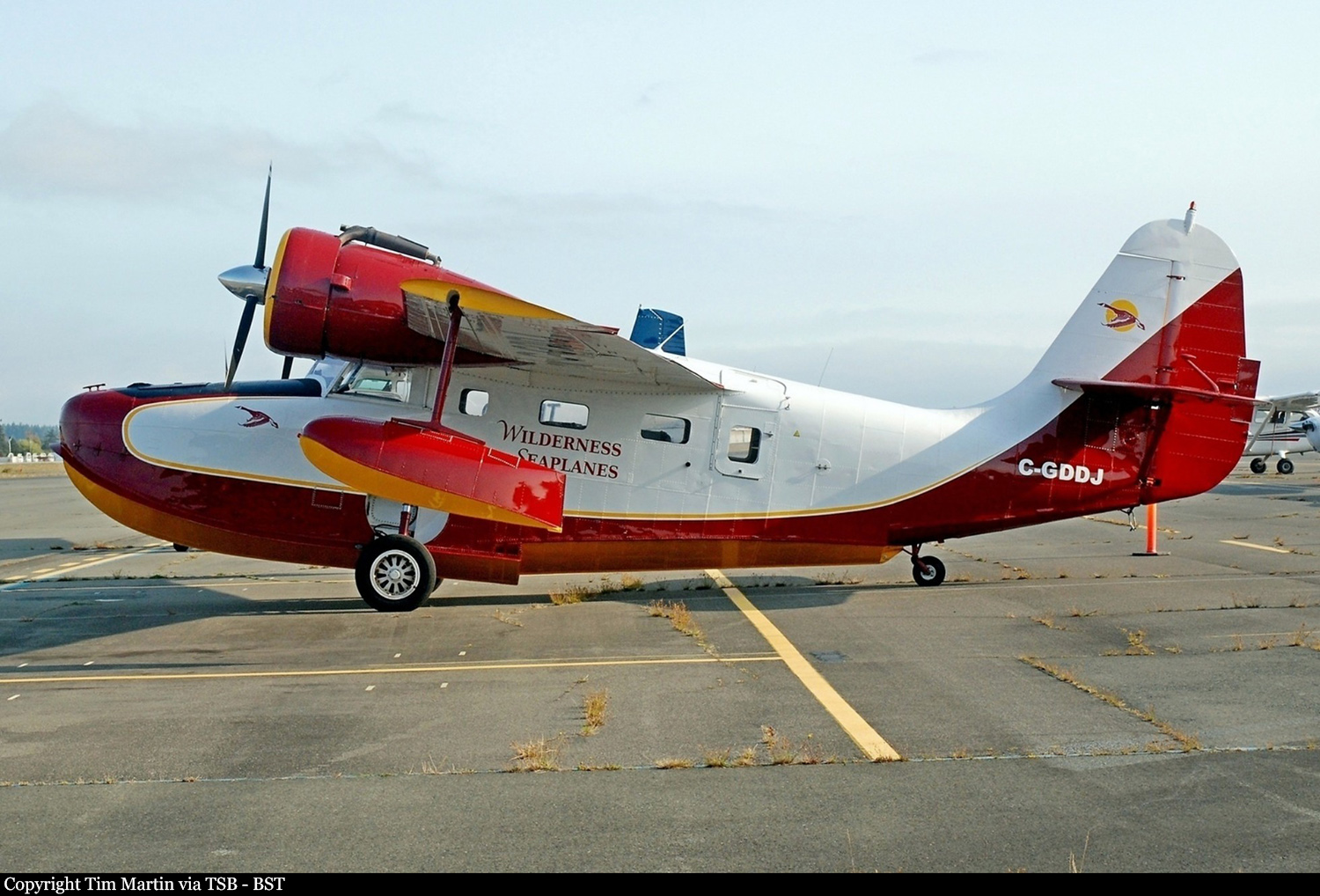
Grumman G-21A Goose
Operator:

Registration:
C-GDDJ
Flight Phase:
Takeoff (climb)
Flight Type:
Charter/Taxi (Non Scheduled Revenue Flight)
Survivors:
Yes
Schedule:
Bella Bella - Port Hardy
MSN:
1184
YOM:
1942
Country:
Canada
Region:
North America
Crew on board:
1
Crew fatalities:
0
Pax on board:
4
Pax fatalities:
0
Other fatalities:
0
Total fatalities:
0
Captain / Total hours on type:
1719
Aircraft flight hours:
26603
Circumstances:
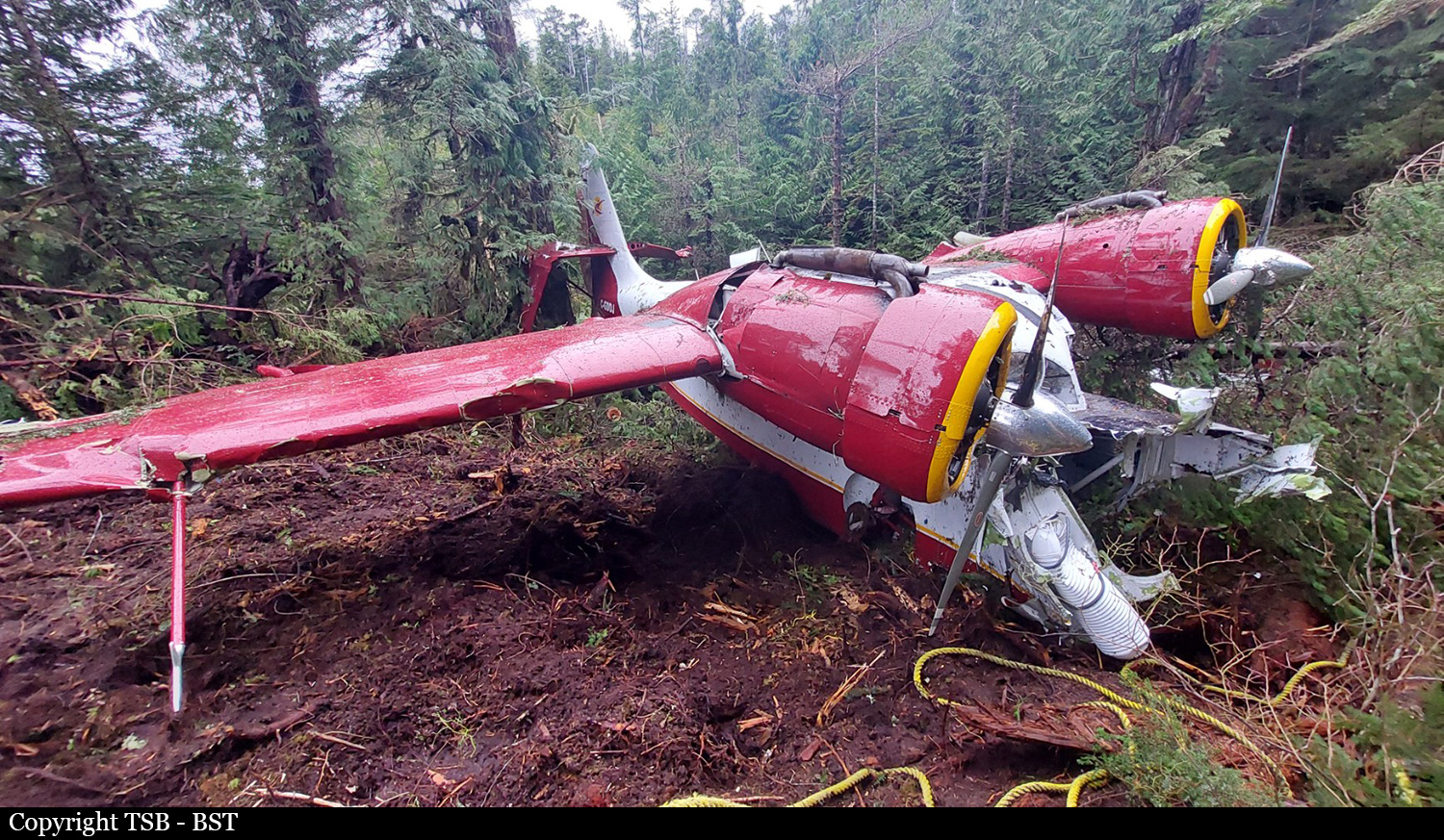
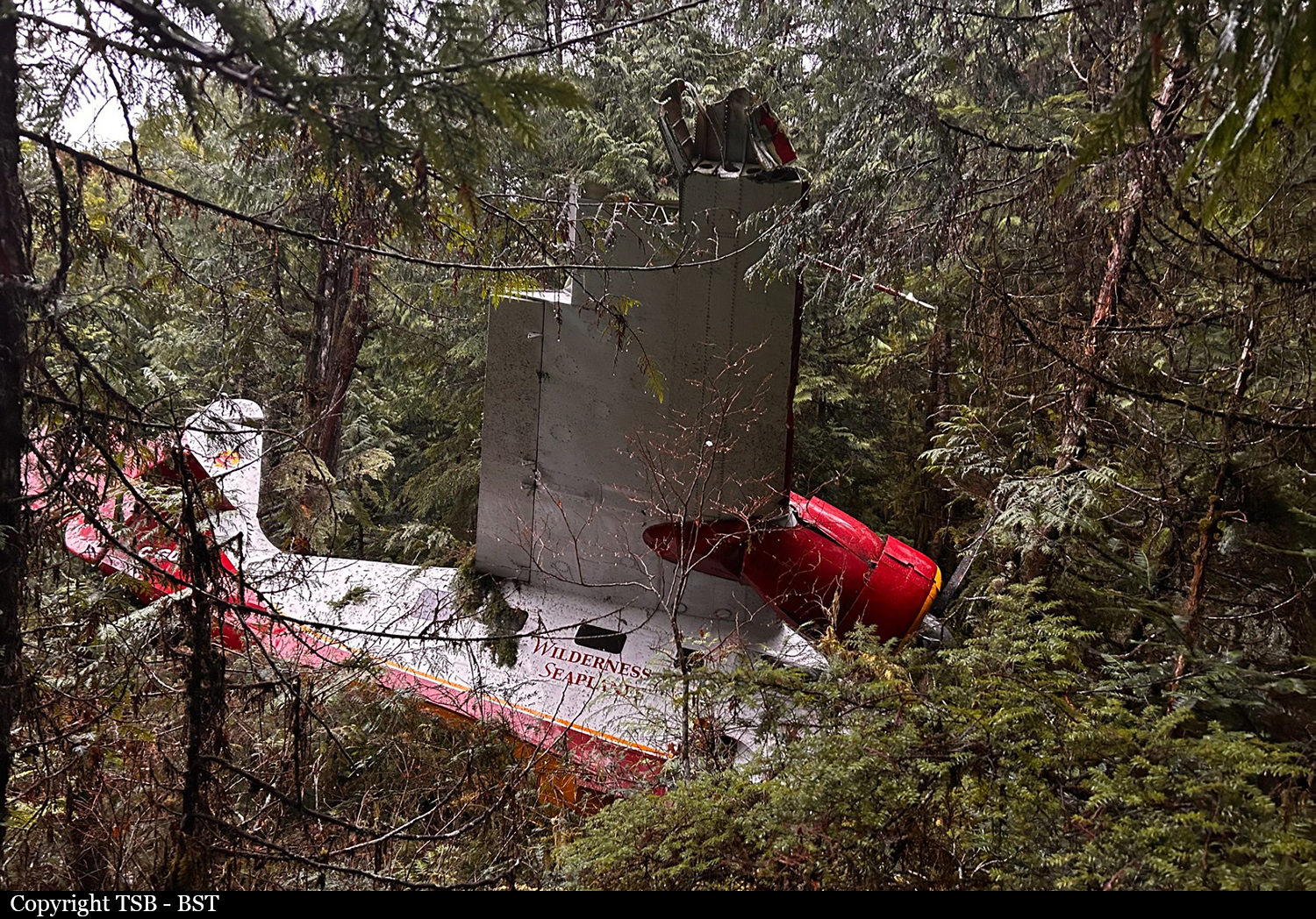
The airplane departed Bella Bella (Campbell Island) Airport Runway 13 on a visual flight rules flight to Port Hardy Airport, carrying one pilot and four passengers. Shortly after takeoff, the aircraft experienced a dual engine failure and was unable to maintain altitude. The pilot transmitted a Mayday call on the radio before the aircraft collided with terrain some 1,5 km southeast from the airfield. All five occupants were injured and the airplane was damaged beyond repair.
Probable cause:
Findings as to causes and contributing factors:
1. The operator did not store fuel drums in a way that minimized the possibility of fuel contamination because the operator was not aware of Transport Canada’s fuel drum storage guidelines. As a result, the occurrence fuel drum was stored upright, and water likely entered via the vent or bung and contaminated the fuel.
2. The operator did not consider the hazards related to fueling from previously opened or contaminated fuel drums. As a result, physical defenses commonly used to detect contamination, such as filters or water detection paste, were not implemented.
3. Because drum fueling operations were new and in the process of changing, the operator delayed the communication of specific procedures describing how to safely perform the task.
4. Training was not provided on the equipment or procedures for drum fueling by the operator because it was perceived to be a simple task, and it was believed that company pilots would have prior experience with drum fueling.
5. Because there were no physical defenses, no specific procedures, and no training, water contamination was introduced into the fuel system when the aircraft was fueled.
6. Company guidance required fuel to be sampled only as part of the daily inspection, and the practice of omitting fuel sampling had become normalized. As a result, the contamination that was introduced into the fuel system was not detected before departure.
7. As a result of fuel contamination, the left and right engines lost power shortly after departure. The pilot performed a forced landing in a wooded area, which resulted in substantial damage to the aircraft and minor injuries to the 5 occupants.
1. The operator did not store fuel drums in a way that minimized the possibility of fuel contamination because the operator was not aware of Transport Canada’s fuel drum storage guidelines. As a result, the occurrence fuel drum was stored upright, and water likely entered via the vent or bung and contaminated the fuel.
2. The operator did not consider the hazards related to fueling from previously opened or contaminated fuel drums. As a result, physical defenses commonly used to detect contamination, such as filters or water detection paste, were not implemented.
3. Because drum fueling operations were new and in the process of changing, the operator delayed the communication of specific procedures describing how to safely perform the task.
4. Training was not provided on the equipment or procedures for drum fueling by the operator because it was perceived to be a simple task, and it was believed that company pilots would have prior experience with drum fueling.
5. Because there were no physical defenses, no specific procedures, and no training, water contamination was introduced into the fuel system when the aircraft was fueled.
6. Company guidance required fuel to be sampled only as part of the daily inspection, and the practice of omitting fuel sampling had become normalized. As a result, the contamination that was introduced into the fuel system was not detected before departure.
7. As a result of fuel contamination, the left and right engines lost power shortly after departure. The pilot performed a forced landing in a wooded area, which resulted in substantial damage to the aircraft and minor injuries to the 5 occupants.
Final Report:
C-GDDJ.pdf1.33 MB

