


Date & Time:
Oct 7, 1983 at 1730 LT
Type of aircraft:
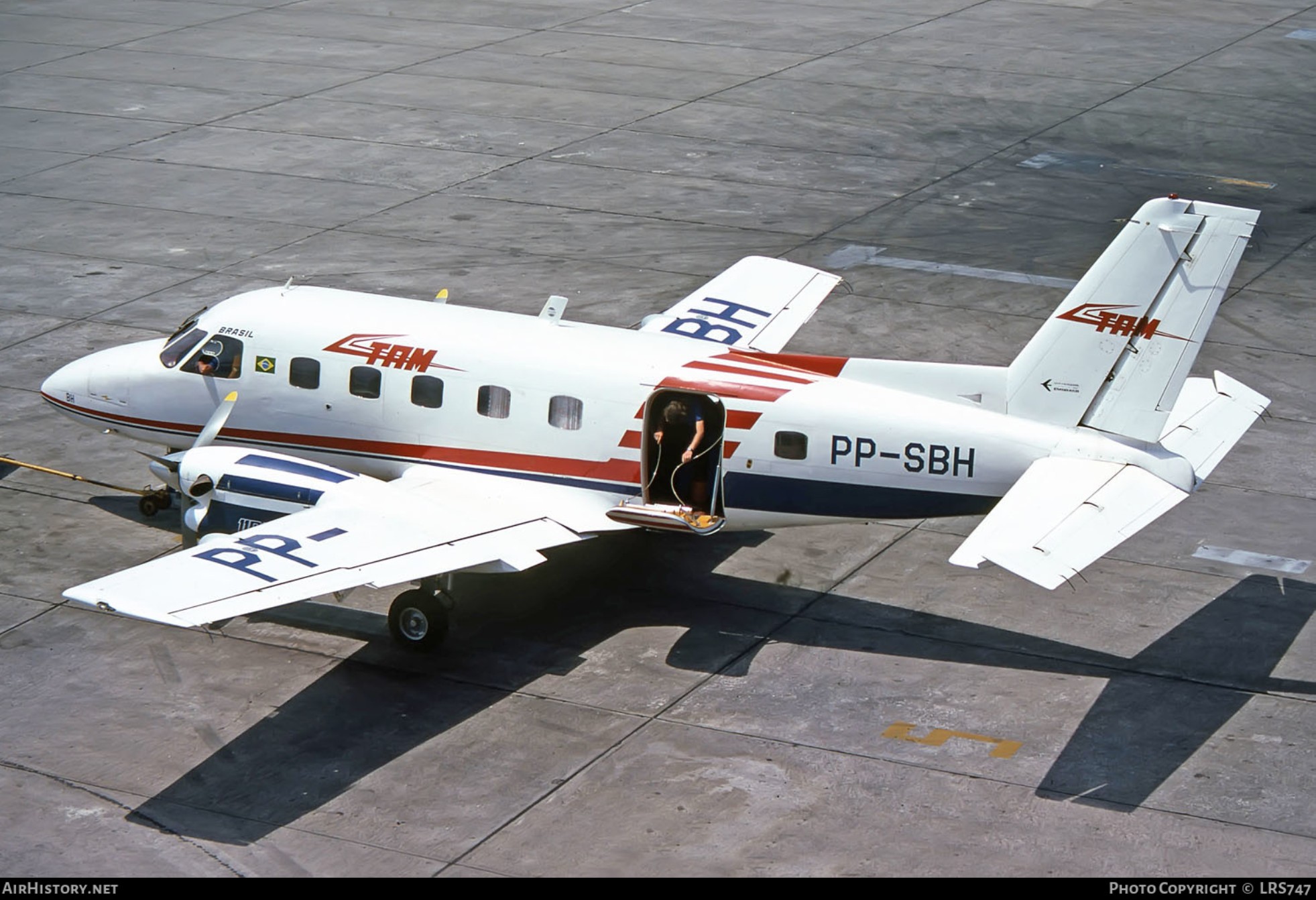
Embraer EMB-110 Bandeirante
Operator:

Registration:
PP-SBH
Flight Phase:
Landing (descent or approach)
Flight Type:
Scheduled Revenue Flight
Survivors:
Yes
Schedule:
Campo Grande - Araçatuba
MSN:
110-026
YOM:
1974
Country:
Brazil
Region:
South America
Crew on board:
2
Crew fatalities:
2
Pax on board:
13
Pax fatalities:
5
Other fatalities:
0
Total fatalities:
7
Captain / Total hours on type:
1246
Copilot / Total hours on type:
1745
Circumstances:
On approach to Araçatuba Airport runway 22, the crew encountered poor weather conditions with heavy rain falls. After the approach was abandoned twice, the crew initiated a go around and attempted to land on runway 04. Completing a last turn to the left at very low altitude under VFR mode in IMC conditions, the airplane struck the ground with its left wingtip and crashed few hundred metres short of runway. Both pilots and five passengers were killed while eight other occupants were injured.
Probable cause:
The review of all data reveals that upon arrival at destination, the pilots encountered adverse weather conditions. A pilot from the airline, who was near the radio station, informed them that the airport was operating under Instrument Flight Rules (IFR) and that the runway was very wet. Given the intensity of the rainfall, some witnesses believe the airfield should have been closed. The absence of a meteorologist allowed information to be relayed to the crews, who then made unsuccessful approach attempts when they should have diverted to the alternate airport. According to the statement of the captain of the other aircraft flying over the airfield, at the critical moment of the procedure, he had no visual contact with the ground. During the go around procedure, while flying over the airport, he spotted the second half of runway 22, which led him to attempt a visual approach to runway 04. During this attempt, which essentially consisted of a 180° turn, the pilot again sought to establish visual contact in difficult landing conditions (aircraft altitude and immediate proximity of the runway) and aborted the landing. Based on the evidence gathered, it has been concluded that the crew involved in the accident attempted a similar procedure, abandoned the approach and elected to establish a visual contact with the ground. During the final turn completed at low altitude in a steep left bank, despite the crew not having established visual contact, the aircraft struck the ground with its left wingtip and crashed. From the perspective of human error, it should be noted that the pilots had been away from home for five days and that after landing at this airport, they were to complete their mission and be flown back to São Paulo by the second aircraft that was also attempting to land. This situation must have caused them some anxiety about their desire to land, leading them to accept the risks of a perilous operation. The fact that the captain was seated on the right may have contributed to hindering his piloting, allowing the copilot to attempt a visual approach when such a procedure was impossible.
Final Report:
PP-SBH.pdf5.27 MB

