


Date & Time:
Dec 27, 2023 at 1245 LT
Type of aircraft:
De Havilland DHC-6 Twin Otter
Operator:

Registration:
C-GMAS
Flight Phase:
Landing (descent or approach)
Flight Type:
Charter/Taxi (Non Scheduled Revenue Flight)
Survivors:
Yes
Site:
Plain, Valley
Schedule:
Margaret Lake - Lac de Gras
MSN:
438
YOM:
1974
Flight number:
TID601
Country:
Canada
Region:
North America
Crew on board:
2
Crew fatalities:
0
Pax on board:
8
Pax fatalities:
0
Other fatalities:
0
Total fatalities:
0
Captain / Total hours on type:
8000
Copilot / Total hours on type:
200
Aircraft flight hours:
51995
Circumstances:
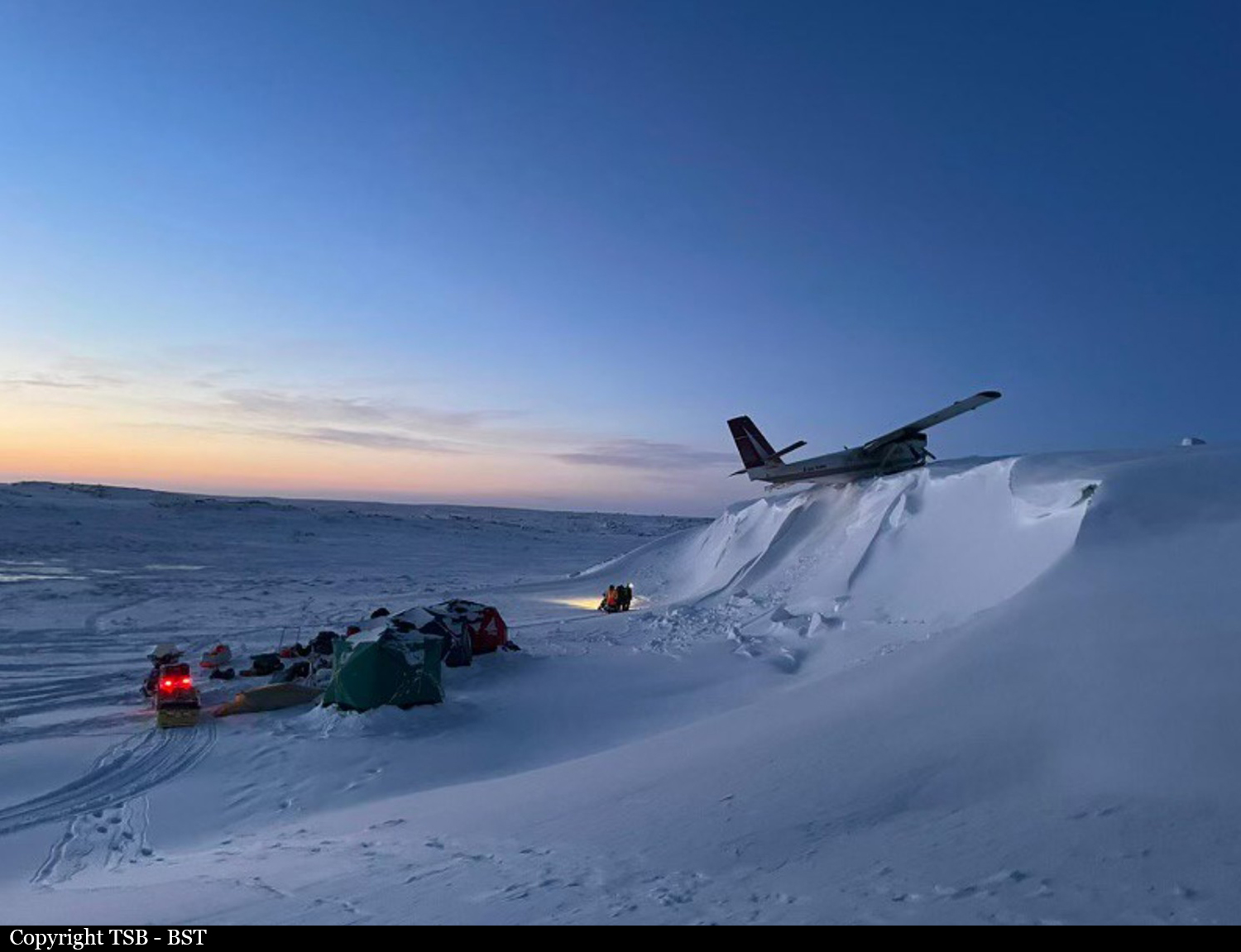
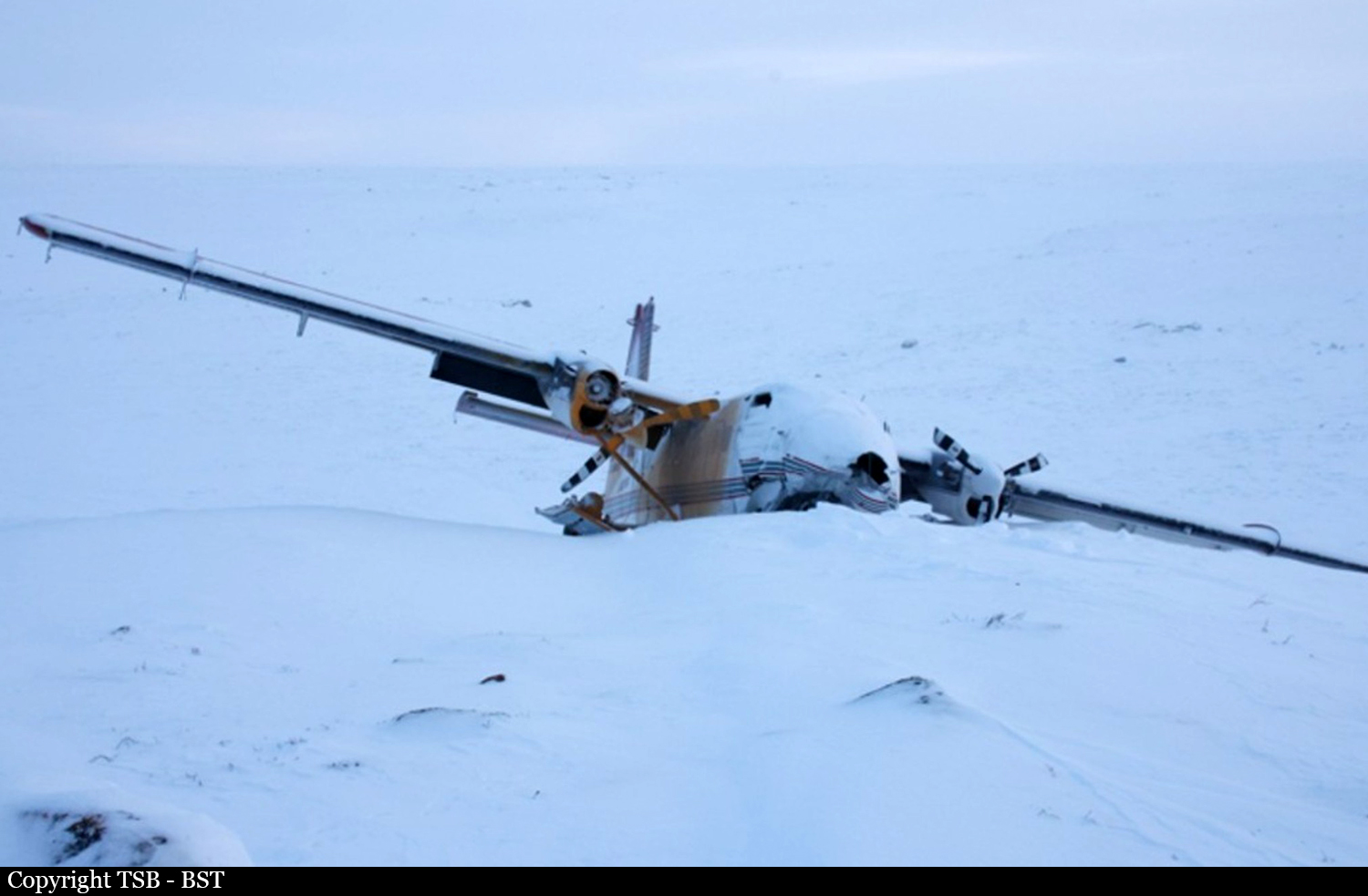
The wheel-ski equipped airplane departed Margaret Lake at 1205LT on flight TID601 to Lac de Gras, carrying eight passengers and two crew members. Upon arriving over the Lac de Gras road camp, the flight crew conducted 4 approaches toward the desired landing area on the frozen lake surface, descending at times to heights below 50 feet above ground level. During the 4th and final approach attempt, the aircraft descended to below 50 feet above ground level, and the flight crew lost visual contact with the terrain. At 1245LT, the aircraft impacted the terrain 1,850 metres southeast from the desired landing site. Two passengers were seriously injured and were unable to egress. The remaining occupants, including one passenger who was ejected, sustained minor injuries. The airplane was damaged beyond repair.
Probable cause:
Findings as to causes and contributing factors:
- The oversight mechanisms employed by Air Tindi were unable to detect the drift away from standard operating procedures, and deviations by pilots, including the conduct of improvised instrument approaches in instrument meteorological conditions, were not addressed.
- The flight crew’s decision to depart on the day’s flights and continue flying in deteriorating weather was influenced by both the flight crew’s past successful experiences in similar conditions and by a plan continuation bias, which led to a reduced perception of risk associated with continuing this visual flight rules flight in instrument meteorological conditions.
- The flight crew’s overreliance on the electronic flight bags for situational awareness contributed to their decision to continue operating visually in instrument meteorological conditions.
- While conducting an improvised instrument approach in an area of reduced visibility, the flight crew intentionally descended below 50 feet above ground level without sufficient visual reference to the surface and the aircraft impacted rising terrain.
- The oversight mechanisms employed by Air Tindi were unable to detect the drift away from standard operating procedures, and deviations by pilots, including the conduct of improvised instrument approaches in instrument meteorological conditions, were not addressed.
- The flight crew’s decision to depart on the day’s flights and continue flying in deteriorating weather was influenced by both the flight crew’s past successful experiences in similar conditions and by a plan continuation bias, which led to a reduced perception of risk associated with continuing this visual flight rules flight in instrument meteorological conditions.
- The flight crew’s overreliance on the electronic flight bags for situational awareness contributed to their decision to continue operating visually in instrument meteorological conditions.
- While conducting an improvised instrument approach in an area of reduced visibility, the flight crew intentionally descended below 50 feet above ground level without sufficient visual reference to the surface and the aircraft impacted rising terrain.
Final Report:
C-GMAS.pdf2.25 MB