


Date & Time:
Nov 23, 1983 at 1620 LT
Type of aircraft:
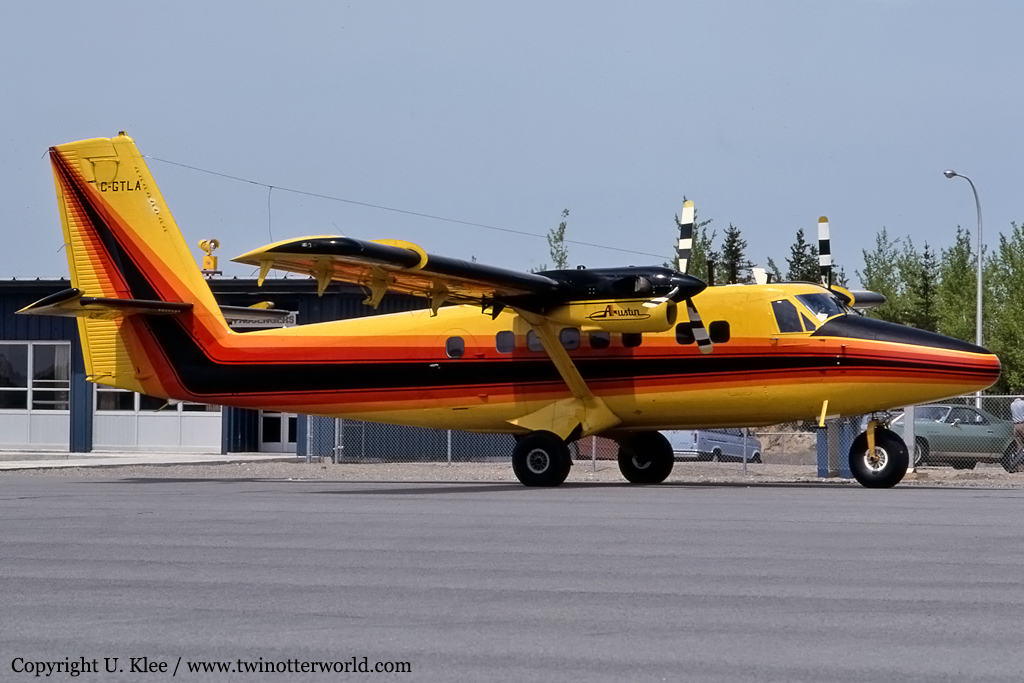
De Havilland DHC-6 Twin Otter
Operator:
Registration:
C-GTLA
Flight Phase:
Landing (descent or approach)
Flight Type:
Charter/Taxi (Non Scheduled Revenue Flight)
Survivors:
Yes
Schedule:
Webequie – Lansdowne House
MSN:
632
YOM:
1979
Flight number:
UH614
Country:
Canada
Region:
North America
Crew on board:
2
Crew fatalities:
0
Pax on board:
5
Pax fatalities:
4
Other fatalities:
0
Total fatalities:
4
Captain / Total hours on type:
1500
Copilot / Total hours on type:
250
Aircraft flight hours:
5907
Circumstances:
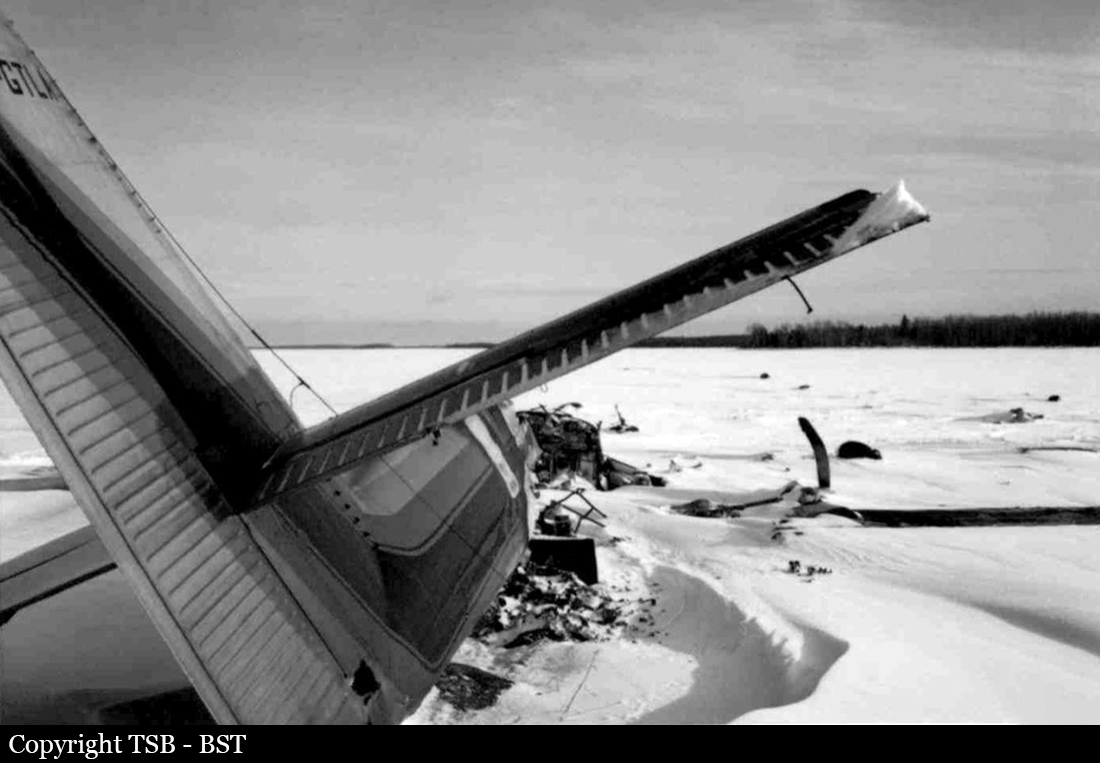
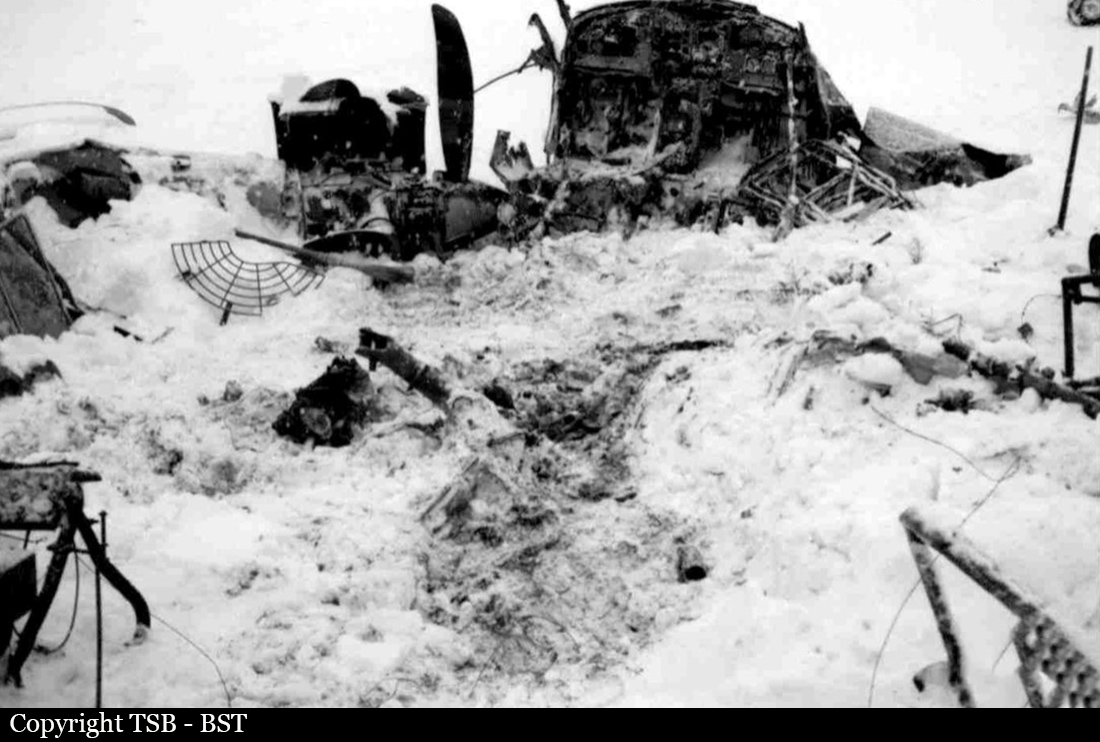
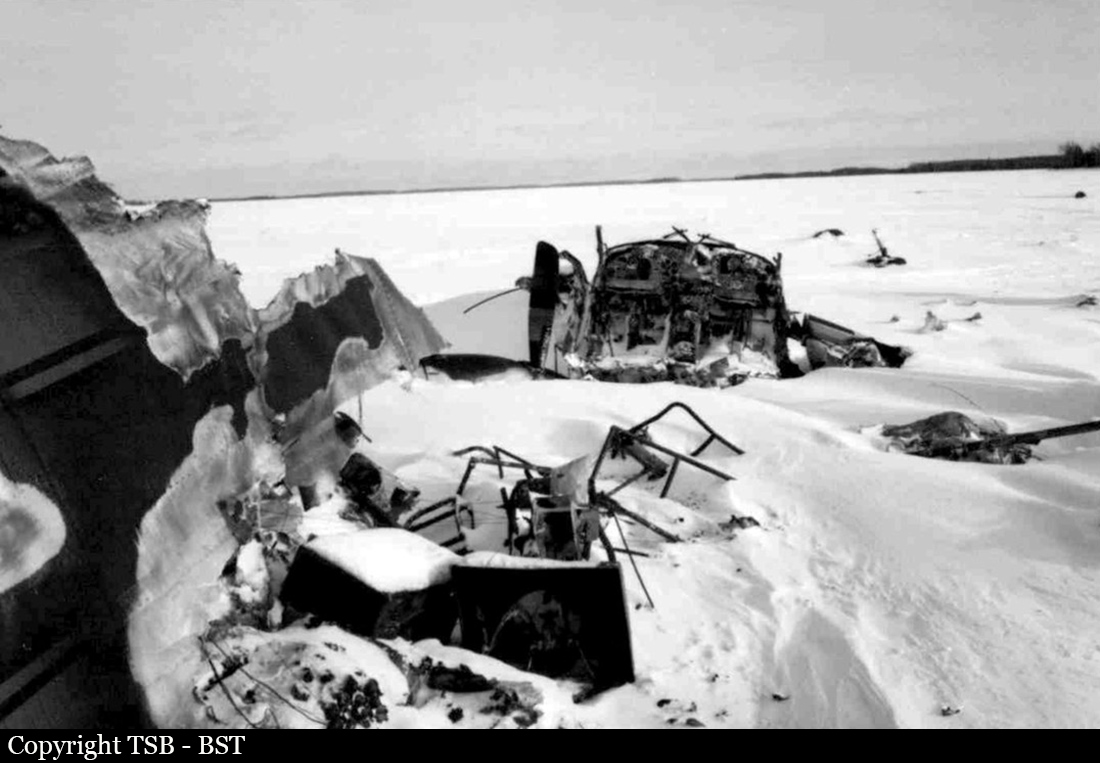
The airplane was on a specific point flight from Webequie to Lansdowne House, Ontario carrying five passengers and freight. The aircraft departed at approximately 1550LT (EST) and arrived at Lansdowne House about 1605. The flight, conducted under visual flight rules (VFR), was uneventful until it approached Lansdowne House, where deteriorating ceiling and visibility forced an altitude change from 2,500 feet to 1,500 feet above sea level (asl). Over Lansdowne House, the first officer relinquished control to the captain who was more familiar with the area. The aircraft approached from the north, and the captain planned a left hand visual approach to runway 26. He briefed the first officer to monitor the instruments and to get 200 feet on the reference “bug” on the radio altimeter, The captain flew the aircraft over the runway and completed a visual circuit; however, the aircraft was not in a position to land. The captain then initiated an overshoot and attempted another left visual circuit. The pilot flew a second circuit without losing sight of the airfield. He then turned toward the runway, called for 20° of flap and descended. As instructed, the first officer monitored the instruments while the aircraft turned on to the final approach. The pilot called “runway in sight", and shortly thereafter, the copilot observed the altimeter pass through 200 feet. Moments before impact, the captain reported to the first officer that he was encountering whiteout conditions and moved to advance the power levers. The aircraft was in line with the runway when it struck the snow-covered ice surface of the lake, about 1,200 feet short of the runway threshold. The aircraft bounced and struck some rocks on the shore. Fire broke out on impact. The elevation of the lake is 7 feet lower than that of the threshold. The accident occurred at 52° 12' 00" N, 87° 56' 00" W at 1620LT during the hours of daylight. Both pilots escaped with minor injuries while one passenger suffered serious injuries and four others were killed. The airplane was destroyed by a post crash fire.
Probable cause:
The following cause-related findings were identified:
- The captain of the aircraft conducted a visual approach in limited visibility.
- The first officer was monitoring the flight instruments and did not alert the captain to the dangerously low altitude indications during the final approach.
- The captain experienced a partial loss of visual reference during the approach and did not detect a descent below a safe altitude.
- The captain of the aircraft conducted a visual approach in limited visibility.
- The first officer was monitoring the flight instruments and did not alert the captain to the dangerously low altitude indications during the final approach.
- The captain experienced a partial loss of visual reference during the approach and did not detect a descent below a safe altitude.
Final Report:
C-GTLA.pdf1.26 MB

