


Date & Time:
Feb 9, 2017 at 2211 LT
Type of aircraft:
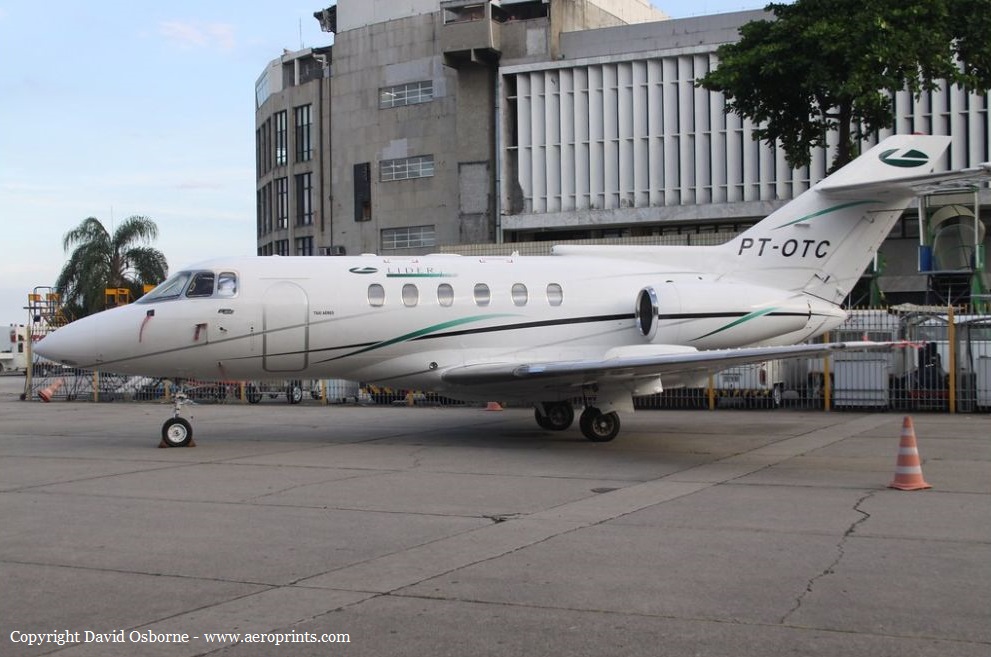
BAe 125
Operator:

Registration:
PT-OTC
Flight Phase:
Landing (descent or approach)
Flight Type:
Charter/Taxi (Non Scheduled Revenue Flight)
Survivors:
Yes
Schedule:
Brasília – São Paulo
MSN:
258194
YOM:
1991
Country:
Brazil
Region:
South America
Crew on board:
2
Crew fatalities:
0
Pax on board:
1
Pax fatalities:
0
Other fatalities:
0
Total fatalities:
0
Captain / Total hours on type:
782
Copilot / Total hours on type:
275
Aircraft flight hours:
7588
Circumstances:
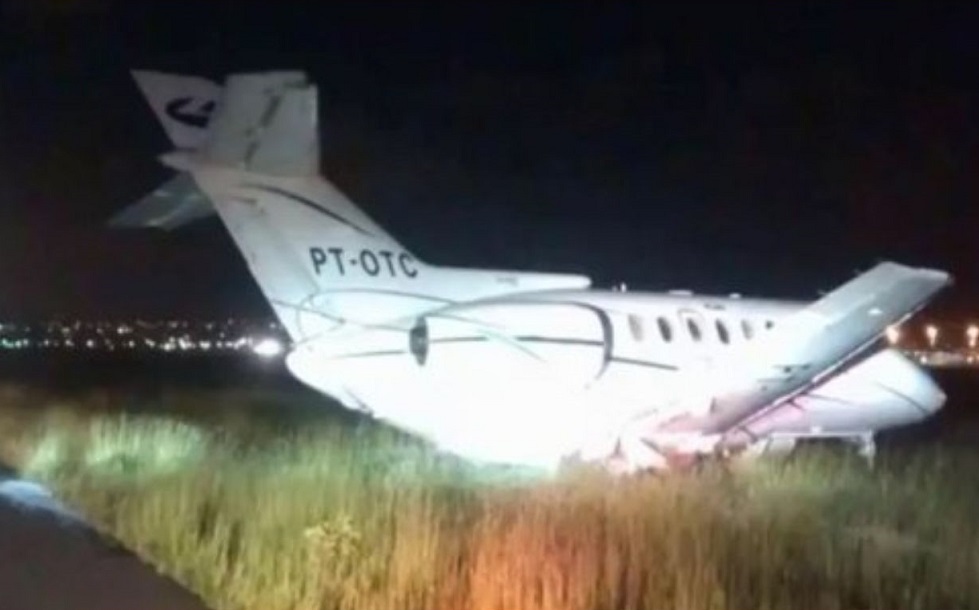
The airplane departed Brasilía-Presidente Juscelino Kubitschek Airport at 2025LT on a charter flight to São Paulo-Congonhas, carrying two pilots and one passenger, the Senator Aécio Neves da Cunha. During the takeoff roll, a tire on one of the main landing gear burst. Takeoff was continued and after departure, ATC was informed about the situation. While descending to São Paulo-Congonhas Airport, the crew realized that the situation with the landing gear was abnormal, made a manual recycling and decided to divert to São Paulo-Guarulhos Airport that offered longer runways for an emergency landing. After touchdown at night, the left main landing gear collapsed, causing the airplane to veer off runway and to come to rest in a grassy area. All three occupants evacuated safely and the airplane was damaged beyond repair.
Probable cause:
The copilot's (SIC) attitude, in not advising the pilot-in-command (PIC) assertively about his perception of the potentially abnormal condition of the landing gear, possibly influenced by a sense of "power hierarchical distance," contributed to the PIC's reduced situational awareness. This contributed to his decision to request movement of the landing gear control lever using the override system, without adequately assessing the scenario. The SIC's attitude of not proposing the identification of the fault and reading the checklist also contributed. As for the PIC, the attitude of not requesting that the identification be carried out and verifying this condition on the checklist contributed to the non-compliance with the restriction established in the QRH for retraction of the landing gear using the override system (If Retraction Is Essential). As the abnormal and emergency conditions relating to the landing gear system were not simulated for the takeoff procedure, particularly for the 'Landing Gear Lever Cannot Be Moved' failure, this circumstance contributed to the crew's inadequate performance in identifying, interpreting, and managing this abnormal situation.
Contributing factors were identified Investigators also noted that annual crew resource management (CRM) training did not directly address "planning continuity bias," which relates to the area of human factors in decision-making. As a result, crew members were not alert, aware, or familiar with the potential perception of "pressure" on certain flights, particularly when transporting VIPs. Contributing factors were identified in decision-making, decision support systems, flight planning and management, memory, communication and coordination within the crew, and crew training.
Contributing factors were identified Investigators also noted that annual crew resource management (CRM) training did not directly address "planning continuity bias," which relates to the area of human factors in decision-making. As a result, crew members were not alert, aware, or familiar with the potential perception of "pressure" on certain flights, particularly when transporting VIPs. Contributing factors were identified in decision-making, decision support systems, flight planning and management, memory, communication and coordination within the crew, and crew training.
Final Report:
PT-OTC.pdf3.05 MB

