


Date & Time:
Jun 14, 2024 at 1539 LT
Type of aircraft:
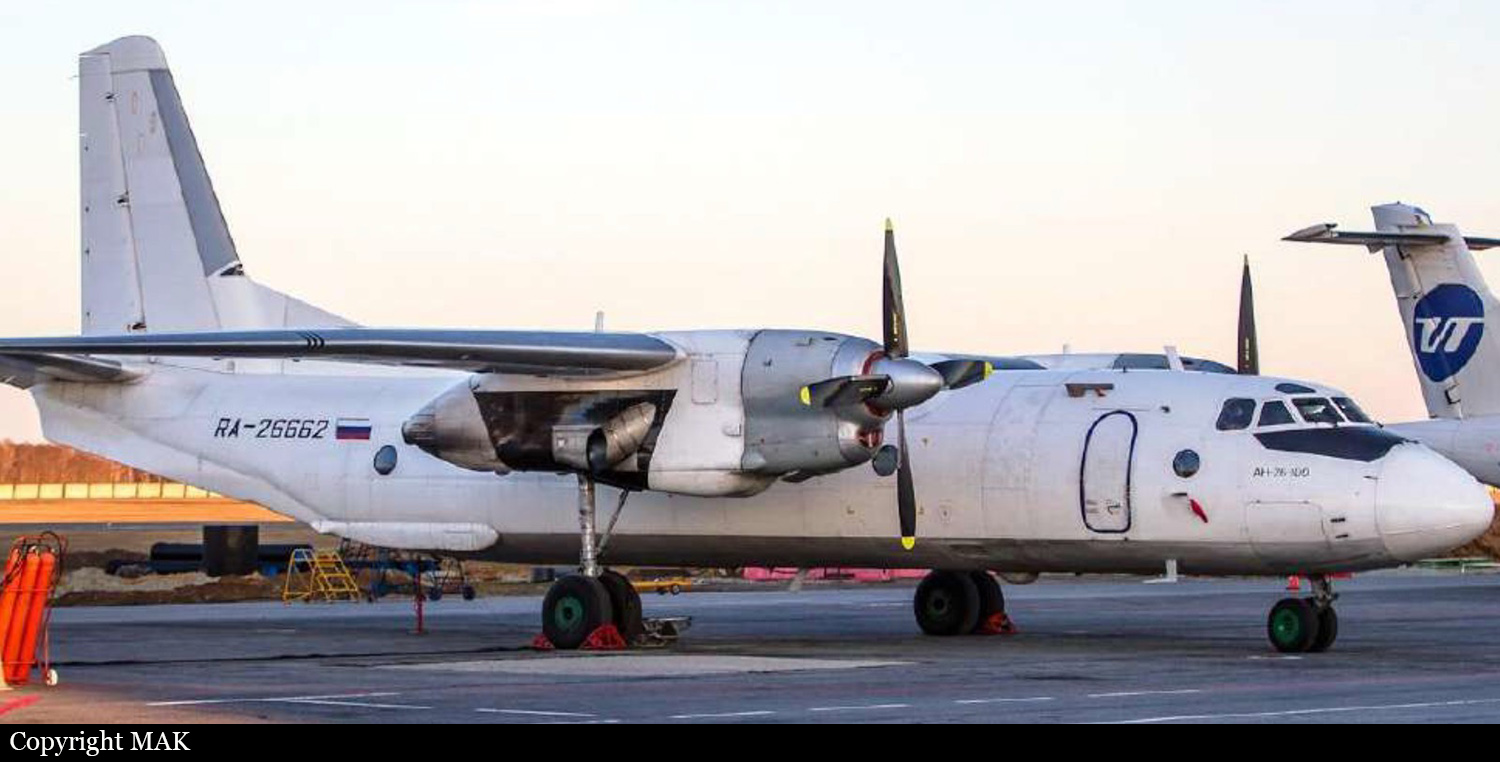
Antonov AN-26
Operator:

Registration:
RA-26662
Flight Phase:
Landing (descent or approach)
Flight Type:
Charter/Taxi (Non Scheduled Revenue Flight)
Survivors:
Yes
Schedule:
Sabetta - Utrenniy
MSN:
81 01
YOM:
1979
Flight number:
UT9706
Country:
Russia
Region:
Asia
Crew on board:
5
Crew fatalities:
0
Pax on board:
36
Pax fatalities:
0
Other fatalities:
0
Total fatalities:
0
Captain / Total hours on type:
10188
Copilot / Total hours on type:
2270
Aircraft flight hours:
38913
Aircraft flight cycles:
18124
Circumstances:
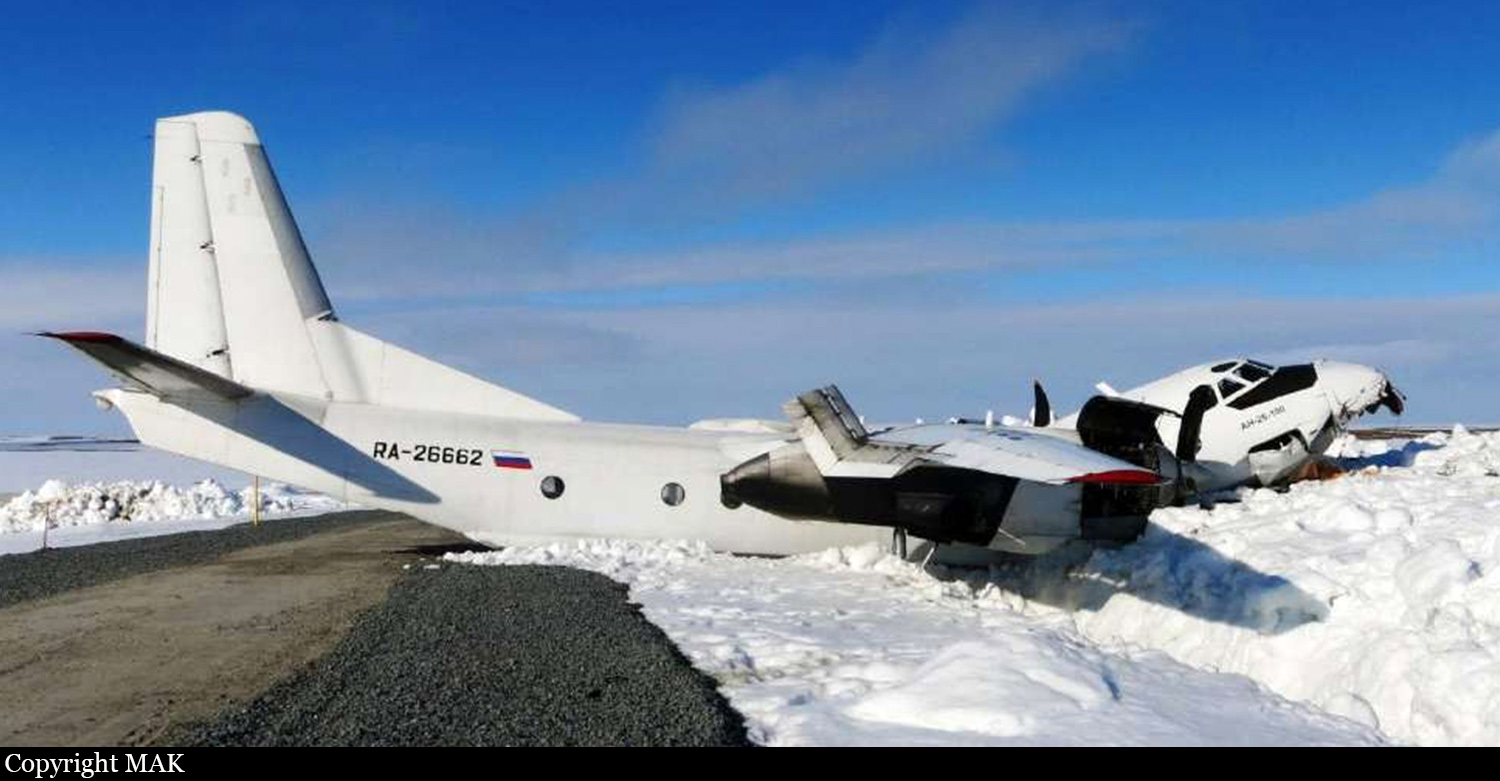
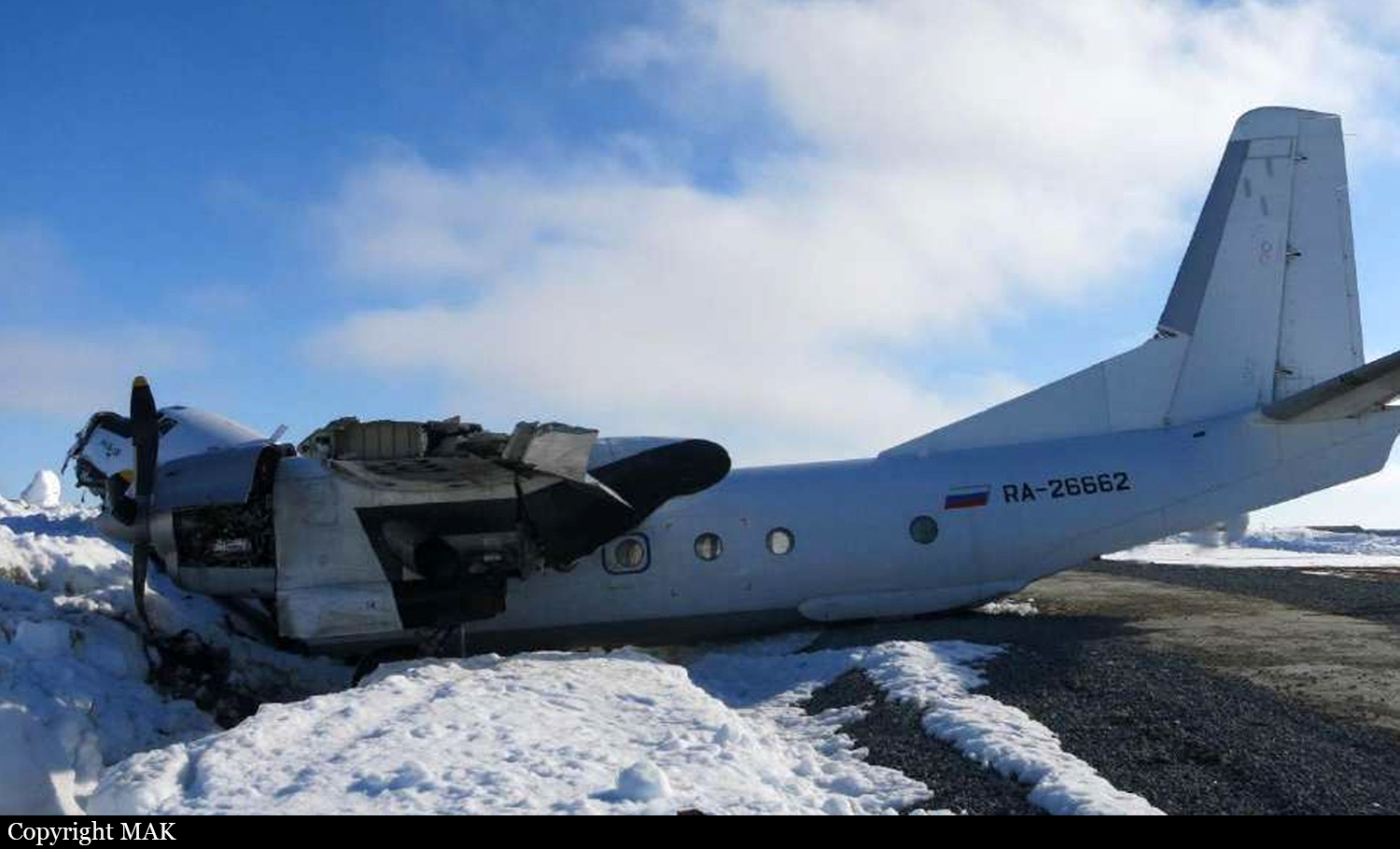
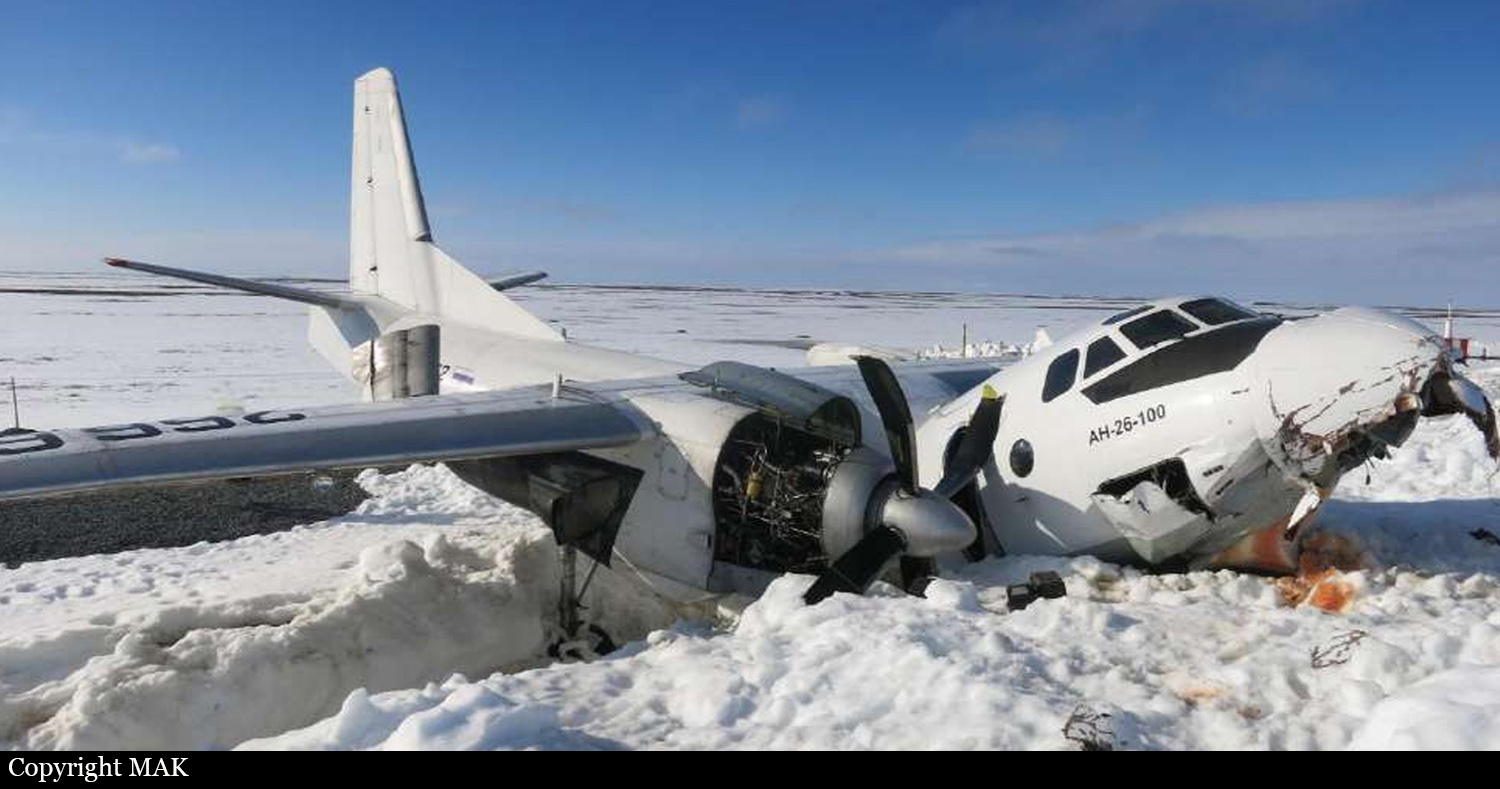
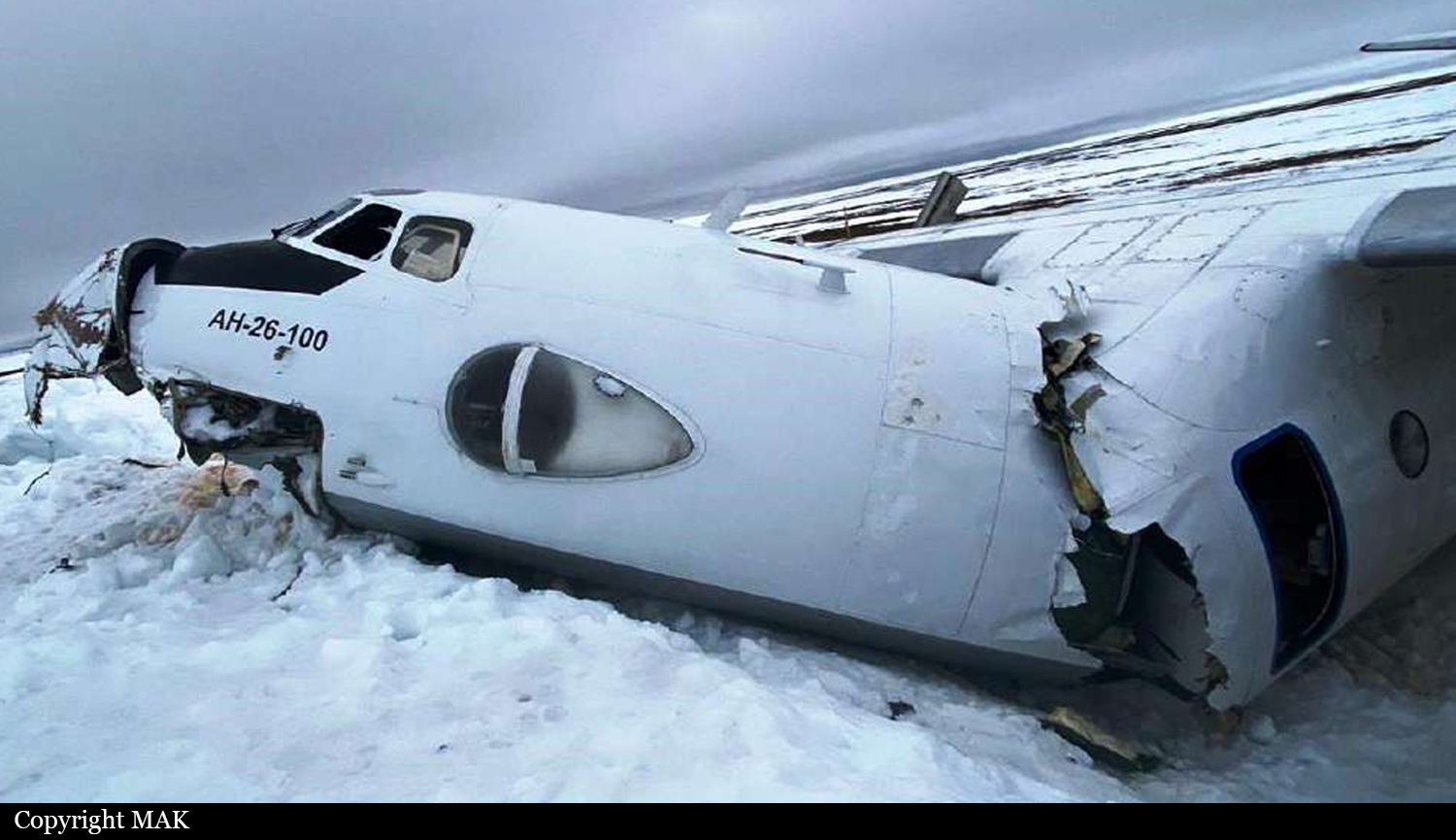
The airplane departed Sabetta on a charter flight to Utrenniy, carrying 36 passengers and five crew members. Following an uneventful flight, the crew initiated the descent to the destination airport in marginal weather conditions. On final approach, the copilot reported the altitude of 300 metres and that the airplane was stabilized. Once the aircraft reached the altitude of 80 metres on descent, the navigator noticed that it was beginning to descend below the glide path and pointed this out to the captain, who confirmed that the runway was in sight. At a distance of 2,150 metres from the runway threshold, the radio altimeter alarm sounded for a period of five seconds. On short final, after the aircraft's speed decreased from 220 km/h to 165 km/h, the captain initiated a go-around, pitching the aircraft up to a 20° angle. Simultaneously, the aircraft's speed dropped to 125 km/h and, at too low an altitude, struck with its left main landing gear a snowbank located 955 metres short of runway 19 threshold. With a positive acceleration of 2,2 G, the aircraft struck the snow-covered ground and pivoted to the left before coming to rest in the snow, broken in two. The wreckage was found 865 metres from the runway threshold. All 41 occupants were rescued, among them three were injured including both pilots.
Probable cause:
The accident occurred during an approach for landing in meteorological conditions below the established minimum operational limits of the airport. This resulted in the aircraft landing approximately 955 metres short of the runway threshold and colliding with a snow barrier.
The following contributing factors were identified:
- The decision by the flight commander to continue the flight to the destination airport and to execute the landing approach, despite having information about meteorological conditions at the destination airport below the established operational minimum,
- The crew's failure to maintain flight parameters that meet the criteria for a stabilized approach to landing, as well as their failure to go around when these were not met,
- Descending below the established minimum descent altitude (MDA/H) with insufficient visual contact with ground landmarks necessary for making a landing decision,
- The flight commander's (crew's) error in recognizing the runway and its landmarks,
- Poor crew coordination,
- Insufficient crew resource management by the flight commander.
The following contributing factors were identified:
- The decision by the flight commander to continue the flight to the destination airport and to execute the landing approach, despite having information about meteorological conditions at the destination airport below the established operational minimum,
- The crew's failure to maintain flight parameters that meet the criteria for a stabilized approach to landing, as well as their failure to go around when these were not met,
- Descending below the established minimum descent altitude (MDA/H) with insufficient visual contact with ground landmarks necessary for making a landing decision,
- The flight commander's (crew's) error in recognizing the runway and its landmarks,
- Poor crew coordination,
- Insufficient crew resource management by the flight commander.
Final Report:
RA-26662.pdf2.77 MB

